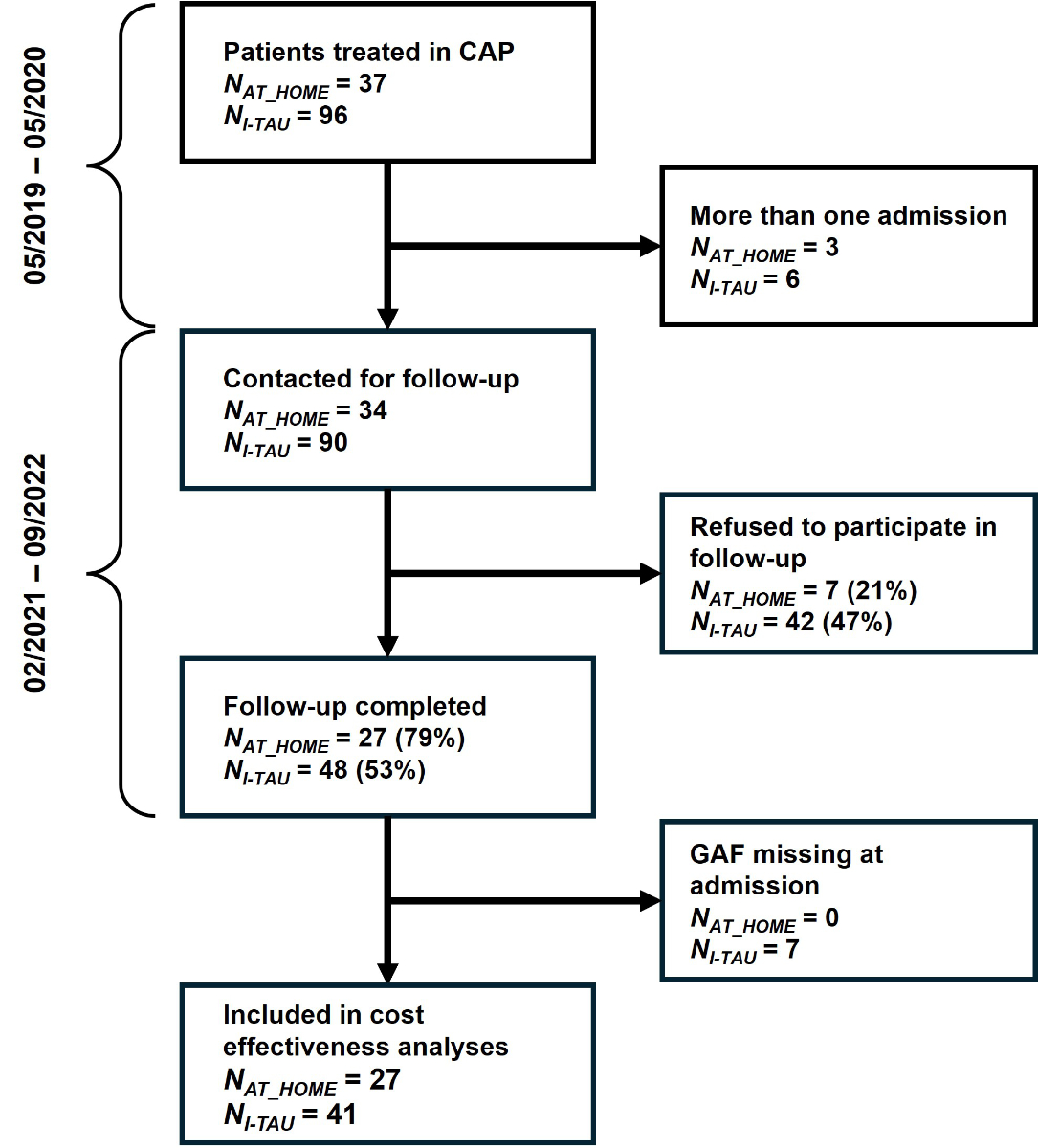
Figure 1 Participant flowchart.
DOI: https://doi.org/https://doi.org/10.57187/4899
The prevalence of mental disorders among children and adolescents is high: Approximately 63–75% of all mental illnesses first occur before the age of 25, with a peak onset around the age of 15 years. Current estimates suggest that approximately 14% of young people are experiencing mental health problems at any given time [1, 2], a number that has increased notably over the past five years [3]. The reasons for this development are multifactorial, and may include societal factors such as the COVID-19 pandemic or social media use among many others [4, 5].
Concurrently, increased mental health problems among young people have led to increased demands on mental healthcare systems [6]. In Switzerland, this trend is reflected in steadily increasing rates of psychiatric hospitalisation among children and adolescents since 2012 [7]. Despite growing demand, resources remain limited, with global mental health budgets averaging only 2% of total health expenditure [8]. In Switzerland, mental health spending accounted for approximately 2.6% of total health expenditure in 2021 [9]. Ensuring equitable access and efficient use of mental health services remains a key challenge, making the optimisation of resource allocation through cost-effective treatment models a growing priority [10]. At the policy level, Switzerland has recently emphasised the expansion of outpatient and community-based care as a key strategy to contain rising healthcare costs. At a national roundtable in October 2025, political representatives and healthcare stakeholders identified the consistent promotion of ambulatory care as a central cost-containment measure [11, 27 October 2025], highlighting the potential of intermediate-care structures to improve efficiency and quality of care. In line with this strategy, the Lancet Psychiatry Commission on Youth Mental Health recently advocated holistic, patient-centred and community-based approaches such as home treatment [12]. Such models may also help address the shortage of trained mental health professionals by making more efficient use of existing human resources.
In contrast to inpatient treatment as usual (I-TAU), home treatment allows young patients to remain in their natural environment while receiving frequent and regular visits from a multidisciplinary team. This approach actively involves family members, peers and schools in the therapeutic process. The systemic orientation of home treatment aims to maintain daily social structures and prevent long-term costs associated with disrupted family dynamics and educational pathways [13–15]. Although several countries have implemented home treatment programmes in child and adolescent psychiatry and evaluated their clinical effectiveness [16], research examining their cost-effectiveness remains sparse. Most existing studies have been conducted in English-speaking countries [17, 18], limiting the generalisability of their findings to other healthcare contexts. In the German-speaking world, only one study has directly compared the cost-effectiveness of home treatment and I-TAU and it reported significantly lower costs and favourable cost-effectiveness outcomes for home treatment at discharge and at an 8-month follow-up [19]. However, this study combined home treatment with abbreviated inpatient stays, making it difficult to isolate the specific contribution of home treatment to the observed outcomes. In addition, given structural and systemic differences in healthcare provision across countries, there is a clear need to replicate existing findings and assess the cost-effectiveness of home treatment within the specific context of the Swiss mental health system.
The present study evaluated a stand-alone home treatment model, AT_HOME (“Aufsuchende Therapie – zu Hause, Originell, Mobil, Effektiv” = “Outreach treatment – at home, original, mobile, effective”), implemented at the University Hospital for Child and Adolescent Psychiatry and Psychotherapy (CAP) in Bern. Under this model, treatment is delivered entirely in the home environment without interim I-TAU. AT_HOME was launched in 2019 and targets children and adolescents experiencing acute mental disorders who meet criteria for hospitalisation. Initial clinical evaluations of AT_HOME compared to I-TAU showed significant improvements in patient outcomes at discharge, with better long-term trajectories of treatment effects at 18-month follow-up [20]. However, these evaluations did not provide conclusions regarding the cost-effectiveness of this new treatment model.
The aim of the current study was therefore to evaluate whether home treatment is a more cost-effective alternative compared to traditional I-TAU in a Swiss psychiatric hospital setting. To address this question, we assessed both immediate treatment costs and subsequent healthcare expenditure to determine whether potential short-term savings from home treatment were offset by higher costs following discharge.
The data used for the analysis were collected as part of a monocentric, non-randomised pilot trial with two arms. The prospective follow-up study received approval from the Cantonal Ethics Committee of Bern (2021-00098) and was preregistered in the German Clinical Trials Register (DRKS00025424, 27 May 2021). No deviations from the preregistered procedures occurred with respect to participant follow-up, measurement instruments or assessment timing. No formal study protocol existed for the initial pilot trial and the preregistration did not specify a statistical analysis plan for the economic evaluation; the present cost-effectiveness analysis was developed after data collection and is reported according to CHEERS standards for health economic evaluation [21].
Participants in this study were children and adolescents aged 6 to 17 years who were consecutively admitted for inpatient treatment to the CAP Bern. Inclusion criteria for AT_HOME required a stable residence within a 30-minute catchment area from the CAP Bern. Exclusion criteria were the presence of acute child welfare hazards in the patient’s home or any acute endangerment to self or others requiring immediate protection. Families who met eligibility criteria were free to choose whether to participate in the new home treatment programme. In total, of 71 eligible families, 37 (52.1%) opted for AT_HOME between May 2019 and July 2020. In the same period, 96 patients received I-TAU at a CAP inpatient ward. Patients allocated to the I-TAU group were a) those who did not meet the eligibility criteria for home treatment and b) those who fulfilled all the criteria but declined to participate. Thus, allocation to treatment arms was non-random. For the follow-up study, 124 patients were eligible, since 9 patients admitted multiple times during the study period were included only once, based on their first admission (figure 1).
AT_HOME provided intensive, home-based psychiatric care delivered by a multidisciplinary team comprising child and adolescent psychiatrists, psychotherapists, nurses, social pedagogues and a school counsellor. The team conducted home visits six times per week and offered 24/7 telephone crisis support. Treatment took place in the patient’s home and involved close collaboration with caregivers, schools and other significant individuals in the patient’s environment. The intervention was time-limited to three to four months and included regular individual and family sessions. Short-term inpatient admissions (maximum 72 hours) were possible in acute crisis situations, with the home treatment team maintaining responsibility for ongoing care. A detailed description of the home treatment clinical programme and intervention components is available elsewhere [22, 23].
I-TAU consisted of residential inpatient care without a predefined duration. Patients received 24/7 support at the clinic, attended hospital-based schooling, participated in group therapies and had regular individual and family sessions.
Figure 1 Participant flowchart.
Clinical data were obtained by unblinded clinical raters at admission and discharge within an established quality assurance process. Follow-up outcomes were assessed through clinical interviews conducted between 18 and 24 months after discharge. Interviews were conducted by trained researchers via telephone either with the former patients themselves if aged 12 or over or with the parents and child together for younger patients. The assessments were recorded and re-rated by a second, blinded rater, and the mean of both ratings was used for all analyses.
Treatment costs were calculated individually at a study subject level according to service utilisation and considered the cost of the index treatment (home treatment or I-TAU) and subsequent use of mental health services during the follow-up period. All cost outcomes are reported in Swiss francs (CHF) at 2024 prices. The study was conducted from a comprehensive multipayer healthcare system perspective [24] that captured the full range of services involved in mental healthcare for children and adolescents in Switzerland (for an overview of the Swiss healthcare system, see [25]). Specifically, we included services financed through (a) mandatory and additional health insurance, funded by enrolee premiums; (b) cantonal public health services, funded primarily through taxes; (c) additional comprehensive health and social services, funded through social insurance contributions; and (d) optional complementary services, paid for out-of-pocket by families. A detailed breakdown of funding sources and their allocation across the services included in this study is available in the open data repository (see “Data sharing statement” below).
The direct costs of both index treatments were extracted from the hospital database and included staff costs for various professionals involved in therapy (psychologists, psychiatrists, social workers and specialist nurses), medication and any specialised therapy or diagnostic procedures (e.g. animal therapy or magnetic resonance imaging) as required. Additional costs applied for each treatment individually, including e.g. expenses for infrastructure or 24-hour nursing staff in I-TAU; or travel expenses in AT_HOME.
The use of subsequent mental health services during the period following discharge from the index treatment was retrospectively assessed at follow-up using the Mannheimer Modul Ressourcenverbrauch [MRV, 26]. The MRV is an instrument to collect resource use of mental health services including quantities and cost (e.g. visits, medication, inpatient treatment days) for a specific study sample and period. The original scale was modified to cover all mental health-related healthcare services while excluding general health services not directly attributable to the mental health episode, such as dental or ophthalmological consultations.
To convert service utilisation data into monetary values, we developed a new cost catalogue adapted to the Swiss healthcare system, since previous studies using the MRV reported data primarily from other countries [e.g. Germany, 27]. The catalogue included unit costs for all relevant treatments, services and medications, based on official tariffs and reimbursement rates from three sources: mandatory health insurance (reflecting the healthcare system perspective), public health and social insurance services (reflecting the societal perspective) and out-of-pocket expenses borne by families (capturing the individual perspective). Cost of services provided by the CAP Bern were based on standardised insurance rates (Canton of Bern, effective August 2024), covering expenses such as psychotherapy sessions, day clinic days and emergency admissions. For services not offered at the CAP, such as ergotherapy, telephone helplines and residential care homes, cost estimates were validated through expert interviews conducted by the Institute of Health Economics and Health Policy at Bern University of Applied Sciences. Medication costs were generated based on brand names, dosage levels, frequency of intake and application type, classified by the Anatomical Therapeutical Chemical Code [ATC, 28], as listed in the Swiss Specialties List [29, effective July 2024].
A detailed description of the modified Swiss version of the MRV in English and German, the validated pricing catalogue for healthcare services and an evaluation script for Stata based on this catalogue is available online at osf.io (see “Data sharing statement”).
We used psychosocial functioning as an indicator of clinical effectiveness, reflecting an individual’s ability to manage daily life, social and role-related responsibilities [19]. Functioning was assessed at admission and follow-up using the Global Assessment of Functioning Scale [30, 31] and coded on a scale from 1 (no functioning at all) to 100 (perfect functioning). The interrater reliability between the interviewer and a second, blinded rater was high, with an intraclass correlation coefficient (ICC) of 0.95. For the cost-effectiveness analysis, effectiveness was quantified as the between-group difference in change in GAF scores (ΔGAF) from admission to follow-up. Clinical outcomes are reported to contextualise the cost-effectiveness analysis; a more detailed and methodologically adjusted evaluation of clinical effectiveness has been published elsewhere [20].
Participants were analysed according to their initial treatment allocation, irrespective of subsequent treatment variations or additional service use. Because computation of the effectiveness measure and total costs required complete information across all time points, the cost-effectiveness analyses were conducted on a complete-case basis; no imputation of missing values was performed. All analyses were conductedusing Stata v17.0 and a p-value <0.05 was set as the criterion for statistical significance in inferential statistics. Because this cost-effectiveness analysis was conducted retrospectively using data from a previously completed pilot trial, no a priori power analysis was performed. Discounting was not applied in the analysis because the study period was limited to two years, and the distribution of costs and outcomes across the time horizon was uniform. We did not perform subgroup analyses due to the small sample size.
For analysis, we classified all cost units into three categories: inpatient treatment (including psychiatric hospitalisations, emergency treatment and day clinics), outpatient treatment (including ambulatory care, residential homes and other services) and medication (measured per month taken). We analysed mean cost differences between groups using ordinary least squares regressions, controlling for sex, age, school status at admission and time between discharge and follow-up. Given the non-normal distribution of cost data, bootstrapping with 1000 iterations was applied to estimate mean differences, standard errors and 95% confidence intervals [32]. As a sensitivity analysis, we additionally fitted generalised linear models with a gamma distribution and log link for each cost category to account for skewness in the cost data.
Group differences in clinical outcomes, demographic variables and readmission rates were analysed using t-tests for continuous variables with approximately normal distributions, and Wilcoxon rank-sum tests for non-normally distributed variables. For categorical outcomes, chi-squared tests were applied, or Fisher’s exact tests when expected cell frequencies were below five.
To evaluate the cost-effectiveness of home treatment compared to I-TAU, we calculated the incremental cost-effectiveness ratio (ICER), defined as the ratio of the difference in mean costs (ΔC, including costs of index and follow-up treatments) to the difference in clinical effectiveness (ΔE), measured by change in GAF scores from admission to follow-up [33, 34]. The ICER was therefore computed as:

Ordinary least squares regression was used to adjust for covariates that could influence costs and outcomes, including age, sex, school status at admission and time between discharge and follow-up [35]. The regression models were specified as follows:

where a0 and b0 are the intercepts, a1 and b1 are the coefficients for the treatment variable Ti, an and bn are the coefficients for the covariates x and ui is the error term. Given the lack of randomisation in group assignment, we implemented inverse probability weighting to balance pre-treatment characteristics across groups, as recommended for observational studies [36, 37]. Propensity scores representing the probability of receiving home treatment were estimated using a logistic regression model including age, sex, school status at admission and GAF score at admission. Inverse probability weights were derived from these propensity scores and applied to the cost and effectiveness regression models used in the cost-effectiveness analysis.
Within this regression-based framework, the ICER can be expressed as the ratio of the treatment coefficients from the cost and effectiveness models:

To account for uncertainty in our data, we simulated the ICER distribution using bootstrapping with 1000 iterations and plotted them on a cost-effectiveness (CE) plane [38, 39], illustrating the distribution of simulated ICERs across the four cost-effectiveness quadrants.
Additionally, we generated a cost-effectiveness acceptability curve (CEAC) to illustrate the probability that home treatment is cost-effective compared to I-TAU [40, 41]. The CEAC was constructed using a range of willingness-to-pay thresholds (λ) in increments of CHF 100, from CHF 0 to CHF 5000. Particular attention was given to λ = 0, as the primary objective of our analysis was to identify potential cost savings rather than justify additional spending. The CEAC was based on a net monetary benefit (NB) framework, which considers the alternative treatment cost-effective if:

where λ is the maximum willingness-to-pay threshold per point improvement in the GAF [35]. To account for the same covariates specified above, the NBs were calculated on an individual level (NMBi) as

where a0 is the coefficient of the NB of I-TAU and a1 is the coefficient of the incremental NB of home treatment [42, 43]. Baseline differences were considered using inverse probability weights as described above. The CEAC was derived from bootstrapped incremental NB values with 1000 iterations, indicating the percentage of positive NB values that represent cost-effectiveness.
In total, 27 participants in the home treatment arm and 48 in the I-TAU arm completed follow-up. Baseline and follow-up characteristics are presented in table 1. Groups were broadly comparable on demographic variables and follow-up characteristics.
Table 1Demographic variables and clinical outcomes data.
| Home treatment (n = 27) | I-TAU (n = 48) | Test statistics | |
| Female, n (%) | 13 (48%) | 33 (69%) | χ2(1, N = 75) = 3.09;p = 0.079 |
| Age at admission in years, M ± SD | 15.15 ± 2.77 | 16.35 ± 2.87 | t(73) = 1.77;p = 0.081 |
| Treatment duration in days, M ± SD | 84.59 ± 29.24 | 91.81 ± 58.74 | t(73) = 0.60;p = 0.55 |
| In school or employment at follow-up, n (%) | 24 (89%) | 40 (83%) | χ2(1, N = 75) = 0.43;p = 0.51 |
| Time between discharge and follow-up in months, M ± SD | 21.39 ± 1.37 | 21.42 ± 2.66 | t(73) = 0.06;p = 0.95 |
| GAF at admission, M ± SD; (range) | 43.04 ± 8.15;(28–66) | 45.93 ± 12.12;(20–77)* | t(66) = 1.08;p = 0.28 |
| GAF at follow-up, M ± SD; (range) | 71.54 ± 16.59; (34.5–92.5) | 63.67 ± 17.82;(24–90.5) | t(73) = -1.88;p = 0.06 |
* n = 41 due to 7 missing ratings at admission.
GAF scores for all groups and time points are presented in table 1. There were no significant differences between groups at admission and follow-up. Within-group comparisons showed a substantial increase in both groups from admission to follow-up with an effect size of d = 1.67 for home treatment (t26 = 8.69, p <0.001) and an effect size of d = 0.84 (t40 = 5.36, p <0.001) for I-TAU. A comprehensive analysis of clinical effectiveness, including detailed between-group comparisons and methodological adjustments is provided elsewhere [20].
The cost outcomes for the index and follow-up treatments are presented in table 2. Treatment groups differed significantly regarding the cost of the index treatment (lower in the home treatment group) and for the cost of subsequent outpatient treatment between discharge from the index treatment and follow-up (lower in the home treatment group). There were no significant differences between groups for the cost of subsequent inpatient treatment and psychopharmacology. Total costs, including index and follow-up treatments, did not differ significantly between groups. Sensitivity analyses using gamma-distributed generalised linear models yielded results consistent with the primary analyses.
Table 2Cost outcomes in Swiss Francs (CHF) for index and follow-up treatments.
| Home treatment (M ± SD)n = 27 | I-TAU (M ± SD)n = 48 | Adjusted mean difference*[95% CI] | p | |
| Index treatment | 53,160 ± 20,233 | 92,990 ± 62,663 | -42,120[-61,820 to -22,421] | <0.001 |
| Follow-up treatment | 98,145 ± 116,565 | 113,771 ± 121,158 | -4251[-56,924 to 48,422] | 0.87 |
| Inpatient treatment | 76,569 ± 101,572 | 53,536 ± 93,296 | 30,766[-13,963 to 75,496] | 0.18 |
| Outpatient treatment | 20,846 ± 36,354 | 59,600 ± 77,147 | -35,142[-61,468 to -8798] | 0.009 |
| Psychopharmacology | 730 ± 987 | 635 ± 114 | 125[-324 to 573] | 0.59 |
| Total cost | 151,305 ± 118,521 | 206,762 ± 136,073 | -46,372[-103,192 to 10,448] | 0.11 |
*Adjusted for age, sex, school status at follow-up and time between discharge from index treatment and follow-up. CI: confidence interval; M: mean; SD: standard deviation.
The point estimate of the incremental cost of home treatment compared to I-TAU was -48,591 CHF (95% CI: -108,493 to 11,312, SE = 30,563) and the point estimate of the incremental effect was 9.41 (95% CI: 0.52 to 18.31, SE = 4.54). The resulting ICER point estimate was -5161 per 1-point improvement in the GAF score (95% CI: -49,482 to 39,161, SE = 22,613). Figure 2 (a) shows the distribution of the 1000 bootstrapped ICERs on a cost-effectiveness plane, with 93% located in quadrant 4, 5.1% in quadrant 2, 1.6% in quadrant 3 and 0.3% in quadrant 1.
The results of the net monetary benefit analysis, based on adjusted GAF scores, are displayed in the CEAC in figure 2 (b), suggesting that home treatment has at least a 94.6% probability of being cost-effective compared to I-TAU, irrespective of the willingness-to-pay threshold.
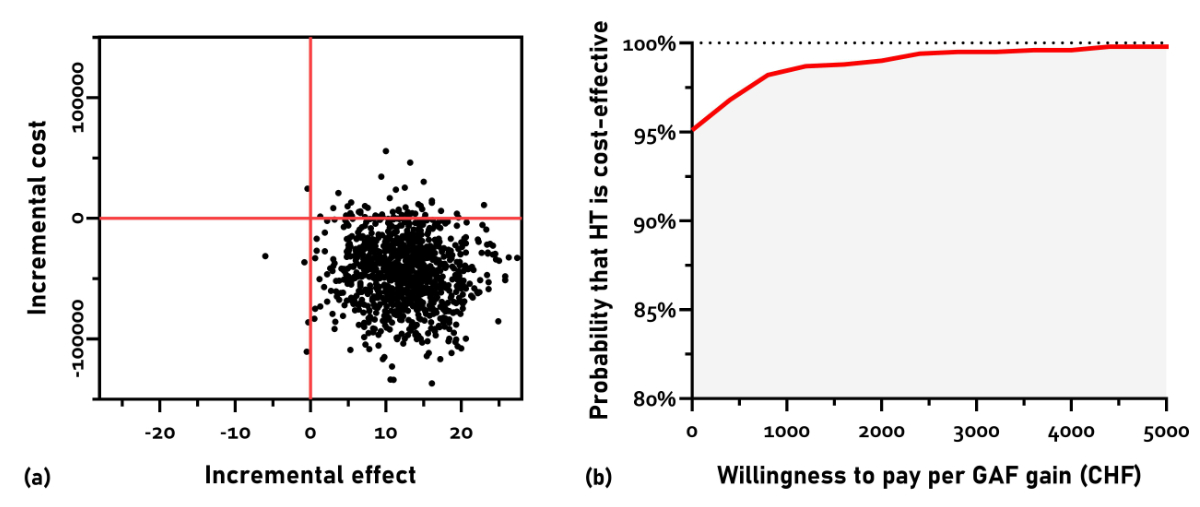
Figure 2(a) Cost-effectiveness plane with 1000 bootstrapped ICER (positive values indicate higher cost and higher effectiveness of home treatment compared to I- TAU) and (b) cost-effectiveness acceptability curve. GAF: global assessment of functioning.
In this study, we compared the clinical and economic outcomes of an intensive home-based treatment approach with inpatient treatment in child and adolescent psychiatry, assessed between 18 and 24 months after discharge. Using probabilistic cost-effectiveness analyses based on a net monetary benefit framework and adjusting for baseline differences, we found that home treatment was cost-effective with over 90% probability. These findings are consistent with previous research [19] reporting that home treatment supplementing a shortened inpatient stay had an 86.1% probability of being cost-effective compared to I-TAU at an 8-month follow-up. Similarly, Ougrin et al. [17] found that their supported discharge service had at least a 58% probability of cost-effectiveness compared to usual care, rising to over 90% at a willingness-to-pay threshold of £5000, six months after admission.
The cost-effectiveness of home treatment in the current study was primarily driven by a) lower index treatment costs and b) favourable functional outcomes at follow-up. This improved long-term stability of treatment effects has previously been proposed as a key advantage of home treatment [e.g. 13, 14], as the close involvement of family, school and peers in therapy allows problems to be observed and addressed in their natural setting, leveraging existing systemic resources that remain available after treatment [15]. In addition, although home treatment did not result in lower follow-up costs, it may have contributed to more efficient use of healthcare resources after discharge. Treating families at home can facilitate better coordination with existing mental health providers, improving the transition to outpatient care or service modifications, if required. Moreover, while readmission is often viewed negatively as an indicator of ongoing problems, seeking professional help when needed can also represent a valuable resource in preventing further deterioration or relapse. However, we observed considerable variability in follow-up costs within the home treatment group, primarily driven by a small number of patients who required post-discharge inpatient care. This pattern suggests that while many patients benefited from home treatment, a subset of individuals needed more intensive treatment. It will be important for future studies to identify subgroups of patients best suited for home treatment, while recognising those who may require the structured environment of I-TAU.
As expected, index treatment costs were lower for home treatment because of the reduced requirement for inpatient infrastructure. To ensure that potential short-term savings during treatment were not offset by increased costs after discharge, we included index and follow-up costs in our cost-effectiveness analysis. Follow-up costs were high in both groups (average total of CHF 98,145 in the home treatment group vs CHF 113,771 in the I-TAU group) and exceeded the cost of the respective index treatment. These figures underline the importance of long-term evaluations in psychiatric care, emphasising sustained stability after discharge, beyond the focus on symptom reduction and short-term stabilisation.
Several limitations must be acknowledged. First, the generalisability of our findings is limited by the non-randomised study design. Although we applied inverse probability weighting to balance baseline differences, selection bias cannot be ruled out. Additionally, the study was monocentric, and cost estimates were based on Swiss healthcare pricing, which limits direct applicability to other healthcare systems. Second, the use of psychosocial functioning as the primary clinical outcome to assess cost-effectiveness restricts conclusions regarding the reduction of psychopathological symptoms. Similar to previous studies [17, 19], we prioritised functioning as a long-term outcome, as maintaining or restoring daily functioning despite some persistent symptoms is often a more realistic treatment goal than complete symptom remission. Third, the relatively small sample size precluded subgroup analyses and reduced the precision of our estimates, as reflected in the wide confidence intervals for cost outcomes. In this context, the unequal participation rates between groups (almost 80% of eligible home treatment patients vs 53% of eligible I-TAU patients) raise concerns about potential non-response bias [44]. While demographic characteristics did not differ between follow-up participants and the original sample, selective dropouts may have led to underrepresentation of individuals with poorer outcomes. As a result, the reported outcomes and cost-effectiveness of I-TAU may be overestimated, potentially biasing group comparisons in favour of I-TAU. Nonetheless, home treatment still emerged as more cost-effective, indicating that its true advantage may be even greater than observed. Fourth, the economic assessment of follow-up treatment relied on self-reported resource use, which is subject to recall bias. This was necessary because post-discharge healthcare data were not available from a single source. Still, self-reported resource use has been reported to be relatively reliable, even in populations with cognitive impairments [45, 46] and there is no reason to suspect systematic bias between treatment conditions. Finally, while the cost data for the index treatment were obtained directly from clinic financial records, the costs of subsequent treatment required certain assumptions, particularly for services not listed in standardised insurance cost catalogues. To minimise estimation errors in calculating these costs, assumptions were based on expert interviews conducted by the Institute of Health Economics and Health Policy at Bern University of Applied Sciences. Nevertheless, the resulting figures represent only an approximation of actual costs, and deviations are likely to occur across providers, regions and service settings. Moreover, it was not always clear which costs can be directly attributed to the mental health episode under study. For example, some of the high costs associated with residential care homes may reflect broader social circumstances rather than psychiatric needs. In cases where children or adolescents are placed in institutional care due to parental mental illness or loss of custody, these costs may be recorded in the mental healthcare trajectory but are not necessarily caused by the index patient’s psychiatric condition. As a result, overall costs for the follow-up period may have been partially overestimated. To improve comparability in future cost evaluations, we developed a publicly available, standardised pricing system for healthcare services (see “Data sharing statement” below).
The present pilot study suggests that intensive home treatment in child and adolescent psychiatry may represent a cost-effective alternative to standard I-TAU, with a high probability of achieving favourable long-term functional outcomes at a lower cost. However, given the non-randomised design and limited sample size, these findings should be interpreted with caution and may only apply to a preselected patient population.
From a healthcare sector perspective, these findings highlight the potential of intensive home-based treatment models to contribute to more efficient use of mental health resources and underscore the need for further evaluation. Future studies with larger samples and randomised designs are required to confirm our results and to identify patient subgroups most likely to benefit from home-based treatment. In addition, economic modelling studies could help estimate the long-term budgetary implications of broader implementation and inform evidence-based policy decisions to maximise clinical benefits for young patients while ensuring efficient use of financial resources.
The deidentified data will be made available by the corresponding author upon reasonable request. The data are not publicly available due to patient privacy considerations and the risk of reidentification within the small pilot sample.
The following material from the study is available online without restrictions on osf.io (doi: https://doi.org/10.17605/OSF.IO/EAM7Z): 1) modified versions of the MRV in English and German; 2) validated cost catalogue, including all units, the respective cost estimates and the corresponding source of financing; 3) preparation protocol for cost data assessed with the MRV (Stata script); 4) analysis code for the cost-effectiveness analysis used in the study with documentation (Stata script).
We wish to thank the clinic staff and AT_HOME team, led by Ulrich Böhnke and Nicole Haymoz, for their diligent data collection and excellent treatment and care of the patients. We would also like to thank Roman Vifian for his help in conducting the interviews and all the patients and their families who volunteered for the new AT_HOME treatment programme and participated in the study.
This study received no funding.
All authors have completed and submitted the International Committee of Medical Journal Editors form for disclosure of potential conflicts of interest. Michael Kaess reports grants from the Swiss National Science Foundation, the Federal Office of Public Health (BAG), Health Promotion Switzerland and the German Federal Ministry of Education and Research (BMBF) for projects unrelated to the submitted work. He also reports participation on an advisory board for a randomised controlled trial conducted at the University of Geneva and holds unpaid leadership positions as Co-President of the Dachverband DBT e.V., President of the Berner Bündnis gegen Depression and member of the executive board of the Institut für Psychotherapie im Kindes- und Jugendalter (IPKJ). All other authors declare no potential competing interests.
1.Polanczyk GV, Salum GA, Sugaya LS, Caye A, Rohde LA. Annual research review: A meta-analysis of the worldwide prevalence of mental disorders in children and adolescents. J Child Psychol Psychiatry. 2015 Mar;56(3):345–65.
2.Kieling C, Buchweitz C, Caye A, Silvani J, Ameis SH, Brunoni AR, et al. Worldwide Prevalence and Disability From Mental Disorders Across Childhood and Adolescence: Evidence From the Global Burden of Disease Study. JAMA Psychiatry. 2024 Apr;81(4):347–56.
3.Thom J, Jonas B, Reitzle L, Mauz E, Hölling H, Schulz M. Trends in the Diagnostic Prevalence of Mental Disorders, 2012-2022—Using Nationwide Outpatient Claims Data for Mental Health Surveillance. Dtsch Arztebl Int. 2024 May;121(11):355–62.
4.Racine N, McArthur BA, Cooke JE, Eirich R, Zhu J, Madigan S. Global Prevalence of Depressive and Anxiety Symptoms in Children and Adolescents During COVID-19: A Meta-analysis. JAMA Pediatr. 2021 Nov;175(11):1142–50.
5.Madigan S, Racine N, Vaillancourt T, Korczak DJ, Hewitt JM, Pador P, et al. Changes in Depression and Anxiety Among Children and Adolescents From Before to During the COVID-19 Pandemic: A Systematic Review and Meta-analysis. JAMA Pediatr. 2023 Jun;177(6):567–81.
6.Wiens K, Bhattarai A, Pedram P, Dores A, Williams J, Bulloch A, et al. A growing need for youth mental health services in Canada: examining trends in youth mental health from 2011 to 2018. Epidemiol Psychiatr Sci. 2020 Apr;29:e115.
7.Federal Statistical Office. (Bundesamt für Statistik, BfS). Behandlung von psychischen Störungen bei jungen Menschen, 2020 und 2021. Neuchâtel; 2023 retrieved 2023 Feb 14. Available from: https://www.bfs.admin.ch/bfs/de/home/aktuell/neue-veroeffentlichungen.html
8.Knapp M, Wong G. Economics and mental health: the current scenario. World Psychiatry. 2020 Feb;19(1):3–14.
9.Schuler D, Tuch A, Sturny I, Peter C. Psychische Gesundheit. Kennzahlen 2021. Neuchâtel: Schweizerisches Gesundheitsobservatorium; 2023 retrieved 2025 Mar 7. Available from: https://www.obsan.admin.ch/de/publikationen/2023-psychische-gesundheit
10.Mohajer-Bastami A, Moin S, Sweetman B, Ahmed AR, Head M, Gelber E, et al. A comparison of the United Kingdom’s and Switzerland’s healthcare financing systems for achieving equity and efficiency goals. Swiss Med Wkly. 2025 Mar;155(3):4101.
11.Federal Office of Public Health. (Bundesamt für Gesundheit, BAG) (BAG). Runder Tisch Kostendämpfung: Massnahmenpapier. Bern; 2025 retrieved 2025 Nov 5. Available from: https://www.bag.admin.ch/de/runder-tisch-kostendaempfung
12.McGorry PD, Mei C, Dalal N, Alvarez-Jimenez M, Blakemore SJ, Browne V, et al. The Lancet Psychiatry Commission on youth mental health. Lancet Psychiatry. 2024 Sep;11(9):731–74.
13.Schmidt MH, Lay B, Göpel C, Naab S, Blanz B. Home treatment for children and adolescents with psychiatric disorders. Eur Child Adolesc Psychiatry. 2006 Aug;15(5):265–76.
14.Woolston JL, Berkowitz SJ, Schaefer MC, Adnopoz JA. Intensive, integrated, in-home psychiatric services. The catalyst to enhancing outpatient intervention. Child Adolesc Psychiatr Clin N Am. 1998 Jul;7(3):615–33.
15. Wasik BH, Bryant DM. Home visiting: Procedures for helping families. 2nd ed. Thousand Oaks (Calif): SAGE Publications; 2001. doi: https://doi.org/10.4135/9781452225616
16.Graf D, Sigrist C, Boege I, Cavelti M, Koenig J, Kaess M. Effectiveness of home treatment in children and adolescents with psychiatric disorders-systematic review and meta-analysis. BMC Med. 2024 Jun;22(1):241.
17.Ougrin D, Corrigall R, Poole J, Zundel T, Sarhane M, Slater V, et al. Comparison of effectiveness and cost-effectiveness of an intensive community supported discharge service versus treatment as usual for adolescents with psychiatric emergencies: a randomised controlled trial. Lancet Psychiatry. 2018 Jun;5(6):477–85. doi: https://doi.org/10.1016/S2215-0366(18)30129-9
18.Sheidow AJ, Bradford WD, Henggeler SW, Rowland MD, Halliday-Boykins C, Schoenwald SK, et al. Treatment costs for youths receiving multisystemic therapy or hospitalization after a psychiatric crisis. Psychiatr Serv. 2004 May;55(5):548–54.
19.Boege I, Corpus N, Schepker R, Kilian R, Fegert JM. Cost-effectiveness of intensive home treatment enhanced by inpatient treatment elements in child and adolescent psychiatry in Germany: A randomised trial. Eur Psychiatry. 2015 Jul;30(5):583–9.
20.Graf D, Lerch S, Böhnke U, Reichl C, Kaess M. Comparison of the long-term outcome of home vs. inpatient treatment: 18-24 months follow-up of a non-randomized controlled trial. Eur Child Adolesc Psychiatry. 2025 Sep;34(9):2697–705.
21.Husereau D, Drummond M, Augustovski F, de Bekker-Grob E, Briggs AH, Carswell C, et al. Consolidated Health Economic Evaluation Reporting Standards 2022 (CHEERS 2022) statement: updated reporting guidance for health economic evaluations. MDM Policy Pract. 2022 Jan;7(1):23814683211061097.
22.Gehrig M, Kaess MA. _HOME – Aufsuchende Therapie zu Hause, Originell, Mobil, Effektiv. Psychiatrische Pflege. 2020;5(4):21–7.
23.Graf D, Lerch S, Böhnke U, Reichl C, Kindler J, Koenig J, et al. Treatment outcome of an intensive psychiatric home treatment for children and adolescents: a non-randomized controlled pilot evaluation. Eur Child Adolesc Psychiatry. 2023 Apr;32(4):685–95.
24.Sittimart M, Rattanavipapong W, Mirelman AJ, Hung TM, Dabak S, Downey LE, et al. An overview of the perspectives used in health economic evaluations. Cost Eff Resour Alloc. 2024 May;22(1):41.
25.De Pietro C, Camenzind P, Sturny I, Crivelli L, Edwards-Garavoglia S, Spranger A, et al. Switzerland: Health System Review [xix.]. Health Syst Transit. 2015;17(4):1–288.
26. Salize HJ, Kilian R. Gesundheitsökonomie in der Psychiatrie: Konzepte, Methoden, Analysen. Stuttgart, Deutschland: Kohlhammer Verlag; 2010. doi: https://doi.org/10.17433/978-3-17-026606-3
27.Voß E, Salize HJ. Health care utilization and cost-effectiveness analyses in prevention studies in the mental health care field. Ment Health Prev. 2016;4(1):19–23. doi: https://doi.org/10.1016/j.mhp.2016.01.004
28.Federal Institute for Drugs and Medical Devices. (Bundesinstitut für Arzneimittel und Medizinprodukte, BfArM). Anatomisch-therapeutisch-chemische Klassifikation mit Tagesdosen für den deutschen Arzneimittelmarkt: Amtliche Fassung des ATC-Index mit DDD-Angaben für Deutschland im Jahr 2024; 2024 retrieved 2024 Oct 16. Available from: https://www.bfarm.de/SharedDocs/Downloads/DE/Kodiersysteme/ATC/atc-ddd-amtlich-2024.html?nn=732114&cms_dlConfirm=true&cms_calledFromDoc=732114
29.Federal Office of Public Health. (Bundesamt für Gesundheit, BAG) (BAG). Spezialitätenliste; 2025 retrieved 2025 Jul 27. Available from: www.spezialitätenliste.ch.
30. American Psychiatric Association. Diagnostic and Statistical Manual of Mental Disorders. 4th ed. Washington (DC); 1994.
31.Hall RC. Global assessment of functioning. A modified scale. Psychosomatics. 1995;36(3):267–75.
32.Thompson SG, Barber JA. How should cost data in pragmatic randomised trials be analysed? BMJ. 2000 Apr;320(7243):1197–200.
33.Weinstein MC, Stason WB. Foundations of cost-effectiveness analysis for health and medical practices. N Engl J Med. 1977 Mar;296(13):716–21.
34.Puschner B, Kraft S. Kosteneffektivität ambulanter Psychotherapie. Psychotherapeut. 2008;53(4):268–76.
35.Willan AR, Briggs AH, Hoch JS. Regression methods for covariate adjustment and subgroup analysis for non-censored cost-effectiveness data. Health Econ. 2004 May;13(5):461–75.
36.Austin PC, Steyerberg EW. The number of subjects per variable required in linear regression analyses. J Clin Epidemiol. 2015 Jun;68(6):627–36.
37.Kuss O, Blettner M, Börgermann J. Propensity Score: an Alternative Method of Analyzing Treatment Effects. Dtsch Arztebl Int. 2016 Sep;113(35-36):597–603.
38.Briggs A, Fenn P. Confidence intervals or surfaces? Uncertainty on the cost-effectiveness plane. Health Econ. 1998 Dec;7(8):723–40. doi: https://doi.org/10.1002/(SICI)1099-1050(199812)7:8<723::AID-HEC392>3.0.CO;2-O
39.Barber JA, Thompson SG. Analysis of cost data in randomized trials: an application of the non-parametric bootstrap. Stat Med. 2000 Dec;19(23):3219–36. doi: https://doi.org/10.1002/1097-0258(20001215)19:23<3219::AID-SIM623>3.0.CO;2-P
40. Fenwick E, Byford S. A guide to cost-effectiveness acceptability curves. Br J Psychiatry. 2005 Aug;187(2):106–8.
41. Kilian R. Gesundheitsökonomische Evaluation in der psychiatrischen Versorgungsforschung. Pravent Gesundhford. 2008;3(3):135–44.
42.Hoch JS, Briggs AH, Willan AR. Something old, something new, something borrowed, something blue: a framework for the marriage of health econometrics and cost-effectiveness analysis. Health Econ. 2002 Jul;11(5):415–30.
43.Hoch JS, Smith MW. A guide to economic evaluation: methods for cost-effectiveness analysis of person-level data. J Trauma Stress. 2006 Dec;19(6):787–97.
44.Johnson TP, Wislar JS. Response rates and nonresponse errors in surveys. JAMA. 2012 May;307(17):1805–6.
45.Goldberg RW, Seybolt DC, Lehman A. Reliable self-report of health service use by individuals with serious mental illness. Psychiatr Serv. 2002 Jul;53(7):879–81.
46.Calsyn RJ, Allen G, Morse GA, Smith R, Tempelhoff B. Can You Trust Self-Report Data Provided By Homeless Mentally Ill Individuals? Eval Rev. 1993;17(3):353–66.