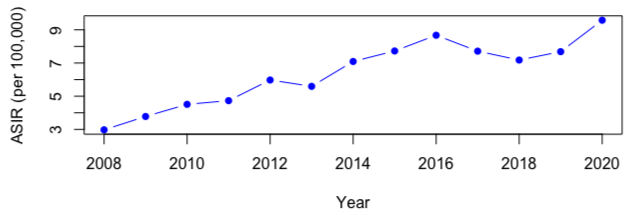
Figure 1Age-standardised incidence rate (ASIR) for RCC during 2008–2020.
DOI: https://doi.org/https://doi.org/10.57187/4878
Advances in and increasing availability of imaging technologies, such as ultrasound (US) and computed tomography (CT), have significantly increased the detection of incidental kidney tumours [1, 2]. Furthermore, the global rise in obesity and hypertension, along with the ageing population, has led to a steady increase in renal cell cancer (RCC) incidence worldwide over the past decades [2, 3]. Hence, effective, evidence-based management of renal masses is essential.
Surgical resection in the form of elective partial nephrectomy provides favourable long-term outcomes for small, localised RCC, preserving renal parenchyma without affecting survival rates [4]. Partial nephrectomy offers benefits that are critical for preserving long-term renal function [5]. Since approximately the start of the new millennium, international guidelines have recommended partial nephrectomy as the standard of care in patients with cT1 tumours. For cT2 tumours, partial nephrectomy is advised whenever technically feasible, as it has been associated with comparable oncologic outcomes to radical nephrectomy in surgically resectable masses [6–9]. This supports the shift towards less invasive surgeries aimed at preserving renal function while safely managing localised RCC from an oncological perspective.
In addition to preserving more renal parenchyma, the use of less invasive approaches and significant advancements in surgical techniques have reshaped the landscape of RCC treatment [10]. Minimally invasive techniques, such as laparoscopic and robotic-assisted surgery, are associated with reduced perioperative morbidity, shorter hospital stays, faster recovery times, and equivalent oncological outcomes compared with open surgeries [11, 12]. Robot-assisted laparoscopic partial nephrectomy has similar oncologic and functional outcomes to open partial nephrectomy, along with improved perioperative outcomes and fewer complications compared with laparoscopic approaches, especially in patients with complex renal tumours [13].
This study aimed to analyse developments in renal cancer surgery over the past decade in Switzerland using datasets provided by the National Cancer Registry (NACR) dataset and the Swiss Federal Statistical Office (FSO), with a focus on the surgical method (partial vs radical nephrectomy) and the choice of surgical approach (laparoscopic vs open). This retrospective analysis aims to provide insights into the surgical treatment of RCC and to identify areas where practice may deviate from established guidelines, potentially guiding future improvements in RCC management in Switzerland.
This retrospective study analysed all cases of patients aged over 18 years who were diagnosed with kidney tumours and registered in the cantonal cancer registries submitted to NACR for inclusion in the national cancer registry dataset, covering the period between January 2008 and December 2020. All patients who underwent surgical treatment with either partial or radical nephrectomy were included (for ICD-10 and CHOP codes, please see tables S1 and S2 in the appendix). Patients were excluded if they lacked essential data such as tumour staging or treatment type, as were patients receiving rare (n <3) or unconventional treatment modalities (i.e. percutaneous ablation) other than partial or radical nephrectomy (n = 84, 1.3%). A selection chart illustrating the inclusion and exclusion criteria can be found in tables S9 and S10 in the appendix. These criteria ensured a consistent and comprehensive dataset focusing on standard surgical treatments in patients with kidney tumours.
To obtain details on the surgical approach, a dataset from the Swiss Federal Statistical Office (FSO) covering the period from January 2008 to December 2018 was used. At the time of retrieval, data were only available up to 2018. These datasets (FSO dataset names: H.1.5. – H.1.10) provided aggregated data by year on the proportion of laparoscopic versus open surgeries, as well as mortality rates. Furthermore, the datasets included variables such as gender, region (7 major regions of Switzerland according to the FSO), year of intervention, age category (in 5-year intervals), diagnosis (ICD-10 codes: C64 and D41), cTNM, pTNM, type of treatment (partial or radical nephrectomy), and treatment intention (curative or palliative).
It is important to note that the NACR and FSO datasets were generated and analysed independently. The NACR dataset focuses on patient diagnosis and treatment details, while the FSO dataset provides specific information on surgical approach and outcomes. As the primary outcome, the absolute and relative increase in partial nephrectomies versus radical nephrectomy according to T-stage was defined. The surgical technique (laparoscopic vs open) was specified as the secondary outcome. The study was conducted as an exploratory analysis describing operative trends in the surgical treatment of kidney tumours to evaluate adherence to international guidelines.
The trends in surgical methods (partial vs radical nephrectomy) and approaches used (laparoscopic vs open) were analysed over the 12-year observation period. In the NACR dataset, treatments were classified according to CHOP codes [14]. CHOP codes indicating the radical nephrectomy surgical method were aggregated, and the same approach was used for partial nephrectomy. Additionally, the medical hospital statistics from the FSO allowed the analysis of trends in surgical approaches (laparoscopic vs open). Potential associations between treatment type and variables such as tumour stage, patient gender, age category, and region were explored separately in each dataset. The aim was to enable a comprehensive analysis of treatments and changes in treatment preferences over time.
Descriptive statistics were used to summarise the clinical characteristics of the patient cohort, stratifying data by treatment type and other variables, such as age categories, gender, region, year of intervention, T-stage, and mortality rates. Covariables were selected based on their clinical relevance and their potential influence on surgical decision-making, as well as to account for temporal and regional variation in treatment practice. Graphical visualisations were plotted to illustrate trends in partial versus radical nephrectomy ratios over time, as well as changes in the choice of laparoscopic versus open surgical approaches. Univariable logistic regression models were used to calculate the odds of receiving partial nephrectomy by increasing T-stage. Furthermore, univariable and multivariable logistic regression models were employed to analyse the data, assessing the association between the surgical method (binary outcome of either partial or radical nephrectomy) and the predictor variables, such as age category (0–49, 50–54, 55–59, 60–64, 65–69, 70–74, 75–79, 80–84, and ≥85 years), pT-stage, gender, region, and treatment year. The models were fitted using a logit link function. P-values below the 0.05 level were considered statistically significant. Odds ratios (OR) were calculated and are presented with 95% confidence intervals (CIs).
The age-standardised incidence rate (ASIR) was calculated for each year of observation using the direct standardisation method and the 2013 European standard population [15]. This standardised measure considers differences in the age distribution of the population, allowing for comparison over a longer period, regardless of demographic changes.
Data entry, processing, and statistical analysis were performed using R Studio (Version 2023.09.1+494. 2023) [16].
Ethical approval for this study was obtained from the local ethics committee (Kantonale Ethikkommission Kanton Zürich, BASEC-Nr. Req-2021-00479). Throughout the observation period, cancer registration in Switzerland was regulated at a regional level, and reporting to the NACR was optional until 2019. Previously, only cantons with a registry were able to report data with 100% coverage to the NACR. Thus, before 2020, the national cancer registry dataset did not cover the entire country of Switzerland, and information on treatment and other variables may have been incomplete.
No prospective study protocol was prepared for this retrospective, exploratory analysis. The study was conducted using pre-existing datasets (NACR and FSO), and all analyses were performed post hoc. Consequently, the study was not registered in any public registry, and there were no protocol deviations to report.
From 2008 to 2020, a total of 10,810 patients with kidney tumours were recorded in the NACR database. All 10,810 patients underwent a form of therapy. However, information on the type of therapy and tumour staging was only available for 6,565 patients. Therefore, only these patients (60.7%) were included in the final analysis, after excluding cases with missing data and rare or unconventional treatment modalities. The FSO dataset included data from 2008 to 2018 for 10,700 patients. It had already been filtered for missing values, ensuring that all available data on laparoscopic and open procedures could be included in the analysis. The reported figures increased in both datasets as the years progressed. Patient characteristics of the study population from the national cancer registry dataset during the observation period, including the total number of interventions, the most common age category of onset, gender, T–stage distribution, and region, are presented in table 1.
Table 1Patient characteristics of the study population from the NACR dataset.
| Patient characteristics | Partial nephrectomy n (%) | Radical nephrectomy n (%) | |
| Age | 0–44 | 210 (54.5) | 175 (45.5) |
| 45–49 | 169 (48.3) | 181 (51.7) | |
| 50–54 | 283 (49.4) | 290 (50.6) | |
| 55–59 | 356 (49.6) | 362 (50.4) | |
| 60–64 | 398 (42.7) | 533 (57.3) | |
| 65–69 | 504 (46.6) | 577 (53.4) | |
| 70–74 | 419 (40.6) | 613 (59.4) | |
| 75–79 | 333 (38.0) | 543 (62.0) | |
| 80–84 | 124 (26.0) | 353 (74.0) | |
| 85+ | 25 (17.6) | 117 (82.4) | |
| Gender | Female | 770 (40.6) | 1126 (59.4) |
| Male | 2051 (43.9) | 2618 (56.1) | |
| Year of intervention | 2008 | 48 (23.2) | 159 (76.8) |
| 2009 | 54 (20.4) | 211 (79.6) | |
| 2010 | 95 (29.2) | 230 (79.8) | |
| 2011 | 122 (35.4) | 223 (64.6) | |
| 2012 | 166 (37.6) | 275 (62.4) | |
| 2013 | 159 (37.2) | 268 (62.8) | |
| 2014 | 234 (42.5) | 316 (57.5) | |
| 2015 | 278 (45.4) | 334 (52.6) | |
| 2016 | 331 (47.6) | 364 (52.4) | |
| 2017 | 314 (49.9) | 315 (50.1) | |
| 2018 | 287 (48.0) | 311 (52.0) | |
| 2019 | 340 (52.2) | 311 (47.8) | |
| 2020 | 292 (47.9) | 427 (52.1) | |
| Pathological T-stage | pT1a-pT1b | 2457 (59.6) | 1667 (40.4) |
| pT2a-pT2b | 96 (15.2) | 536 (84.8) | |
| pT3a-pT3c | 203 (12.7) | 1396 (87.3) | |
| pT4 | 2 (3.1) | 62 (96.9) | |
| notknown | 23 (39.0) | 36 (61.0) | |
| Region | LakeGenevaregion | 446 (43.4) | 582 (56.6) |
| Midlands | 549 (45.8) | 650 (54.2) | |
| NorthwesternSwitzerland | 240 (43.8) | 312 (56.2) | |
| EasternSwitzerland | 527 (43.1) | 696 (56.9) | |
| Ticino | 149 (25.0) | 448 (75.0) | |
| CentralSwitzerland | 232 (49.5) | 137 (50.5) | |
| Zurich | 678 (45.3) | 819 (54.7) | |
The ASIR of kidney tumours increased steadily from 2.97 per 100,000 residents in 2008 to 9.58 per 100,000 residents in 2020. Therefore, our calculations are in line with the ASIR of 9.7 reported by the Global Cancer Observatory for the year 2022 [17]. This trend reflects, with some fluctuations, a more than threefold growth in incidence during the observation period (figure 1).
Figure 1Age-standardised incidence rate (ASIR) for RCC during 2008–2020.
The largest group was patients with surgically treated kidney tumours aged 65–69 years (n = 1,081). During the observation period, a total of 2,821 (43%) partial nephrectomy and 3,744 (57%) radical nephrectomy procedures were documented. Figures 2a and 2b illustrate the primary outcome, showing the increasing proportion of partial nephrectomies compared with radical nephrectomies performed for kidney tumours from 2008 to 2020, stratified by all T-stages and the pT1 stage. The absolute number of documented surgical interventions in patients with kidney tumours increased fourfold, from n = 203 in 2008 to n = 814 in 2020. The proportion of partial nephrectomies compared with radical nephrectomies increased markedly over the observation period (figure 2a). In patients with pT1 tumours, the increase in partial nephrectomies compared with radical nephrectomies was even more pronounced. In 2011, partial nephrectomy exceeded radical nephrectomy in patients with pT1 tumours for the first time, and the gap increased each year thereafter (figure 2b). Univariable regression analysis revealed the treatment year as a significant predictor of receiving partial nephrectomy among patients with pT1 tumours (OR = 1.09, 95% CI: 1.075 to 1.11, p <0.001). This association persisted after adjustment for age and gender, with no relevant change in effect size (table S3 in the appendix). Regarding the secondary outcome measure, based on the 10,700 nephrectomy procedures in the FSO dataset, most radical nephrectomy procedures were performed via an open approach, accounting for 53.7% of surgeries (n = 5,748). Laparoscopic radical nephrectomies only accounted for 13.2% (n = 1,410). Partial nephrectomy using an open approach accounted for 21.4% (n = 2,288), while 11.7% (n = 1,254) were performed laparoscopically. Figure 4 reflects the overall distribution of surgical approaches among all procedures included in the dataset from 2008 to 2018.
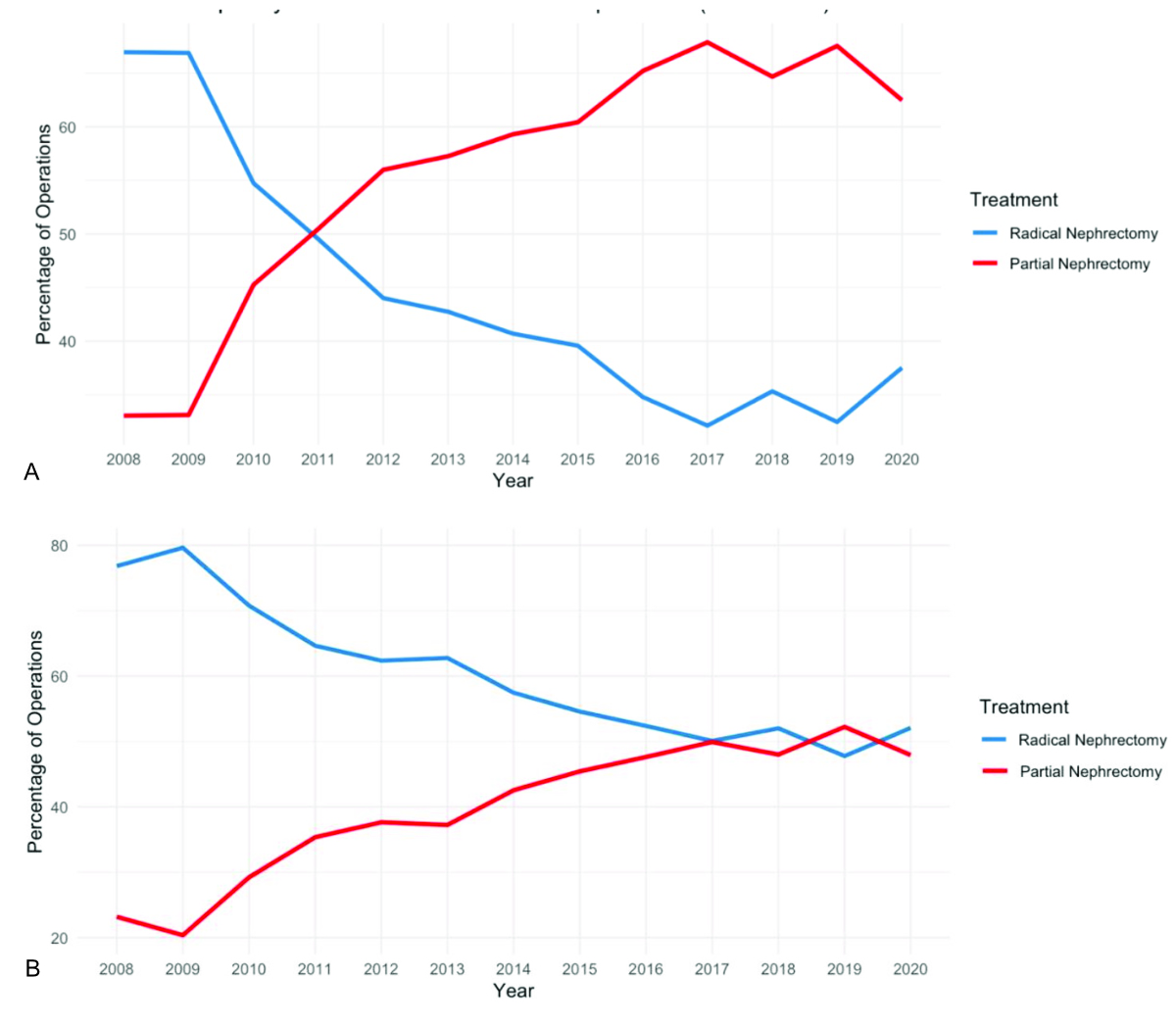
Figure 2A: Proportion of partial nephrectomies versus radical nephrectomy across all T-stages (2008–2020). B: Proportion of partial nephrectomies versus radical nephrectomy in pT1 tumours (2008–2020).
T-stage had a distinct influence on the choice of procedure. Among patients with pT1 tumours, a total of 2,457 partial nephrectomies (59.6%) were performed, compared with 1,667 radical nephrectomies (40.4%), whereas patients with pT2 and pT3 tumours underwent radical nephrectomy in most cases (n = 1,994, 86.9%; table 1). Results from univariable regression analysis demonstrate that with increasing T-stage, the likelihood of receiving partial nephrectomies decreases. Using pT1 as the reference group, the odds of receiving partial nephrectomies were significantly lower for higher T-stages: pT1 versus pT2 (OR: 0.12, 95% CI: 0.10 to 0.15, p <0.001), versus pT3 (OR: 0.10, 95% CI: 0.08 to 0.12, p <0.001), and versus pT4 (OR: 0.02, 95% CI: 0.01 to 0.09, p <0.001). These associations remained essentially unchanged after adjustment for age and gender (all p <0.001, see table A4 in the appendix).Similarly, age was also a relevant factor, as partial nephrectomies was used more frequently in younger patients. The difference became more distinct with increasing age, as older patients had a significantly lower probability of undergoing partial nephrectomies. In the youngest age subgroup (0–44 years), partial nephrectomies was performed in 54.5% of patients, whereas in the oldest age subgroup (85+ years), partial nephrectomies was performed in only 0.2% of cases. Furthermore, the age of the patients was correlated with T-stage: in the 0–44 age category, 71% of patients had a pT1 tumour. This proportion continuously decreased in older patients, reaching 45% in the 85+ age category. If a curative operation was intended, based on the tumour board decision, partial nephrectomies was performed in 47.7% of cases. By contrast, cytoreductive nephrectomy was performed in only 12.2% of palliative cases.
The 7 regions studied correspond to the NUTS-2 (Nomenclature of Territorial Units for Statistics) level units defined by Eurostat, the statistical office of the European Union: Lake Geneva region: Waadt, Wallis, and Genève; Midlands: Bern, Freiburg, Solothurn, Neuenburg, and Jura; Northwestern Switzerland: Basel-Stadt, Basel-Landschaft, and Aargau; Zurich: Zürich; Eastern Switzerland: Glarus, Schaffhausen, Appenzell A.Rh., Appenzell I.Rh., St. Gallen, Graubünden, and Thurgau; Central Switzerland: Luzern, Uri, Schwyz, Obwalden, Nidwalden, and Zug; and Ticino: Tessin.
Over the 12-year observation period, our analysis revealed that existing regional differences influenced the likelihood of receiving partial nephrectomies. Multivariable regression analysis adjusted for age and tumour stage demonstrated that in the region of Ticino, patients had a lower probability of receiving partial nephrectomies (OR: 0.36, 95% CI: 0.29 to 0.45, p <0.001), whereas patients in Central Switzerland had a higher probability of undergoing partial nephrectomies, even after adjusting for age and T-stage (OR: 1.7, 95% CI: 1.37 to 2.12, p <0.001). In both cases, the reference group comprised all other regions combined (i.e. the six remaining regions of Switzerland); this approach was applied consistently for all OR analyses comparing individual regions (see table S5 in the appendix). However, the significant difference did not account for other regions in Switzerland, such as the Midlands, Northwestern or Eastern Switzerland, or the Zurich and Lake Geneva regions. Overall, the total number of partial nephrectomies increased notably from 2008 to 2020 in all regions of Switzerland. The Zurich region exhibited the largest increase, from n = 4 documented cases in 2008 to n = 88 in 2020. Similarly, the Lake Geneva region also exhibited a steady rise in partial nephrectomies numbers, from n = 16 in 2008 to n = 73 cases in 2020, respectively. The Midlands peaked at n = 91 cases in 2016 and thereafter stabilised at n = 82 in 2020. Comparatively, Ticino showed a minimal growth, from n = 3 to n = 15 cases during our observational period, including the lowest proportion of partial nephrectomies (25%) compared with all other regions, corresponding to the NUTS-2 level units combined (45.4%) (figure 3). Northwestern and Central Switzerland started with the lowest number of partial nephrectomies cases, with n = 0 and n = 2 cases in 2008, respectively, which increased to n = 69 and n = 32 cases, respectively, by 2020. Interestingly, Eastern Switzerland peaked at n = 69 cases in 2019 and then declined to n = 34 in 2020. In 2020, the Zurich and Lake Geneva regions, as well as the Midlands, emerged as the leading regions for partial nephrectomies procedures performed, collectively accounting for n = 243 cases (52% of the total).
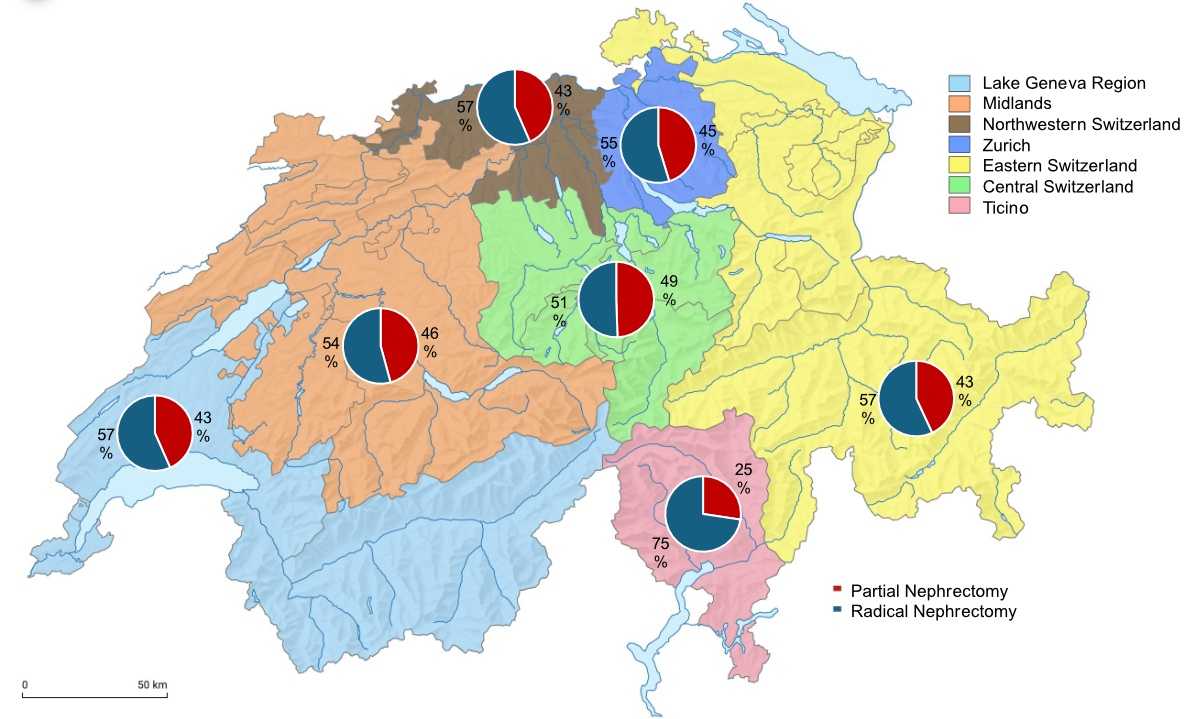
Figure 3Geographical distribution of the partial nephrectomies versus radical nephrectomy ratio across regions in Switzerland (2008–2020). Map source: Swiss Federal Statistical Office (FSO); diagram elements added by the authors.
Overall, male patients had a slightly higher proportion of pT1 tumours at the time of treatment compared with female patients (64.5% vs 61.7%). Accordingly, the proportion of partial nephrectomies performed was also slightly higher in the male cohort (44.0% vs 41.1%). Univariable logistic regression revealed a statistically significant gender difference in favour of male patients undergoing partial nephrectomy (OR: 1.15, 95% CI: 1.03 to 1.28, p = 0.014, reference = female). After adjusting for age, region, and tumour stage, the previously observed association was no longer significant (OR: 1.10, 95% CI: 0.97 to 1.24, p = 0.15, reference = female) (see table S6 in the appendix).
To explore potential regional disparities in the use of partial nephrectomy, a multivariable logistic regression analysis stratified by gender was performed. In Ticino, the odds of receiving partial nephrectomy were significantly lower in both women (OR 0.31, 95% CI: 0.21–0.46, p <0.001) and men (OR 0.45, 95% CI: 0.36–0.56, p <0.001), compared with all other regions (table S7 in the appendix). In Central Switzerland, male patients exhibited a significantly higher OR of undergoing partial nephrectomy (OR 1.36, 95% CI: 1.09–1.71, p = 0.007), whereas no significant difference was observed among female patients (OR 1.26, 95% CI: 0.89–1.77, p = 0.19). For the remaining regions (Midlands, Northwestern Switzerland, Eastern Switzerland, and Zurich), no statistically significant associations were observed between region and partial nephrectomy in either gender.
Along with the increase in partial nephrectomy over time, we observed a steady adoption of new surgical approaches, as reflected in the rising numbers of laparoscopic procedures. The proportion of laparoscopic procedures increased continuously over the observation period (figure 4). Overall, mortality was relatively low for both partial nephrectomy (mean 0.65%, range: 0.0–1.42%) and radical nephrectomy (mean 1.34%, range: 0.44–2.45%) procedures, regardless of the surgical method used.
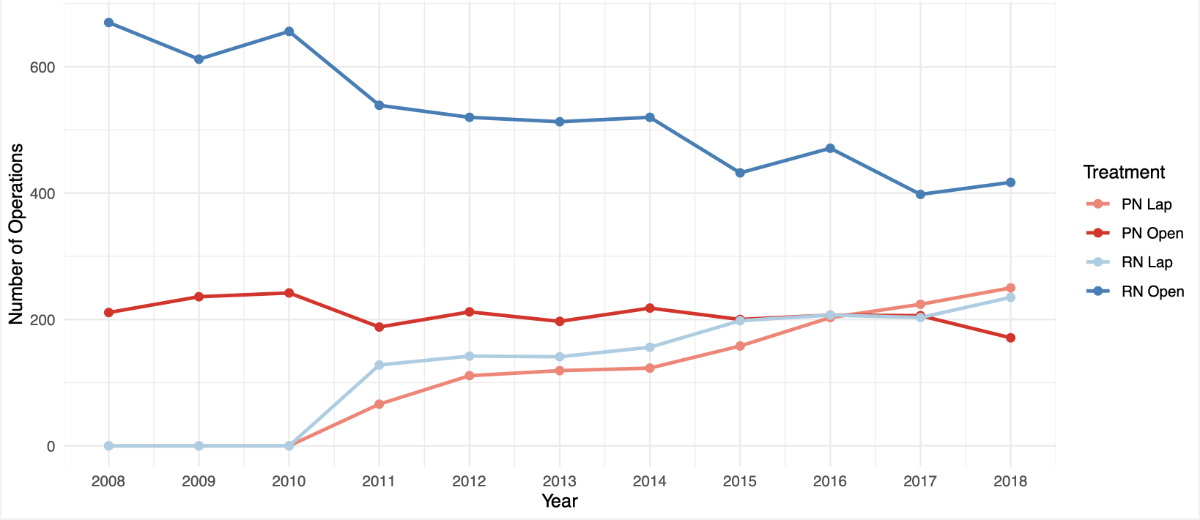
Figure 4Surgical approach, categorised as laparoscopic partial nephrectomy or open partial nephrectomy versus laparoscopic radical nephrectomy or open radical nephrectomy (2008–2018).
Our study presents a comprehensive analysis of the development in surgical treatments for kidney tumours in Switzerland over a 13-year period. During the study period, international guidelines underwent significant changes, recommending nephron-sparing and minimally invasive surgery as the preferred treatment modalities not only for T1 tumours but whenever this is technically feasible. The data indicate that Swiss urologists are largely following international guidelines, with a substantial change in the operative management of RCC over the last decade. In patients with pT1 tumours, partial nephrectomy clearly became the preferred treatment option during the observed period. A shift, albeit a small one, towards partial nephrectomy was also seen in higher T-stages. Despite the increasing use of minimally invasive procedures, we found some differences among the different regions in Switzerland. Furthermore, our findings highlight several insights into the landscape of kidney tumour management, with particular emphasis on the increasing adoption of partial nephrectomies and laparoscopic techniques over the years, especially in patients with T1 tumours. Overall, the chance of receiving partial nephrectomy increased by 7.9% with each additional year, according to the analysis of the provided dataset. This trend aligns with the recommendations of international guidelines.
Interestingly, our data revealed a marked rise in the ASIR of kidney tumours during the observation period. The ASIR increased more than threefold over the observation period (figure 1). This trend reflects not only an increasing number of kidney tumour diagnoses but may also point towards improvements in early detection through more widespread use of imaging techniques, such as sonography, CT, and MRI, as well as the expansion of national cancer registration efforts [1]. The steady increase in ASIR underscores the growing relevance of RCC as a public health concern and reinforces the importance of adapting surgical practice to meet the needs of a changing epidemiological landscape. Nevertheless, part of the observed increase may also stem from enhanced reporting completeness, as cancer registration coverage in Switzerland rose from approximately 60% in 2008 to nearly 100% by 2020.
The shift towards partial nephrectomy is likely driven by its well-documented benefits in preserving renal function and achieving comparable oncological outcomes to radical nephrectomy [18]. However, radical nephrectomy still plays a role in selected patients, especially in conditions in which nephron-sparing surgery is neither indicated nor feasible [19]. International data reveal varying degrees of adherence to these guidelines. A study published in 2016 by Banegas and colleagues identified a significant shift in the United States towards a greater use of nephron-sparing and minimally invasive surgical approaches for RCC treatment [20]. Particularly in patients with pT1 stage, the rate of partial nephrectomies rose from 43% in 2004 to 55% in 2009 (p ≤ 0.05), while laparoscopic partial nephrectomies increased from 8% to 15% during the same period. Following this, the rate of partial nephrectomies stabilised at around this proportion. In 2014, 57% of T1 tumours in the United States were managed with nephron-sparing surgery [21]. Other studies from overseas as well as in other European countries have reported similar trends towards an increasing use of partial nephrectomy compared with radical nephrectomy, particularly in tertiary care centres [22–25]. However, disparities exist, with some countries showing slower adoption rates, possibly due to differences in healthcare infrastructure, surgical expertise, and socioeconomic factors [23, 26]. Regional differences in the choice of partial nephrectomy were also found in a study conducted by Pyrgidis et al. in Germany, where patients in larger hospitals were more likely to undergo minimally invasive operative techniques [27]. Our findings of regional differences within Switzerland mirror these international trends, suggesting that efforts to standardise RCC management are already in practice, but with room for improvement. For example, the disparities in some regions may be attributed to the size of institutions, the availability of surgical expertise, and access to advanced surgical technologies such as robot-assisted procedures.Patel et al. observed an increasing adoption of robot-assisted partial nephrectomy in the U.S. between 2008 and 2011, reaching 14% in university hospitals and 10% in non-university hospitals (p = 0.03). This reference suggests that robot-assisted laparoscopic technology may help surgeons in different clinical settings to perform nephron-sparing surgery, irrespective of T-stage [24]. Addressing these discrepancies is crucial to ensure equitable healthcare delivery across the country.
Age and tumour stage emerged as significant factors influencing the choice of surgical method. This likely reflects the greater importance of long-term renal function preservation in younger patient cohorts with longer life expectancies, for whom higher perioperative risks are accepted; by contrast, in older patients, comorbidities, prior surgeries, and competing risks often shift management towards active surveillance or ablative strategies. Similar age-related treatment patterns favouring partial nephrectomy in younger patients have been reported in published research, even among patients with a comparable tumour stage (pT1) [28, 29]. According to our analysis, younger patients were considerably more likely to undergo partial nephrectomy, whereas its use declined sharply with increasing age. Accordingly, the increasing use of active surveillance in small renal masses, especially in elderly patients, must be accounted for [30]. It is important to note that T-stage played a pivotal role in the choice of surgical method, even after adjusting for age and gender. Furthermore, younger patients tended to be diagnosed with lower T-stages and were thus more likely to be treated with partial nephrectomy. A slightly higher use of partial nephrectomy was observed in male patients, which appeared to be largely explained by differences in tumour stage at presentation.
Finally, one notable trend found in our study was the increasing use of the laparoscopic approach, with the proportion of laparoscopic procedures increasing from 21.1% in 2011 to 45.2% in 2018. The published literature demonstrates that this shift is attributed to technological changes, with the broad availability of robotic-assisted techniques [24], benefiting patients through lower intraoperative blood loss, a shorter length of hospital stay, and a lower overall complication risk [31, 32]. These advantages make minimally invasive methods an appealing option for both patients and surgeons [33]. In terms of safety, our study demonstrated low intraoperative and in-hospital mortality rates for both partial nephrectomy (0.65%) and radical nephrectomy (1.34%), comparable to published international data [34]. These findings reinforce the feasibility and safety of both surgical approaches in the surgical management of kidney tumours.
Our study has strengths and limitations. The large size of our study population and population-based source of data is a clear advantage. However, the retrospective nature of the study and the use of two different datasets with a substantial number of missing data are potential sources of bias. Of the total of 10,810 patients in the national cancer registry dataset, only 6,565 (60.7%) could be included in the statistical analysis. This was mainly due to incomplete reporting of T-stage and/or treatment. Additionally, the observed population changed over time, with more registries contributing to better documentation and an improved dataset. This may have led to a higher number of registered patients with RCC; therefore, the increasing number of surgical procedures should be interpreted with caution, as well as the influence of surgical and technical progress over time, which may favour partial nephrectomy. However, diagnostic accuracy also improved with better ultrasound and more incidental findings due to the widespread use of CT and MRI scans. Furthermore, missing data and a lack of coding practices may have introduced bias, as we could not estimate whether patients received any or a different surgical treatment. This also had an impact on the calculated incidence rate. The calculated ASIR is slightly higher than the projections of the FSO for the entire population in all age groups. One explanation may be that calculations were performed on a regional and not on a cantonal level, and we had no data for patients included in the age group of <18 years. Both may partly explain the higher incidence observed. A technical aspect is the increasing number of robotic surgical systems installed throughout Switzerland, leading to a clear trend in favour of laparoscopic procedures over time. Finally, the data from the NACR and the FSO were collected independently and thus cannot be directly matched. These aspects highlight limitations in evaluating the Swiss healthcare system regarding centralised data collection through cancer registries before 2020. With the introduction of the Federal Act on the Registration of Cancerous Diseases in 2020 and a duty to report standardised information (e.g. treatment) for all diagnosed cancer cases in Switzerland, an important step to support analyses of the quality of care with real-world cancer registry data has been taken [35, 36]. Before 2020, cancer registration was not yet established in all cantons and was primarily used to monitor the development of cancer, which is why information on treatment was not systematically recorded.
Our study provides valuable insights into the evolving patterns of kidney tumour surgery in Switzerland, using cancer registry data and highlighting the increasing preference for laparoscopic partial nephrectomy (most likely robot-assisted) techniques. This development is largely influenced by patient demographics, tumour characteristics, regional practices, and adherence to international guidelines.
The original datasets of the National Cancer Registry (NKRS) and the Swiss Federal Statistical Office (SFO) are subject to legal restrictions and cannot be shared; however, access is available upon reasonable request.
We would like to thank the Cantonal Cancer Registries (CR) for the collection of the data used in this study. Namely: Bergeron Y (CR-FR); Bordoni A (CR-TI); Curjuric I, Adam M (CR-AG); Defossez G (CR-VD); Diebold J (CR-LU/UR/OW/NW); Erny S (CR-BS/BL); Konzelmann I (CR-VS); Kuehni C (ChCR); Maspoli M, Bulliard JL (CR-NE/JU); Mousavi M (CR-SG/TG/AI/AR); Perren A (CR-BE/SO); Rapiti E (CR-GE); Rohrmann S (CR-ZH/ZG/SH/SZ); von Moos R (CR-GR/GL).
This research project received no specific grant from any funding agency in the public, commercial, or not-for-profit sectors.
All authors have completed and submitted the International Committee of Medical Journal Editors form for disclosure of potential conflicts of interest. No potential conflict of interest related to the content of this manuscript was disclosed.
1. Lightfoot N, Conlon M, Kreiger N, Bissett R, Desai M, Warde P, et al. Impact of noninvasive imaging on increased incidental detection of renal cell carcinoma. Eur Urol. 2000 May;37(5):521–7. doi: https://doi.org/10.1159/000020188
2. Padala SA, Barsouk A, Thandra KC, Saginala K, Mohammed A, Vakiti A, et al. Epidemiology of Renal Cell Carcinoma. World J Oncol. 2020 Jun;11(3):79–87. doi: https://doi.org/10.14740/wjon1279
3. Bukavina L, Bensalah K, Bray F, Carlo M, Challacombe B, Karam JA, et al. Epidemiology of Renal Cell Carcinoma: 2022 Update. Eur Urol. 2022 Nov;82(5):529–42. doi: https://doi.org/10.1016/j.eururo.2022.08.019
4. Becker F, Siemer S, Humke U, Hack M, Ziegler M, Stöckle M. Elective nephron sparing surgery should become standard treatment for small unilateral renal cell carcinoma: long-term survival data of 216 patients. Eur Urol. 2006 Feb;49(2):308–13. doi: https://doi.org/10.1016/j.eururo.2005.10.020
5. Bex A, Ghanem YA, Albiges L, Bonn S, Campi R, Capitanio U, et al. European Association of Urology Guidelines on Renal Cell Carcinoma: The 2025 Update. Eur Urol. 2025 Jun;87(6):683–96. doi: https://doi.org/10.1016/j.eururo.2025.02.020
6. MacLennan S, Imamura M, Lapitan MC, Omar MI, Lam TB, Hilvano-Cabungcal AM, et al.; UCAN Systematic Review Reference Group; EAU Renal Cancer Guideline Panel. Systematic review of perioperative and quality-of-life outcomes following surgical management of localised renal cancer. Eur Urol. 2012 Dec;62(6):1097–117. doi: https://doi.org/10.1016/j.eururo.2012.07.028
7. Volpe A, Capitanio U, Falsaperla M, Giannarini G, Palumbo C, Antonelli A, et al.; SIU Scientific Committee. Partial nephrectomy for renal tumors: recommendations of the Italian Society of Urology RCC working group. Minerva Urol Nephrol. 2024 Feb;76(1):9–21. doi: https://doi.org/10.23736/S2724-6051.24.05772-0
8. Zhao PT, Richstone L, Kavoussi LR. Laparoscopic partial nephrectomy. Int J Surg. 2016 Dec;36(Pt C):548–53. doi: https://doi.org/10.1016/j.ijsu.2016.04.028
9. Kunath F, Schmidt S, Krabbe LM, Miernik A, Dahm P, Cleves A, et al. Partial nephrectomy versus radical nephrectomy for clinical localised renal masses. Cochrane Database Syst Rev. 2017 May;5(5):CD012045. doi: https://doi.org/10.1002/14651858.CD012045.pub2
10. Phung MC, Lee BR. Recent advancements of robotic surgery for kidney cancer. Asian J Endosc Surg. 2018 Nov;11(4):300–7. doi: https://doi.org/10.1111/ases.12635
11. Jabaji RB, Fischer H, Kern T, Chien GW. Trend of Surgical Treatment of Localized Renal Cell Carcinoma. Perm J. 2019;23(1):18–108. doi: https://doi.org/10.7812/TPP/18-108
12. Yuan SM. Surgical treatment of renal cell carcinoma with inferior vena cava tumor thrombus. Surg Today. 2022 Aug;52(8):1125–33. doi: https://doi.org/10.1007/s00595-021-02429-9
13. Wang Y, Shao J, Ma X, Du Q, Gong H, Zhang X. Robotic and open partial nephrectomy for complex renal tumors: a matched-pair comparison with a long-term follow-up. World J Urol. 2017 Jan;35(1):73–80. doi: https://doi.org/10.1007/s00345-016-1849-8
14. Deng Y, Denecke K. Classification of user queries according to a hierarchical medical procedure encoding system using an ensemble classifier. Front Artif Intell. 2022 Nov;5:1000283. doi: https://doi.org/10.3389/frai.2022.1000283
15. Commission), E.E., Revision of the European Standard Population: Report of Eurostat’s Task Force. 2013: p. 25.
16. Posit Software, P., R Studio Version 2023.09.1+494. 2023.
17. (IARC), I.A.f.R.o.C., Global Cancer Observatory: Cancer Today – Data Visualization. 2022.
18. Lane BR, Novick AC, Babineau D, Fergany AF, Kaouk JH, Gill IS. Comparison of laparoscopic and open partial nephrectomy for tumor in a solitary kidney. J Urol. 2008 Mar;179(3):847–51. doi: https://doi.org/10.1016/j.juro.2007.10.050
19. Schmid FA, Bausch K, Wettstein MS, Feicke A, Weltzien B, Schmid DM, et al. Long-Term Oncological Efficacy of Retroperitoneoscopic Radical Nephrectomy of Localized Renal Cell Cancer pT1-3 (≤12 cm). Clin Genitourin Cancer. 2022 Oct;20(5):e411–8. doi: https://doi.org/10.1016/j.clgc.2022.04.016
20. Banegas, M.P., et al., Toward greater adoption of minimally invasive and nephron-sparing surgical techniques for renal cell cancer in the United States. Urol Oncol, 2016. 34(10): p. 433 e9-433 e17. doi: https://doi.org/10.1016/j.urolonc.2016.05.021
21. Flegar L, Groeben C, Koch R, Baunacke M, Borkowetz A, Kraywinkel K, et al. Trends in Renal Tumor Surgery in the United States and Germany Between 2006 and 2014: Organ Preservation Rate Is Improving. Ann Surg Oncol. 2020 Jun;27(6):1920–8. doi: https://doi.org/10.1245/s10434-019-08108-x
22. Ljungberg B, Albiges L, Abu-Ghanem Y, Bensalah K, Dabestani S, Fernández-Pello S, et al. European Association of Urology Guidelines on Renal Cell Carcinoma: The 2019 Update. Eur Urol. 2019 May;75(5):799–810. doi: https://doi.org/10.1016/j.eururo.2019.02.011
23. Franco A, Lombardo R, Ditonno F, Bologna E, Licari LC, Nabulsi O, et al. Open versus Minimally Invasive Partial Nephrectomy: Trends and Outcomes from a Wide National Population-Based Database. J Clin Med. 2024 Sep;13(18):5454. doi: https://doi.org/10.3390/jcm13185454
24. Patel HD, Mullins JK, Pierorazio PM, Jayram G, Cohen JE, Matlaga BR, et al. Trends in renal surgery: robotic technology is associated with increased use of partial nephrectomy. J Urol. 2013 Apr;189(4):1229–35. doi: https://doi.org/10.1016/j.juro.2012.10.024
25. Kim SP, Shah ND, Weight CJ, Thompson RH, Moriarty JP, Shippee ND, et al. Contemporary trends in nephrectomy for renal cell carcinoma in the United States: results from a population based cohort. J Urol. 2011 Nov;186(5):1779–85. doi: https://doi.org/10.1016/j.juro.2011.07.041
26. Cruz A, Dickerson F, Pulling KR, Garcia K, Gachupin FC, Hsu CH, et al. Impacts of Neighborhood Characteristics and Surgical Treatment Disparities on Overall Mortality in Stage I Renal Cell Carcinoma Patients. Int J Environ Res Public Health. 2022 Feb;19(4):2050. doi: https://doi.org/10.3390/ijerph19042050
27. Pyrgidis N, Schulz GB, Stief C, Blajan I, Ivanova T, Graser A, et al. Surgical Trends and Complications in Partial and Radical Nephrectomy: results from the GRAND Study. Cancers (Basel). 2023 Dec;16(1):97. doi: https://doi.org/10.3390/cancers16010097
28. Doolittle J, Piotrowski J, Zuk K, Jacobsohn K, Langenstroer P, See W, et al. Evolving Trends for Selected Treatments of T1a Renal Cell Carcinoma. Urology. 2019 Oct;132:136–42. doi: https://doi.org/10.1016/j.urology.2019.06.029
29. White VM, Marco DJ, Bolton D, Papa N, Neale RE, Coory M, et al. Age at diagnosis and the surgical management of small renal carcinomas: findings from a cross-sectional population-based study. BJU Int. 2018 Nov;122(S5 Suppl 5):50–61. doi: https://doi.org/10.1111/bju.14585
30. Jakubowicz D, Dariane C, Correas JM, Audenet F, Caillet P, Méjean A, et al. Disease Progression in Older Patients With Renal Tumor Assigned to an Active Surveillance Protocol. Clin Genitourin Cancer. 2022 Feb;20(1):e53–60. doi: https://doi.org/10.1016/j.clgc.2021.09.008
31. Nicaise E, Feldman AS, Gusev A, Yu A, Nimmagadda N, Wszolek MF, et al. A contemporary comparison of laparoscopic versus open partial nephrectomy for renal cell carcinoma. BMC Urol. 2024 Mar;24(1):58. doi: https://doi.org/10.1186/s12894-024-01423-w
32. Mir MC, Derweesh I, Porpiglia F, Zargar H, Mottrie A, Autorino R. Partial Nephrectomy Versus Radical Nephrectomy for Clinical T1b and T2 Renal Tumors: A Systematic Review and Meta-analysis of Comparative Studies. Eur Urol. 2017 Apr;71(4):606–17. doi: https://doi.org/10.1016/j.eururo.2016.08.060
33. Sharma G, Sharma AP, Tyagi S, Bora GS, Mavuduru RS, Devana SK, et al. Robot-assisted partial nephrectomy for moderate to highly complex renal masses. A systematic review and meta-analysis. Indian J Urol. 2022;38(3):174–83. doi: https://doi.org/10.4103/iju.iju_393_21
34. Cloutier V, Capitanio U, Zini L, Perrotte P, Jeldres C, Shariat SF, et al. Thirty-day mortality after nephrectomy: clinical implications for informed consent. Eur Urol. 2009 Dec;56(6):998–1003. doi: https://doi.org/10.1016/j.eururo.2008.11.023
35. Bulliard JL, Ducros C, Germann S, Arveux P, Bochud M. [New law for cancer registration in Switzerland : opportunities and challenges]. Rev Med Suisse. 2020 Nov;16(713):2099–103. doi: https://doi.org/10.53738/REVMED.2020.16.713.2099
36. Epidemiology, N.I.f.C. and a.R.N. Foundation. Why data is registered. 20.01.2025]; Available from: https://nacr.ch/en/why-data-is-registered
37. BFS. Die 7 Grossregionen der Schweiz am 5.12. Bundesamt für Statistik; 2000.
The appendix is available in the pdf version of the article at https://doi.org/10.57187/4878.