General consent: a
mixed-method and patient-inclusive approach to explore and optimise information
strategies
DOI: https://doi.org/https://doi.org/10.57187/4812
Cindy Allenbacha*,
Naomi Kramera*,
Jennifer Zaslonaa,
Mireille Moserb,
Marie-Josée Creviera,
Marc Froissartc,
Béatrice Schaadd
a Lausanne
University Hospital and University of Lausanne, Research Consent Unit, Clinical
Research Center, Lausanne, Switzerland
b Lausanne
University Hospital and University of Lausanne, Clinical Research Center,
Lausanne, Switzerland
c Lausanne
University Hospital and University of Lausanne, Lausanne, Switzerland
d Lausanne
University Hospital and University of Lausanne, Institute of medical
Humanities, Lausanne, Switzerland
* Equal contribution as first authors
Summary
STUDY AIMS:
Little is known about the factors influencing patients’ response and decision
rates to requests for general consent, designed to cover the use of health-related
personal data and biological samples, in tertiary university hospitals. As such,
we first sought to evaluate different general consent administration modes implemented
at Lausanne University Hospital between December 2012 and April 2022, based on
the following indicators (i) information rates, (ii) response rates and
(iii) consent rates. The second objective of the study was to assess patients’
understanding, preferences, needs and expectations regarding the content, form
and mode of administration of general consent.
METHODS: This
mixed-methods study comprised two phases. First, we analysed retrospective administrative
data and general consent-related information from 178,223 adult patients who
had been informed about general consent. Second, we analysed 2445 anonymised
questionnaires mailed to patients as well as 4737 patient communications, and
conducted 32 semi-structured telephone interviews.
RESULTS: The
information-provision mode and clinical context influence patients’ response to
general consent.Oral information given by healthcare providers within medical
departments is the most effective way of informing patients and making them reach
a decision about granting general consent. However, 73.3% of questionnaire
respondents considered that written information supported by a hotline is sufficient.
Patients referred to the emergency room, following an accident for example, are
less likely to respond to and grant general consent. Even though most
respondents claim to fully grasp the information material, some topics seem
less well understood and require additional explanations, such as the use of health-related
personal data and biological samples in external institutions and the consequences
of not replying to general consent.
CONCLUSIONS:
The study provides an accurate data-driven depiction of how general consent
administration methods and clinical contexts impact patients’ response and
decision rates, as well as an assessment of patients’ understanding and needs
concerning general consent information. These data allow us to confirm the
validity of several practices, draw lessons and propose pragmatic
recommendations to optimise general consent administration in hospitals,
specifically: 1) Promote general consent information provision before or during
the hospital visit or stay, 2) If a patient has not replied to general consent,
repeat the information in a more favourable clinical context, 3) Diversify
information channels and explore digital options for more-personalised and
adapted information, 4) Simplify, clarify and illustrate general consent
documentation with concrete examples of research enabled by general consent.
Introduction
General consent
for research is a form of informed consent by which individuals grant
permission for the secondary use of their health-related personal data and
biological samples in yet-to-be-defined research projects. General consent
covers all data and samples collected during hospital visits and stays (both before
and after accepting and signing the consent form), but precludes the collection
of additional samples for research for which additional and specific informed
consent is necessary. Even though researchers are legally required to provide
participants with information and consent documents that are clear and
understandable, these documents are often lengthy and complex, hindering
patients’ understanding, informed choice and recall of their decision [1–6]. General
consent has the particularity that future studies are not yet defined, and
therefore the information provided at the time of the consent request can only
be generic.
General
consent has been implemented at Lausanne University Hospital (CHUV) since November
2012 [7] and in the other Swiss university hospitals since 2014, as a
consequence of the entry into force of the Federal Act on Research
involving Human Beings (Human Research Act / SR 810.30) [8]. At
CHUV, the current general consent form includes two questions: the first is
about secondary use of health-related personal data and biological samples, the
second is about participation in the genomic biobank of the hospital
(supplementary document 3 in the appendix). Regardless of its evolution over time,
the aim of general
consent at CHUV has remained the same, namely to facilitate research, while
providing patients with sufficient clear information to allow them to make an
informed decision. However, the modes of general consent administration and the
forms used to document patients’ general consent have undergone several
modifications.
There is
evidence that medical and demographic factors influence the way patients
respond to general consent [9], including some ambiguous findings. In an early analysis
conducted in 2017, CHUV reported that the consent rate was
declining progressively with age. Moreover, women, patients born outside Switzerland
and patients admitted through the emergency ward were less likely to consent [7].
More recently, Zurich University Hospital also observed that women are less
likely to grant general consent, whereas age, a higher frequency of hospital
visits and multiple diagnoses were associated with an increased decision rate [10].
Similar results were reported
in Geneva University Hospital: people more prone to grant general consent were
older, had more comorbidities, were of higher socioeconomic status and were
more often of Swiss nationality [11]. We observed that the number of patients
informed about general consent and response rates also fluctuated depending on
the modes of administration. However, overall, evidence regarding the impact of
the mode of general consent administration on patients’ decision-making is
limited [12]. Our study aims to fill this knowledge gap and illustrate the
influence of the clinical context.
The first
objective of the study was to identify the factors impacting the response and the
rate of general consent, in particular the influence of general consent
administration modes implemented at CHUV between December 2012 and April 2022.
The second objective was to evaluate patients’ understanding, preferences,
needs and expectations concerning the content, format and administration of general
consent. Overall, the results of this study provide a solid base on which
pragmatic recommendations can be drawn on how to optimise general consent
content and how the information is administered.
Materials and methods
This was a
mixed-methods study, including quantitative and qualitative analysis.
Data sources
The evaluation
of factors impacting the response and consent rate to general consent relies on
administrative data and general consent-associated data from 178,223 adult
patients informed about general consent, collected at CHUV from December 2012 to
April 2022. Data were extracted from three existing institutional administrative
databases by the CHUV IT division team. During this period, general consent was
gradually implemented in adult hospital departments, culminating in 2019 with
systematic general consent information provided to adult inpatients and outpatients,
except for those visiting the Psychiatric Department. A single research
database was created after an iterative process of data extractions and data
management, a check of data consistency and removal of duplicates. Random spot checks
were undertaken to ensure data quality after this process. Before the
statistical analysis, it became clear that certain variables had a very large
number of categories, some of which had very few observations. As a result, the
categories of certain variables were grouped. Subsequently, during logistic
regression modelling, several observations had to be excluded and variables
dropped in order for model assumptions to be respected and to ensure that the
models could converge. In particular, all variable categories with fewer than
50 observations were dropped as the odds ratios for these categories were very
unstable.
The
database created for this study will be kept on CHUV’s secure server for 20
years after the publication of the study, then destroyed.
The
assessment of patients’ understanding, preferences, needs and expectations
regarding general consent is based on data collected via three channels: 2445 anonymous
questionnaires, 32 semi-structured interviews and 4737 patient communications:
Questionnaire: A 36-item 6-page questionnaire was developed
by the study team. It was sub-divided into 3 sections: demographic information;
self-assessed comprehension; and needs and expectations relating to the
information (supplementary document 1 in the appendix). Question types were multiple-choice,
scale and open-ended. During a 3-month period (1 March 2022 – 3 June 2022), the
paper questionnaire was added to the general consent documents that are systematically
mailed to adult patients who visit CHUV. An electronic form was also available via
a QR code. The French version of the questionnaire was mailed and various
languages were available upon request (German, Italian, English, Spanish and Portuguese).
Only the English version was requested. The questionnaire explored respondents’
understanding as well as their needs and expectations regarding the content, format
and administration of general consent. Data from the paper questionnaires were
manually entered into an electronic REDCap® database. The questionnaire was
anonymous.
Semi-structured
interviews: Given
that individuals not returning a general consent decision (non-responders) were
very unlikely to answer the questionnaire, a random sample of individuals who did
not fill in the general consent form after the reminder was selected based on their
age, sex and whether they received general consent information before or after the
hospital visit/stay. These individuals were invited to participate, on a
voluntary basis, in a semi-structured phone interview during which researchers
probed participants about their recall of the information received, their understanding,
and their needs and expectations about this information. In total, 32 interviews
were conducted in July and August 2022 and in May and June 2023, with 15 women
(6 aged 18–42, 9 aged 43–67) and 17 men (6 aged 18–42, 10 aged 43–67 and 1 aged
68–90). Discussions were conducted according to the interview guide
(supplementary document 2 in the appendix), recorded, transcribed verbatim and anonymised.
All
recordings were destroyed and the transcripts were archived.
Patient communications
(hotline phone calls, e-mails and patient letters) received at the Research Consent Unit are
systematically summarised in a dedicated database.We extracted the
notes taken during the period from 15 May 2020 to 7 March 2023, and analysed
them.
Data analysis
Quantitative analyses
Quantitative
analyses were conducted on the retrospective dataset (December 2012 – April
2022) to identify factors impacting response and decision about general consent
using logistic mixed-effect regression models.
The modalities
of general consent administration were as follows:
- Modality
1: general consent oral presentation by staff dedicated to general consent (Dec
2012 – Oct 2016),
- Modality
2: general consent oral presentation by medical doctors, nurses or
administrative staff within the wards (Since Sep 2014),
- Modality
3: Information by mail before visit/hospitalisation, with or without
reminder letter (Since Oct 2016),
- Modality
4: Information by mail after visit/hospitalisation, with or without
reminder letter (Since Oct 2016).
General
consent modality, version, status for information reiteration (once or more
than once), age, sex, marital status, religious affiliation, country of
citizenship, type of visit (outpatient, inpatient or emergency), reason for
care (illness or accident) were introduced as fixed effects, and medical units
as a random effect. After relevant groupings, small categories (fewer than 50
patients) were excluded (corresponding
to 315 participants). Forest plots of odds ratios and 95% confidence intervals
are presented. It was assumed that the effect of each variable is the same
across all categories. We assumed that there are no interactions between the
different variables in the model. No correction for multiplicity of tests was applied.
Due to the large number of variables and for readability reasons, only those relevant
to the discussion are displayed in figure 1. All analysed variables are
available in figure S1 in the appendix. Missing values were considered to occur completely
at random.
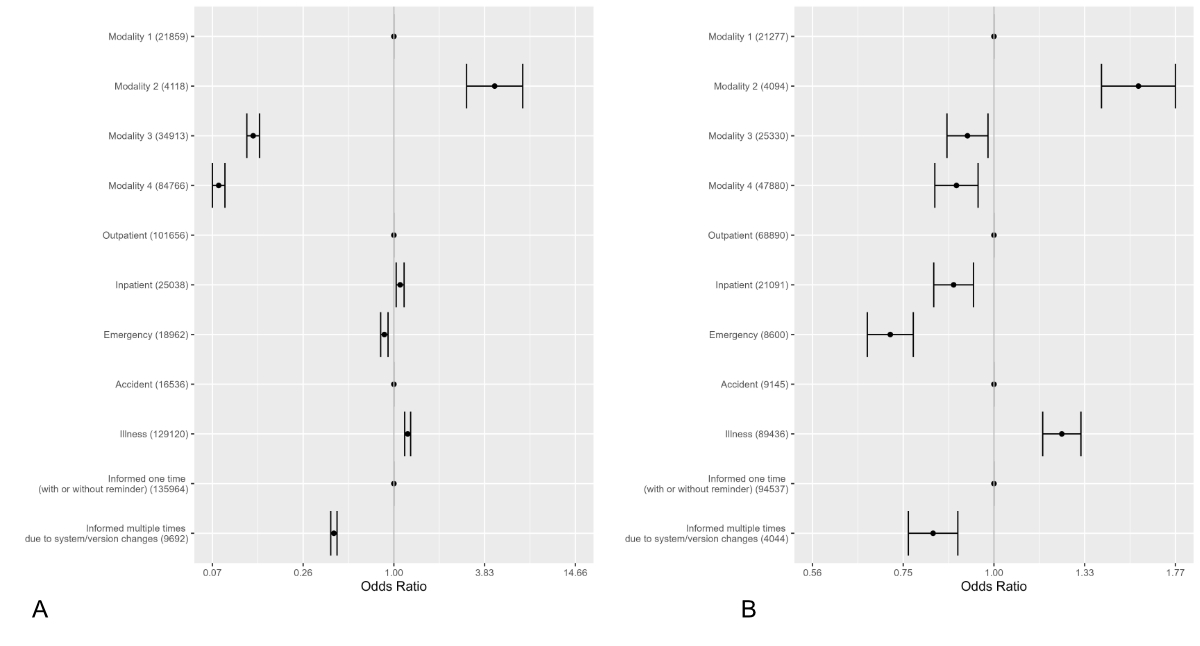
Figure 1Logistic regression of response rate among informed patients (A) and
consent rate among responders (B). The number of values for each category is
shown in brackets. References are visible on the figure with an odds ratio
value of 1 and no confidential interval. Response rate was modelled among
informed patients and consent rate was modelled among patients who responded to
general consent. Modality 1: General consent oral presentation by staff
dedicated to general consent; Modality 2: General consent oral presentation by
medical doctors, nurses or administrative staff within wards; Modality 3:
Information by mail before visit/hospitalisation, with or without
reminder letter; Modality 4: Information by mail after visit/hospitalisation,
with or without reminder letter.
Descriptive
statistics were performed to present the results of the questionnaire, applied
to answers to queries and Likert scale data; mainly counts and percentages. All
quantitative statistical analyses were performed with R 4.1.3 and 4.5.1. No weighting
for underrepresentation of certain groups of patients was applied.
Qualitative analyses
Qualitative
data collected via the questionnaire, semi-structured interviews and patient
communications were analysed using the thematic content analysis method of
Braun V and Clarke V [13], chosen for its flexibility and suitability in
capturing complex, subjective experiences. This method entails an iterative
process in which two researchers independently familiarise themselves with the
data prior to coding them to identify interesting recurring content. To enhance
the credibility and trustworthiness of the findings, discrepancies between
coders were resolved through discussion and consensus. Data coding and analysis
were performed using MAXQDA (Analytics Pro 2022) to help organise data and
facilitate interdisciplinary exchange between researchers. In the Results
section, the number of occurrences per theme are indicated as well as the total
number of occurrences for one question. The total number of occurrences
excludes answers with no relevance to the question. This clarification is
provided to ensure methodological transparency and prevent any
misinterpretation of the results.
Ethics approval and
consent to participate
This study
was conducted in compliance with the Helsinki Declaration. According to its
aims, the study is a quality project and so falls outside the scope of the
Swiss research legislation (the Human Research Act), which applies to research
concerning human diseases, and the structure and function of the human body (see
article 2). As such, Swiss research legislation and institutional guidelines
waive the requirement for approval by an Ethics Committee.
Furthermore,
to process this monitoring study, the dataset constituted with mainly
administrative data of patients was anonymised to comply with the applicable data
protection legislation. Given the type of study and the anonymisation of data,
patient consent was not required. Data concerning patients’ understanding and
opinions about general consent documents and modalities were collected on a
voluntary basis through anonymised questionnaires and interviews.
The
institutional Legal Department formally confirmed that this study is exempt from
Ethics Committee authorisation in compliance with Swiss legislation and
institutional guidelines, as well as from patient consent.
Nonetheless,
before starting, we informed the cantonal ethics committee for research
involving humans (CER-VD) about this study.
Results
Patient characteristics
Sample for the evaluation
of factors impacting the response and consent rate to general consent
To be able
to determine the factors influencing the response and consent rate, a database
was created as described in “Materials and methods”. Several observations were
excluded, as shown in the patient selection chart (figure 2). This results from
complexities associated with how data were recorded and anomalies in the
information process. In total 36,712 (17%) observations were excluded from the
initial extraction file (n = 214,935) for various reasons, resulting in the
final database containing 178,223 observations. The descriptive analysis of the
database is available in table S1 in the appendix.
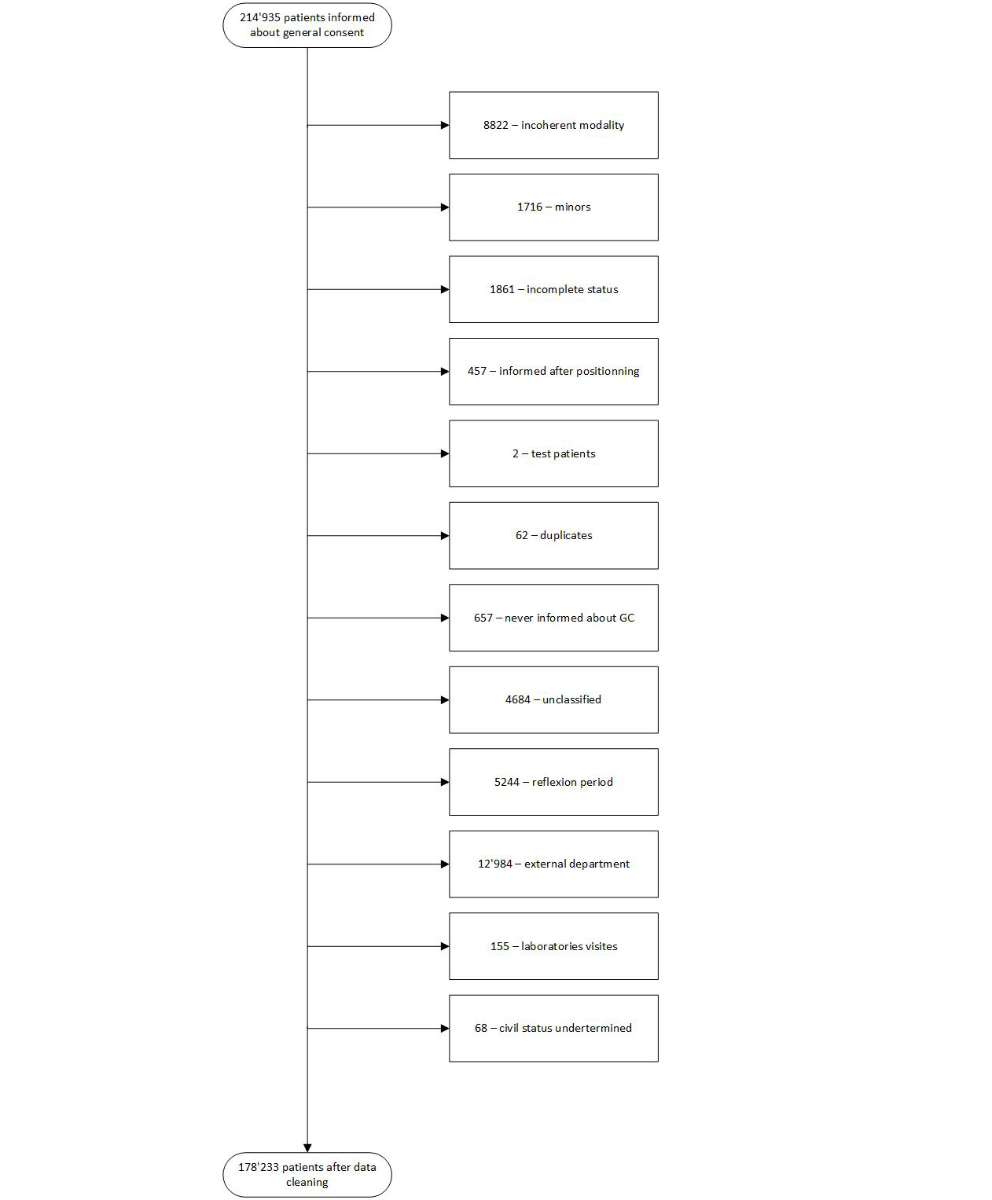
Figure 2Patient
selection chart used to create a single research database containing 178,223 observations
for the quantitative analysis. In total, 36,712 (17%) observations were
excluded resulting from data cleaning from the initial extraction file (n = 214,935);
exclusion was linked to various reasons resulting in a database. A summary of
the reasons for exclusion of variables is provided in the flowchart.
Questionnaire sample
The
questionnaire was mailed to 13,798 adult patients of CHUV between 1 March and 3
June 2022. The research team accepted returned questionnaires (paper 92% and
electronic 8%) until 3 August 2022. During this period, 2616 questionnaires
were returned (response rate: 19%). In comparison, the response rate to general
consent forms over the same period (i.e. individuals who provided a response to
the general consent request) was 46%. Among the returned questionnaires, 6.5%
(171) had to be excluded (incomplete electronic records [n = 86]; only the
administrative part of the questionnaire completed [n = 75]; fewer than 5 items
of the questionnaire filled in [n = 9]; questionnaire completed by a minor [n =
1]), which resulted in the inclusion in the analysis of 2445 questionnaires of
different levels of completeness (providing a consolidated response rate of 18%).
Among questionnaire respondents, 36% identified as male, 48% as female and 16%
did not specify sex. The average age was 51 and most questionnaire respondents
were identified as patients (80%). The descriptive table of questionnaire
respondents as well as questionnaire results are extensively reported in
tables S2 and S5 in the appendix.
Based on
the responses to question 8 of the questionnaire (How did you fill in/do you
think to fill in general consent form), we observed that patients who stated in
the questionnaire that they responded to or intended to respond to the general
consent request were overrepresented. This overrepresentation was particularly
pronounced for individuals who stated that they would agree to the secondary
use of their health-related personal data and biological material: 70% of the
questionnaire respondents indicated that they intended to or had consented
while the observed actual consent rate among those informed about general
consent in the same period is 34%. In contrast, questionnaire respondents who
stated they did not intend to respond to general consent (2% of questionnaire
respondents) or would refuse (5% of questionnaire respondents) were drastically
underrepresented, when compared to the population who received the
questionnaire accompanying general consent documents (54% non-respondents and
11% refusers) (table S6). Due to this lack of representation of
non-respondents, a random sample of individuals who did not fill in
the general consent form was selected and interviewed, as described in the “Materials
and methods” section. Although individuals who declined general consent were
underrepresented among questionnaire respondents, engaging this group was not
feasible, as it would have required contacting those who had refused general
consent.
Factors influencing
response and consent rate
The
quantitative analyses conducted on factors influencing patients’ response
revealed that most variables related to general consent administration, to
hospital visit/stay and to patient demographics impact the odds for responding
to general consent and consenting to secondary use of health-related personal
data and biological samples (figure S1, tables S3 and S4 in the appendix).
The way general
consent information is administered is associated with various response and consent
rates. In-person oral presentation by staff of the unit/ward (modality 2) is
associated with the highest odds for responding and consenting to the secondary
use of health-related personal data and biological samples (compared to
modality 1: oral presentation by dedicated
staff): adjusted odds ratio (aOR) = 4.44, p <0.001, for responding and
aOR = 1.58, p <0.001) for consenting. In contrast, written information sent
by mail before (modality 3) or after (modality 4) the visit/hospitalisation is associated
with the lowest odds for responding and consenting: modality 3 vs modality 1, aOR
= 0.12, p <0.001 for responding and aOR = 0.92, p = 0.018 for consenting; and
modality 4 vs modality 1, aOR = 0.07, p <0.001 for responding and aOR = 0.89,
p <0.001 for consenting (figure 2A illustrates the logistic regression of
response rate among informed patients, and figure 2B illustrates consent rates
among responders).
Inpatients are
more likely to respond to general consent than outpatients (aOR = 1.10, p = 0.001)
and emergency patients (aOR = 0.87, p <0.01); however, outpatients are the
most likely to grant general consent. Emergency patients are less prone to
respond and grant general consent. This is related to the fact that patients
whose type of visit/stay is categorised as “illness” are more prone to respond
to and grant general consent than those categorised as “accident” (aOR = 1.23, p
<0.001 and aOR = 1.24, p <0.01, respectively) since these patients often
enter via the emergency room.
Compared to
patients informed once (with the first mailing +/- the reminder letter), those informed
multiple times are less prone to respond (aOR = 0.41, p <0.02) and grant general
consent (aOR = 0.83, p <0.001). Patients were informed multiple times because
either they did not respond before April 2019 and were informed again
when the new general consent management application was implemented or they
did not reply to the first version of general consent and were informed again
when the version changed. The same trend in response and consent rate is
observed when analysing the effect of the reminder letter. During the period from
January 2018 to April 2020, 39% of patients made their decision after receiving
the information by a single mail. In May 2020, a reminder letter was introduced
and sent 6 weeks after the initial information letter if the patient had not responded.
During the following period, 55% of patients made their decision when receiving
general consent information by mail, which suggests that despite a lower
overall consent rate in responders during the latter period (76% vs 81%), the reminder
mailing was followed by a 16% increase in overall response rate among informed
patients.
Patients’ self-assessed
comprehension of general consent information
Using a
series of 12 statements (questions 9–10 and 14–23; questions 11–13 concerning
the genomic biobank are not discussed in this article), questionnaire
respondents were asked to indicate the extent to which they understood the
information provided on a Likert scale of 1 “I didn’t understand” to 5 “I
understood”. Most questionnaire respondents (60%, n = 1454) indicated that they
understood all these statements, rating a score of 5 for each statement. Similarly,
when asked on a scale of 1 to 10 whether they easily understood the general
consent documents (Q25), 89% (n = 2060) of respondents gave a rating greater than
8, with 59.7% (n = 1378) giving the maximal score (table S5 in the appendix). An
analysis to compare the understanding of acceptors’, refusers’ and non-responders’
groups was not statistically possible, since the questionnaire return rate of
the non-responders and refusers was too low.
While most questionnaire
respondents self-assessed complete understanding of general consent
information, we identified some topics with varying levels of understanding (figure
3). The greatest variability in understanding is related to (i) the use of health-related
personal data and biological material collected in the past and the future,
(ii) the use of samples and data by public and private entities, and (iii) the
use of samples and data in Switzerland and abroad. The possibility that, in
cases of non-response, health-related personal data and biological samples may
exceptionally be used for research under Article 34 of the Swiss Human Research
Act – outlining how permission to use data and samples from non-respondents can
be granted – remains a subject for which patients’ and questionnaire
respondents’ understanding is limited.
Figure 3Self-assessed
comprehension of general consent information. Using a series of 12 statements
(questions 9–10 and 14–23; questions 11–13 concerning the genomic biobank are
not illustrated in this figure), questionnaire respondents were asked to
indicate the extent to which they understood the information provided on a
Likert scale of 1 “I didn’t understand” to 5 “I understood”. Ratings of people
who did not rate 5 to all comprehension questions are illustrated (n = 991
patients). “Missing” means no response.
Examination
of the 4737 patient communications data revealed several recurring questions
from patients: 350 people asked why they had received this consent form, 320
needed help understanding the information and completing the form and 220 asked
whether they had to complete the general consent form considering they felt too
old, too sick or misunderstood the scope of the consent. Individual interviews
confirmed that the reason why a patient receives general consent needs to be better
explained as well as the existence of a provision whereby data may still be used in
specific circumstances in case of non-response (i.e. that under Article 34 of the
Swiss Human Research Act, permission to use
the data may still be granted in some cases).
Main sources of concern
for patients
When questionnaire
respondents were asked whether they were concerned about some aspects of general
consent information (Q31), the majority responded that they were not (91.4%, n
= 2149) (table S5). Among respondents who indicated having concerns
(8.6%, n = 203), 3 themes recurred in the comments. The first concern was the
use of health-related personal data and biological material in the private
sector (59/175 occurrences). The second concern was the fact that biological samples
and health-related data could be shared with institutions in a foreign country
(32/175 occurrences). The third concern was data protection (how data are
stored, the level of protection, the risk of hacking, …) with 25/175 occurrences.
Preferences about general
consent information modalities and timing
When asked
about the best way to receive information about general consent (Q29), 73.3% of
the questionnaire respondents (n = 1677) stated that the printed materials, the
website and support options offered by the hospital are sufficient to make an
informed decision, while 26.7% (n = 611) of respondents would appreciate an
oral presentation. When asked who should provide oral information, the preference
goes to a medical doctor (38.2%), followed by a general consent team member (26.6%),
a nurse (25.9%) and, lastly, a member of the admission office (14.3%) (table S5).
Concerning
the best moment to receive general consent information (Q33), opinions vary. We
observe a slight preference for the option “during the stay or visit” compared
to “after the stay or visit” and “before the stay or visit” (33.3% of questionnaire
respondents vs 29.8% and 24.5%, respectively) (table S5). When examining
the reasons why respondents prefer to receive the information during their stay
or visit, the main motivations are that it is the best moment to ask/clarify
certain points with hospital staff (98/227 occurrences) and that patients have time
while waiting at the hospital (77/227 occurrences).
Evaluation of the layout
and presentation of general consent information
Questionnaire
respondents were asked to rate the presentation and layout of general consent
information on a scale of 1 to 10 (Q24). The majority rated the presentation and
layout positively, with 88% using scores of 8 or more (n = 2038).
Respondents
were also probed on whether they felt any information was missing from the
documentation (Q26). The overwhelming majority, 93.1% (n = 2137), considered
that there was no information missing from the documentation. Among respondents
indicating that information was missing, comments were made on the type of
research to be conducted with their health-related personal data and biological
material, as well as on the need to show examples of research being done with general
consent (31/110 occurrences). Some respondents mentioned that they would like
to have more information on research being done in the private sector and
abroad (15/110 occurrences). Details on how health-related data and biological samples
are protected would also be appreciated (14/110 occurrences).
During
individual interviews, several suggestions for improvement were raised, such as
simplifying the information to make it more understandable and accessible,
illustrating the importance of general consent by referring to concrete
examples of research projects carried out within the framework of general
consent and clarifying the consequences of not responding to general consent.
Most questionnaire
respondents (94.4%, n = 2241) stated that general consent documents were
sufficient to make a decision (Q28). Of those who needed more information (n = 132),
45.4% (n = 60) indicated that they wanted to discuss the topic with a relative
and 20.5% (n = 27) wanted to discuss it with their doctor or nurse (table S5).
Willingness to participate
in research and overall satisfaction with information received
When asked
to rate the importance of contributing to research on a scale from 1 “Not at
all” to 10 “It’s essential” (Q34), an overwhelming majority of questionnaire respondents
(89.1%, n = 2068) answered towards the positive end of the scale (greater than 8).
When asked
why it is important to contribute to research, the two most prevalent reasons
were civic duties (567/647 occurrences) and a personal involvement in medical
research (student, physician, researcher in the family, …) (47/647
occurrences).
88% (n = 2044)
of the respondents were satisfied with the information received on general
consent, rating satisfaction at more than 8 on a scale from 1 to 10 (Q35). Two
questions sought suggestions on enhancing the clarity and comprehensibility of
the documents (Q27) and improving how patients are informed about general
consent (Q36). Among 406 suggestions, 130 emphasised the need to simplify the
documents and make them more concise. While 86 respondents would like to have oral
information during their visit/stay at the hospital and have human contact, 34 respondents
were interested in a more electronic process. In line with observations
reported above, 19 respondents emphasised the importance of providing examples
of research conducted within the framework of the general consent.
Discussion
Factors predicting response
and consent
Our quantitative
analyses spanning over a decade of general consent practice at a university
tertiary hospital reveal that information modalities, as well as the context of
the patient’s visit, influence response and consent rates.
The quantitative
analyses highlight that oral information provided by hospital unit staff during
the patient’s stay/visit is associated with the highest likelihood of
responding to and granting general consent. The questionnaire data also show a
slight preference for receiving general consent information during the hospital
stay/visit as it provides an opportunity to ask questions, and because patients
often have waiting time in hospital that could be used wisely to be informed
about general consent. These results are aligned with previous studies
demonstrating that patients’ preferences regarding the use of their samples and
health-related data in research is influenced by relational considerations [4].
Patients
whose visit/stay is classified as emergency and patients whose visit/stay is
related to an accident are less likely to grant general consent than patients
presenting at the hospital for a scheduled appointment and patients whose visit
is related to an illness. The unforeseen situation, concomitant stress and
possibly a temporary incapacity to discern create an unfavourable context for
making decisions regarding general consent. This may be a barrier to a
representative engagement of patients in research conducted in critical care or
emergency units. Repeating general consent information in a more favourable
clinical context may increase the chances of obtaining a response to general
consent request.
A decision to participate in research initiatives depends on the patients' trust towards
the hospital and their staff [9, 14–16]. Over time, the
trust relationship of a patient with the hospital may change, as well as the
context of their care or the reason for the visit (transition from an acute
episode to a chronic illness, repeated hospital stays, scheduled versus
emergency stay, etc), their interest in research and general consent might
change accordingly.
We also
observed that the probability of responding and granting consent is influenced
by the patient's sociodemographic profile (sex, age, religion, nationality and
marital status), which will not be discussed in more detail as it has been
described in several previous studies [7, 9–11]. It does, however, question the
representativeness of people included in research projects conducted using data
covered by general consent. As previously reported, the extent to which
patients understand information and consent documents influences the response
and consent rates [17]. Offering multiple ways to inform patients about general
consent might be a solution to better reach the diverse patient profiles and
increase the variety of patients responding to general consent. Several studies
reported that users’ comprehension improved when an e-consent medium was used [18].
The potential of digital solutions that provide flexible and tailored
information for patients, such as dynamic consent platforms [19], needs to be
explored with the help of patients and researchers. However, digitisation of the
consent process should be thought of as a complement to improve patient
autonomy and understanding, not as a substitute for human interaction [20].
Patients’ preferences
about general consent documents
Most questionnaire
respondents stated that the printed material, website and support options
offered (hotline and e-mail) are sufficient to help them make their decision. However,
the analysis of the questionnaires, interviews and patient communications reveals
that the information brochure should be more concise, easier to understand and more
attractive. Examples of research made possible by general consent would also be
greatly appreciated. Additionally, individual interviews showed that the reason
why patients receive general consent and the consequences of not responding
need to be better explained.
Furthermore,
the questionnaire revealed that the questions concerning the use of health-related
personal data and biological material by the private sector and/or abroad were
also those that raised most concerns. As previously reported, the main concerns
when deciding whether to grant general consent are lack of trust, data privacy
and an objection to profit-making through the use of health-related data [21–24].
Emphasising the patient-centred benefit of this third-party use of health-related
personal data and biological material, as well as better communication about
the means used to protect privacy may help patients feel more comfortable about
sharing their data with researchers from the private sector or abroad [25].
Furthermore, digital dynamic consent platforms offering transparency and more
consent choices may offer patients greater confidence and peace of mind in
their choices [24, 26].
We should
keep in mind that, even though a random sample of individuals that did not fill
in the general consent form was selected for interviews, most respondents in the
three qualitative models were favourable towards general consent, meaning that
the interpretation of the data discussed must be taken with caution.
Limitations of the study
The large
sample size gives the results their strength, but it could also lead to some
effects appearing statistically significant without representing an
operationally relevant difference. In addition, data are based on
administrative data extracted from hospital databases. Although efforts have
been made to ensure that these data are collected accurately (through iterative
quality checks), some inaccuracies may persist due to data entry errors,
despite careful data consistency and data cleaning checks when deriving the
analysis dataset.
The extended
duration of data collection – over 10 years – cannot exclude a time effect. Intercurrent
events, such as the SARS-CoV-2 pandemic, could have influenced perceptions of
the healthcare system and biomedical research, and therefore the reception of
information on general consent by patients [24] .
Questionnaire
respondents displayed a recruitment bias: patients who responded to general
consent were overrepresented, particularly those who granted general consent.
In contrast, non-respondents to general consent and general consent refusers
were severely underrepresented, something that cannot be compensated for by
statistical methods. Furthermore, the questionnaire was distributed only via
mailings to patients receiving general consent via modality 1, which may influence
some responses. Therefore, the data collected via the questionnaire must be
interpreted with caution as respondents’ profile reveals a specific population
that is generally favourable towards research and general consent.
Conclusion
The results
presented in this study are based on a substantial volume of information. These
data allowed us to confirm the validity of several practices, draw lessons from
more than ten years of experience in the field of general consent and propose four
practical recommendations for general consent practice:
- Promote
general consent information before or during the hospital visit or stay,
whether in written or oral form.
- If
a patient has not replied to the general consent request, repeat the
information in a more favourable clinical context.
- Diversify
information channels and explore digital options to offer more-personalised and
adapted information.
- Simplify,
clarify and illustrate general consent documentation with concrete examples of
research carried out using general consent.
These recommendations
should help increase the number of patients properly informed and therefore patients
who complete the general consent form. Indeed, if modalities of general consent
administration are adapted according to patients’ needs and preferences, and if
the content and format of the information allow for better understanding of general
consent, we assume that the response rate will increase and, more importantly,
so will the rate of truly informed and autonomous decisions.
This study
focused on patients’ perspectives on general consent information within a
broader institutional approach to patient and public involvement and engagement.
The relatively high response rate to the questionnaire suggests that many patients
value the idea of improving understanding of the consent request and legitimise
its informed and well-understood nature. It is essential to involve patients in
the development of general consent and in the establishment of guidelines
relating to its administration.
Availability of data and
materials
The
datasets generated and analysed during the current study were deposited under
restricted access in the institutional repository of CHUV due to the sensitive
nature of the data. Metadata are publicly available on Zenodo and accessible
via the DOI provided in the dataset reference (https://doi.org/10.5281/zenodo.15683552).
Access to the data may be granted upon reasonable request to the Principal
Investigator and is subject to a data transfer and use agreement.
Acknowledgments
We would
like to thank the following: Professor Mauro Oddo, Director of innovation and
research at CHUV, for allocating institutional funding dedicated to Swiss personalized
health network to the project; Léa
Stiefel, research fellow, for individual interviews and qualitative analysis;
Francesca Bosisio, Ordinary Professor at Haute École d'Ingénierie et de Gestion du
Canton de Vaud (HEIG‑VD), for methodological support in
developing the questionnaire and qualitative analyses; the Datawarehouse team
of CHUV, particularly Laïla Nadich, for extracting and combining the data from
IT systems; Éric Eboulet, statistician at CHUV Clinical Research Center, for support
in creating the
study database; Vassili Soumas, datamanager at CRC, for support in creating the
questionnaire database; Pierre-Antoine Dubois, graphic designer at the
communications service of CHUV, for the graphic design of the questionnaire and
the layout of the document; Dominique Sprumont, President of the cantonal
research ethics committee, for fruitful discussions; Maria Ramos and Amédée
Kibalabala, research collaborators at the Research Consent
Unit, for their support in recruiting participants for individual interviews;
and finally all the patients who took time to answer the questionnaire and
participate in interviews.
Author contributions: BS, MF and
CA contributed to the conception and the supervision of the study. BS, MF, CA,
NK and JZ were involved in designing the methodology. NK, JZ and MJC collected and
processed the data. NK, JZ, MJC and MM analysed and interpreted the data. JZ
and CA reviewed the literature. NK, CA, MM and BS wrote the first draft of the
manuscript. All the authors were involved in the revision of the manuscript.
Cindy Allenbach
Research Consent Unit
Clinical Research Center
Lausanne University Hospital (CHUV)
Rue du Bugnon 19
CH-1011 Lausanne
cindy.allenbach[at]chuv.ch
References
1. D'Abramo F. Biobank research, informed consent and society. Towards a new alliance?
J Epidemiol Community Health. 2015;69(11):1125-8. Epub 20150210. doi: 10.1136/jech-2014-205215. PubMed PMID: 25669218.
2. Anderson EE, Newman SB, Matthews AK. Improving informed consent: Stakeholder views.
AJOB Empir Bioeth. 2017;8(3):178-88. Epub 20170802. doi: 10.1080/23294515.2017.1362488. PubMed PMID: 28949896; PubMed Central PMCID: PMCPMC5749407.
3. Ballard LM, Horton RH, Dheensa S, Fenwick A, Lucassen AM. Exploring broad consent
in the context of the 100,000 Genomes Project: a mixed methods study. Eur J Hum Genet.
2020;28(6):732-41. Epub 20200109. doi: 10.1038/s41431-019-0570-7. PubMed PMID: 31919452; PubMed Central PMCID: PMCPMC7253456.
4. Barazzetti G, Bosisio F, Koutaissoff D, Spencer B. Broad consent in practice: lessons
learned from a hospital-based biobank for prospective research on genomic and medical
data. Eur J Hum Genet. 2020;28(7):915-24. Epub 20200221. doi: 10.1038/s41431-020-0585-0. PubMed PMID: 32086443; PubMed Central PMCID: PMCPMC7316733.
5. Bosisio F, Barazzetti G, Koutaissoff D, Spencer B. Patients' decision to contribute
to a biobank in the light of the patient-recruiter relationship-a qualitative study
of broad consent in a hospital setting. J Community Genet. 2021;12(1):15-25. Epub
20200810. doi: 10.1007/s12687-020-00479-z. PubMed PMID: 32779150; PubMed Central PMCID: PMCPMC7846645.
6. Cheah PY, Jatupornpimol N, Hanboonkunupakarn B, Khirikoekkong N, Jittamala P, Pukrittayakamee S,
et al. Challenges arising when seeking broad consent for health research data sharing:
a qualitative study of perspectives in Thailand. BMC Med Ethics. 2018;19(1):86. Epub
20181107. doi: 10.1186/s12910-018-0326-x. PubMed PMID: 30404642; PubMed Central PMCID: PMCPMC6223036.
7. Bochud M, Currat C, Chapatte L, Roth C, Mooser V. High participation rate among 25
721 patients with broad age range in a hospital-based research project involving whole-genome
sequencing - the Lausanne Institutional Biobank. Swiss Med Wkly. 2017;147:w14528.
Epub 20171020. doi: 10.4414/smw.2017.14528. PubMed PMID: 29063527.
8. Humanforschungsgesetz. Die Bundesversammlung der Schweizerischen Eidgenossenschaft.
Bundesgesetz über die Forschung am Menschen. https://www.admin.ch/opc/de/classified-compilation/20061313/index.html#2014
9. Sanderson SC, Brothers KB, Mercaldo ND, Clayton EW, Antommaria AHM, Aufox SA, et al. Public
Attitudes toward Consent and Data Sharing in Biobank Research: A Large Multi-site
Experimental Survey in the US. Am J Hum Genet. 2017;100(3):414-27. Epub 20170209.
doi: 10.1016/j.ajhg.2017.01.021. PubMed PMID: 28190457; PubMed Central PMCID: PMCPMC5339111.
10. Griessbach A, Bauer A, Jorger Lebet F, Grossmann R. The concept of General Consent
in Switzerland and the implementation at the University Hospital Zurich, a cross-sectional
study. Swiss Med Wkly. 2022;152:w30159. Epub 20220414. doi: 10.4414/smw.2022.w30159. PubMed PMID: 35429239. doi: https://doi.org/10.4414/SMW.2022.w30159
11. Bosmani C, Carboni S, Samer C, Lovis C, Perneger T, Huttner A, et al. REPRESENT: REPresentativeness
of RESearch data obtained through the 'General Informed ConsENT'. BMC Med Ethics.
2023;24(1):10. Epub 20230213. doi: 10.1186/s12910-022-00877-7. PubMed PMID: 36782161; PubMed Central PMCID: PMCPMC9926654.
12. Gerber DE, Rasco DW, Skinner CS, Dowell JE, Yan J, Sayne JR, et al. Consent timing
and experience: modifiable factors that may influence interest in clinical research.
J Oncol Pract. 2012;8(2):91-6. Epub 20111206. doi: 10.1200/JOP.2011.000335. PubMed PMID: 23077435; PubMed Central PMCID: PMCPMC3457835.
13. Braun VC. Thematic analysis. APA handbook of research methods in psychology, Vol 2:
Research designs: Quantitative, qualitative, neuropsychological, and biological. psychology®
Ahi, editor: American Psychological Association; 2012 2012. 14 p. doi: https://doi.org/10.1037/13620-004
14. Nielsen MEJ, Kongsholm NCH. Blanket Consent and Trust in the Biobanking Context. J
Bioeth Inq. 2022;19(4):613-23. Epub 20220906. doi: 10.1007/s11673-022-10208-5. PubMed PMID: 36068428.
15. Hong SJ, Drake B, Goodman M, Kaphingst KA. Race, Trust in Doctors, Privacy Concerns,
and Consent Preferences for Biobanks. Health Commun. 2020;35(10):1219-28. Epub 20190605.
doi: 10.1080/10410236.2019.1623644. PubMed PMID: 31167570; PubMed Central PMCID: PMCPMC6893100.
16. Grande D, Mitra N, Shah A, Wan F, Asch DA. Public preferences about secondary uses
of electronic health information. JAMA Intern Med. 2013;173(19):1798-806. doi: 10.1001/jamainternmed.2013.9166. PubMed PMID: 23958803; PubMed Central PMCID: PMCPMC4083587.
17. de Man Y, Wieland-Jorna Y, Torensma B, de Wit K, Francke AL, Oosterveld-Vlug MG, et
al. Opt-In and Opt-Out Consent Procedures for the Reuse of Routinely Recorded Health
Data in Scientific Research and Their Consequences for Consent Rate and Consent Bias:
Systematic Review. J Med Internet Res. 2023;25:e42131. Epub 20230228. doi: 10.2196/42131. PubMed PMID: 36853745; PubMed Central PMCID: PMCPMC10015347.
18. Kassam I, Ilkina D, Kemp J, Roble H, Carter-Langford A, Shen N. Patient Perspectives
and Preferences for Consent in the Digital Health Context: State-of-the-art Literature
Review. J Med Internet Res. 2023;25:e42507. Epub 20230210. doi: 10.2196/42507. PubMed PMID: 36763409; PubMed Central PMCID: PMCPMC9960046.
19. Budin-Ljosne I, Teare HJ, Kaye J, Beck S, Bentzen HB, Caenazzo L, et al. Dynamic Consent:
a potential solution to some of the challenges of modern biomedical research. BMC
Med Ethics. 2017;18(1):4. Epub 20170125. doi: 10.1186/s12910-016-0162-9. PubMed PMID: 28122615; PubMed Central PMCID: PMCPMC5264333.
20. Goldschmitt M, Gleim P, Mandelartz S, Kellmeyer P, Rigotti T. Digitalizing informed
consent in healthcare: a scoping review. BMC Health Serv Res. 2025;25(1):893. Epub
20250702. doi: 10.1186/s12913-025-12964-7. PubMed PMID: 40604763; PubMed Central PMCID: PMCPMC12225439.
21. Tosoni S, Voruganti I, Lajkosz K, Habal F, Murphy P, Wong RKS, et al. The use of personal
health information outside the circle of care: consent preferences of patients from
an academic health care institution. BMC Med Ethics. 2021;22(1):29. Epub 20210324.
doi: 10.1186/s12910-021-00598-3. PubMed PMID: 33761938; PubMed Central PMCID: PMCPMC7992944.
22. Ghafur S, Van Dael J, Leis M, Darzi A, Sheikh A. Public perceptions on data sharing:
key insights from the UK and the USA. Lancet Digit Health. 2020;2(9):e444-e6. Epub
20200724. doi: 10.1016/S2589-7500(20)30161-8. PubMed PMID: 32838250; PubMed Central PMCID: PMCPMC7380931.
23. Richter G, Borzikowsky C, Hoyer BF, Laudes M, Krawczak M. Secondary research use of
personal medical data: patient attitudes towards data donation. BMC Med Ethics. 2021;22(1):164.
Epub 20211215. doi: 10.1186/s12910-021-00728-x. PubMed PMID: 34911502; PubMed Central PMCID: PMCPMC8672332.
24. Tosoni S, Voruganti I, Lajkosz K, Mustafa S, Phillips A, Kim SJ, et al. Patient consent
preferences on sharing personal health information during the COVID-19 pandemic: "the
more informed we are, the more likely we are to help". BMC Med Ethics. 2022;23(1):53.
Epub 20220520. doi: 10.1186/s12910-022-00790-z. PubMed PMID: 35596210; PubMed Central PMCID: PMCPMC9122733.
25. Trinidad MG, Platt J, Kardia SLR. The public's comfort with sharing health data with
third-party commercial companies. Humanit Soc Sci Commun. 2020;7(1). Epub 20201111.
doi: 10.1057/s41599-020-00641-5. PubMed PMID: 34337435; PubMed Central PMCID: PMCPMC8320359.
26. Lee AR, Koo D, Kim IK, Lee E, Yoo S, Lee HY. Opportunities and challenges of a dynamic
consent-based application: personalized options for personal health data sharing and
utilization. BMC Med Ethics. 2024;25(1):92. Epub 20240831. doi: 10.1186/s12910-024-01091-3. PubMed PMID: 39217356; PubMed Central PMCID: PMCPMC11365279.
Appendix
The appendix is available in the pdf version of the article at https://doi.org/10.57187/4812.