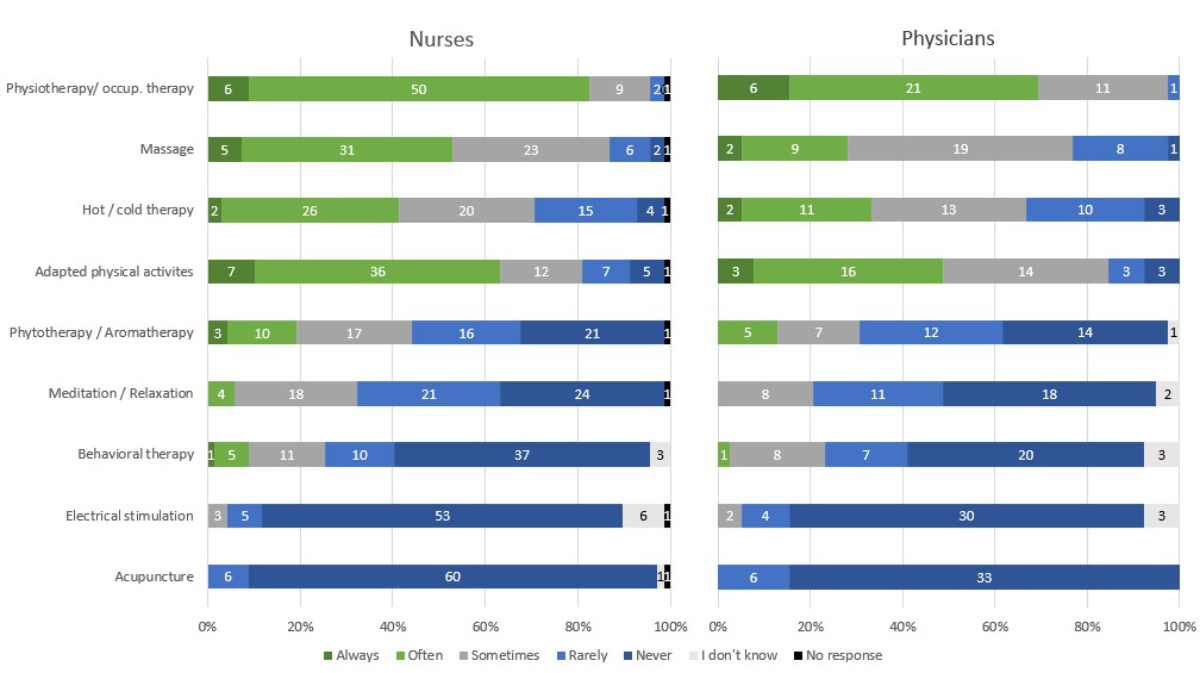
Figure 1Frequency of use of non-pharmacological measures by nurses (n = 68) and physicians (n = 39).
DOI: https://doi.org/https://doi.org/10.57187/4743
Chronic pain is a major public health issue in nursing homes, due to its prevalence [1] and impact on quality of life in the elderly. In Switzerland, data on self-reported pain suggests that about 60% of nursing home residents suffer from pain [2]. In nursing home residents, chronic pain, defined as pain persisting for more than three months, is predominantly of musculoskeletal or neurogenic origin. It is frequently associated with sleep disturbances, depressive symptoms and functional impairments [3]. Cancer-related pain is less common and typically requires targeted management, either for the pain directly caused by the malignancy or for the adverse effects of cancer treatments. Management of chronic non-cancer pain is particularly complex due to the frailty and cognitive impairment often present in this type of patient [1, 4, 5]. Different strategies can be used to assess and to manage the pain, whether psychological, physical or pharmacological [6, 7], and a combined approach is often recommended [8]. Different healthcare professionals, most often physicians and nurses, but sometimes also pharmacists, are involved, requiring coordination.
Some studies have explored the management of non-cancer chronic pain in Swiss nursing homes. The lack of availability and use of non-pharmacological treatments, the lack of time for comprehensive pain assessment and the residents’ reluctance to report their pain were cited by nurses and nursing aides as the main limitation to good pain management [9]. Residents, for their part, expressed concerns about the care workers’ ability to manage their pain [10]. Close collaboration between physicians and nurses and nursing aides was highlighted as a factor facilitating pain management [9], in which physicians are perceived as the primary decision-makers by the residents [10]. The implementation of various strategies to improve pain management, such as the introduction of pain management champions or training for nursing staff, have also been evaluated [11]. These studies have assessed the question of chronic non-cancer pain management in qualitative terms within a limited number of German-speaking Swiss nursing homes. The objective of the present study was to obtain a more objective and measurable assessment of professional practices in chronic non-cancer pain management based on a larger number of French-speaking Swiss nursing homes.
The study was an observational study based on a mixed-methods research design. It was carried out in 2021 in all nursing homes of the canton of Vaud (124 nursing homes) in Switzerland. The study was part of a Quality of Care programme mandated by the General Health Directorate of Vaud to nursing homes, which structures the collaboration between physicians, pharmacists and nurses, with the goal of optimising drug use in the nursing home. The evaluation of the Quality of Care programme includes an analysis of annual drug consumption data of each nursing homes, based on drug invoice data reported by nursing home-affiliated pharmacies to the monitoring team. The study is reported in accordance with Strengthening the Reporting of Observational Studies in Epidemiology (STROBE) guidelines [12].
Two convergent parallel approaches were carried out to collect data:
Two online questionnaires were developed, one for nurses and one for referring physicians. Both questionnaires aimed to explore the practices of these two professions regarding four themes: pain assessment, non-pharmacological measures, drug treatments for chronic pain and interprofessional practices within the nursing home. The two questionnaires differed mainly in the section dealing with drug treatments, given the different responsibilities of the two professions in this field (see "additional materials" in the appendix). The questionnaire for nurses contained 32 questions, and the one for physicians 35. Different types of questions were integrated (single-choice, multiple-choice and 5-point Likert scale) and all were compulsory. The survey was administered online, using LimeSurvey, an open-source, self-hosted tool.
The questionnaires were reviewed by different professionals: four senior researchers from the research team, and two referring physicians and three nurses from nursing homes of Vaud. Their comments, which focused on the clarity, feasibility and relevance of the questions, were taken into account in the final version. Questionnaires were sent via e-mail to the referring pharmacist of all nursing homes participating in the Quality of Care programme, with a flyer detailing the purpose and deadline for completing the survey. Pharmacists then forwarded the questionnaire to physicians and nurses of their nursing homes.
Three days later, these flyers were also sent by e-mail to the professional stakeholders (nursing home associations, personal assistance service providers, association of nursing home physicians) to support the completion of the questionnaires.
A reminder e-mail was sent to the pharmacists two weeks after the first mailing. A month later, reminder e-mails were also sent directly to nursing homes whose referring nurses and/or physicians had not yet responded to the first e-mail.
The data collection period lasted 40 days, from February to 24 March 2023.
In parallel, an analysis of analgesic consumption in the nursing homes of Vaud canton was carried out. Data on drug consumption was provided by the Quality of Care programme and analysed at nursing home level to ensure residents’ anonymity.
Data on drug consumption between 2017 and 2021 was extracted using Microsoft Excel Power Query and analysed using Microsoft Excel Power Pivot. The following criteria were applied for data inclusion in this study:
As different populations are accommodated in Swiss nursing homes, only data from nursing homes with a geriatric, gerontopsychiatric or mixed population was used.
Only data concerning residents aged over 65 and who were present in the nursing home on 1 January of the considered year was included: as the drug consumption data is provided annualised to the Quality of Care programme by the community pharmacy supplying the nursing homes, distinguishing from drugs used before and after entry in the nursing home is impossible.
Only data on drugs appearing in the World Health Organization (WHO) pain steps [13] was used; the drugs were selected based on Anatomical Therapeutic Chemical (ATC) classification [14] and considered within the framework of the three-step analgesic ladder, which reflects an escalating approach to pain management:
All responses, even partial ones, were analysed. The responses from the questionnaires were extracted from the LimeSurvey software into an Excel Microsoft 365 file. The accuracy of the extracted dataset was verified (completeness, absence of inconsistent data). Each question was analysed, and for most of them, a histogram or bar chart was created to compare the prevalence of each response.
Analgesic consumption was analysed through the use of two indicators for several active drugs or pharmacological classes: the average daily analgesic consumption perresident, expressed in Daily Defined Dose per day and per resident (DDD/d/resident),and the prescription frequency. This analysis assessed the analgesic consumption of each nursing home and compared it between nursing homes.
The use of Defined Daily Doses (DDD) to define analgesic consumption in nursing homes allowed us to study drug consumption independently of the different drugs’ potency [15]. DDD/day/resident was computed by multiplying the number of intake units in a box, the dosage for each unit and the number of boxes consumed in the year, divided by the number of days spent in the nursing home in the year and the DDD of the considered drug. As drug combinations have no assigned DDD, the DDD of the most potent active drug was used. DDD/d/resident was not computed for topical products (ATC M02A), as no DDD can be established for these products.
Prescription frequency was computed, for each year, by dividing the number of residents with at least one invoice for the selected active drug or drug class by the total number of residents who stayed in the nursing home.
Based on these two indicators, different analyses were carried out:
According to the Human Research Act (HRA), this study did not require the approval of the Ethics Committee because it involved non-identifying data collected as part of the evaluation of the quality of care and data from an opinion survey [16].
Among the 124 nursing homes of the canton of Vaud invited to fill in questionnaires, 41 physicians and 72 nurses responded, of whom 36 and 51, respectively, fully completed the questionnaire. These returns corresponded to 34 and 30 nursing homes, respectively, as several physicians or nurses of the same nursing home had answered. It is also worth noting that some physicians answered for more than one nursing home as they are involved with several of them. Table 1 presents the characteristics of the nurses and physicians who participated in the survey.
Table 1Characteristics of nurses and physicians surveyed.
| Nurses | Physicians | ||
| n = 72 | n = 41 | ||
| Years of experience | <5 | 5 (6.9%) | 0 |
| 5–10 | 13 (18.1%) | 2 (4.9%) | |
| 11–20 | 12 (16.7%) | 11 (26.8%) | |
| >20 | 22 (30.6%) | 23 (56.1%) | |
| No response | 20 (27.8%) | 5 (12.2%) | |
| % of residents followed in the nursing home | <10% | 3 (7.3%) | |
| 10–30% | 6 (14.6%) | ||
| 31–60% | 13 (31.7%) | ||
| 61–90% | 3 (7.3%) | ||
| >90% | 11 (26.8%) | ||
| No response | 5 (12.2%) | ||
| Employment rate in the nursing home | <30% | 0 | |
| 30–50% | 0 | ||
| 31–70% | 6 (8.3%) | ||
| >70% | 46 (63.9%) | ||
| No response | 20 (27.8%) | ||
| Number of beds in nursing home | Min | 29 | 20 |
| Mean | 58.8 | 58.0 | |
| Median | 51.5 | 50.0 | |
| Max | 161 | 108 | |
Regardless of the configuration, all returns were considered. To make the results easier to read, physician data is systematically presented first, followed by nurse data.
Among pain self-assessment scales, a numerical scale is predominantly used by the two professions (33/41 for physicians and 64/72 for nurses). Facial and verbal scales are also widely used (28/41 and 22/41, respectively, for physicians; 49/72 and 52/72, respectively, for nurses). Concerning pain hetero-assessment scales, physicians declared to be more likely to use the Doloplus scale [17] (24/41), while the Algoplus scale [18] was cited as the most widely used by nurses (51/72). The Pain Assessment in Advanced Dementia (PAINAD) scale [19] was cited by only two nurses and one physician (appendix I). Nearly two-thirds of physicians (25/41) and nurses (45/72) did not consider (“No, somewhat” or “Not at all”) the self-assessment sufficient to assess residents’ pain. Most physicians (27/41) and nurses (64/72) declared the existence of recommendations or guidelines for assessing pain at their nursing home. Five physicians stated that there were no guidelines at their nursing home on this matter, and nine did not know.
Almost all responding healthcare professionals (38/39 physicians; 68/68 nurses) considered that non-pharmacological measures have a place in the management of chronic pain in nursing home residents. Figure 1 shows the frequency of use for each method reported by each healthcare profession.
Figure 1Frequency of use of non-pharmacological measures by nurses (n = 68) and physicians (n = 39).
Many measures other than those suggested were mentioned, such as hypnosis, with or without relaxation, therapeutic interview, listening interview, balneotherapy, thermo-spa, art therapy, music therapy, zootherapy, Snoezelen, regular follow-up with the physician for a targeted assessment, reflexology, touch techniques or infiltration. A large majority of physicians (29/39) and nurses (57/68) were in favour of introducing or reinforcing specific psychological care for patients.
Lack of training for healthcare professionals (31/39 physicians; 53/68 nurses), lack of qualified staff (i.e. nurses) (29/39; 51/68) and/or time (31/39; 50/68) and lack of reimbursement (27/39; 50/68) were the most frequently cited obstacles to implementing these measures.
When pharmacological measures are required, paracetamol is considered the first-line analgesic for elderly patients suffering from pain by almost all physicians (35/37) and nurses (57/61). NSAIDs are reserved for second-line treatment by a large majority of nurses (47/61); more than half of physicians (22/37) declared that they rarely prescribed NSAIDs for chronic pain management, or never (3/37). Notably, side effects are the main reason cited by the two professions for restricting their use.
Weak opioids (WHO step 2 analgesics) were considered a second-line treatment by most professionals: almost two-thirds of nurses (41/61) mentioned that weak opioids are not the first choice for the elderly and three-quarters of physicians (28/37) declared that they use them as second-line. For the nine physicians who stated that they rarely use them, weak opioids have no place in the management of chronic pain because of their side effects, their lack of efficacy and/or their risk of interaction with other treatments.
Concerning the use of strong opioids (WHO step 3 analgesics), more than two-thirds of physicians (26/37) declared prescribing them as a third-line treatment, versus less than a third (10/37) as a second-line treatment. More than two-thirds of nurses (42/61) mentioned that strong opioids should be used as a second-line treatment when WHO step 1 analgesics are insufficient, and that they should only be introduced if other treatments fail (43/61). The majority of nurses (50/61) declared that strong opioids are not reserved for end-of-life pain relief and did not agree with the idea that strong opioids are a bad option due to their side effects (40/61) and the risk of dependence (38/61). More than three-quarters of physicians (28/37) mentioned being comfortable prescribing opioids because their administration is managed by nursing home nursing staff. Most have no hesitation in prescribing opioids, even considering their side effects (19/37), the risk of interactions (20/37), the risk of dependence (31/37) or the bad image of opioids for residents and their relatives (33/37). Morphine was considered the strong opioid of choice for chronic pain in the elderly by most physicians (28/37) and almost half of nurses (28/61), particularly for end-of-life pain (34/37; 43/61).
A large majority of physicians (31/37) said that they prescribe a rescue opioid for elderly residents when a long-term opioid treatment is prescribed. One and four others, respectively, declared that they do not prescribe them for fear of abuse or because they prefer to be informed by nursing home nursing staff when long-term opioid treatment is insufficient. Most of them (26/37) declared having confidence in nursing staff to manage rescue opioid treatments and wished for nurses to have more autonomy (23/37). Almost all nurses (56/61) felt comfortable administering a rescue opioid. More than half of nurses (32/61) mentioned administering a rescue opioid if the resident needed it and most of them reported doing so without contacting the physician before (51/61). Three-quarters of nurses (46/61) said that the information on how to administer rescue opioid analgesics is always very clear.
Within the online questionnaire, 37 physicians and 56 nurses provided an answer on the respective role of healthcare professionals in chronic pain management. Most physicians (34/37) and nurses (45/56) believed that each of the two professions has a role to play in the assessment of chronic pain in the elderly. Almost all physicians and nurses expressed that the nursing staff's mission is to check that long-term (35/37; 53/56) and rescue (34/37; 53/56) analgesic treatments are appropriate, and to pass on to physicians if adjustments are necessary. Approximately two-thirds of physicians and nurses perceived the role of community pharmacists in chronic pain management as being limited to two main activities: promoting good prescribing practices during interprofessional discussion sessions, such as quality circles (QCs) (respectively 24/37 and 34/56), and routinely checking the appropriateness of analgesic therapy when dispensing prescriptions (respectively 21/37 and 36/56). However, most physicians (25/37) and nurses (49/56) considered that the involvement of community pharmacists in QC or medication reviews improves pain management for nursing home residents (appendix II).
Most physicians and nurses considered the collaboration between nursing staff and physicians to be good (19/37; 27/56) or excellent (15/37; 14/56) and almost half of the professionals (17/37; 24/56) said they did not encounter any obstacles to this collaboration. However, the majority (23/37; 49/56) believed that a better collaboration could improve the management of chronic non-cancer pain. The lack of transmission of patient information by the nurse to the physician is the main obstacle cited by the latter (12/37), while the time taken to prescribe an analgesic treatment and the partial consideration of nursing staff opinions by the physician are the main obstacles cited by nurses (respectively 17/56 and 12/56).
The majority of physicians and nurses (24/37 and 43/53) reckon that less than one-third of the residents are not correctly treated. Among the list of possible barriers to effective chronic pain management in nursing homes, the three most frequently chosen were structural or cultural and include lack of time at residents’ bedside, nurses’ specific pain management skills and patients’ reluctance to report pain (see figure 2). Other, freely cited difficulties were the presence of severe neurocognitive disorders in some residents, a reluctance on the part of residents to take opioid analgesics, pain that sometimes goes unnoticed, signs that are difficult to interpret, or too many changes in nursing staff, leading to a lack of follow-up.
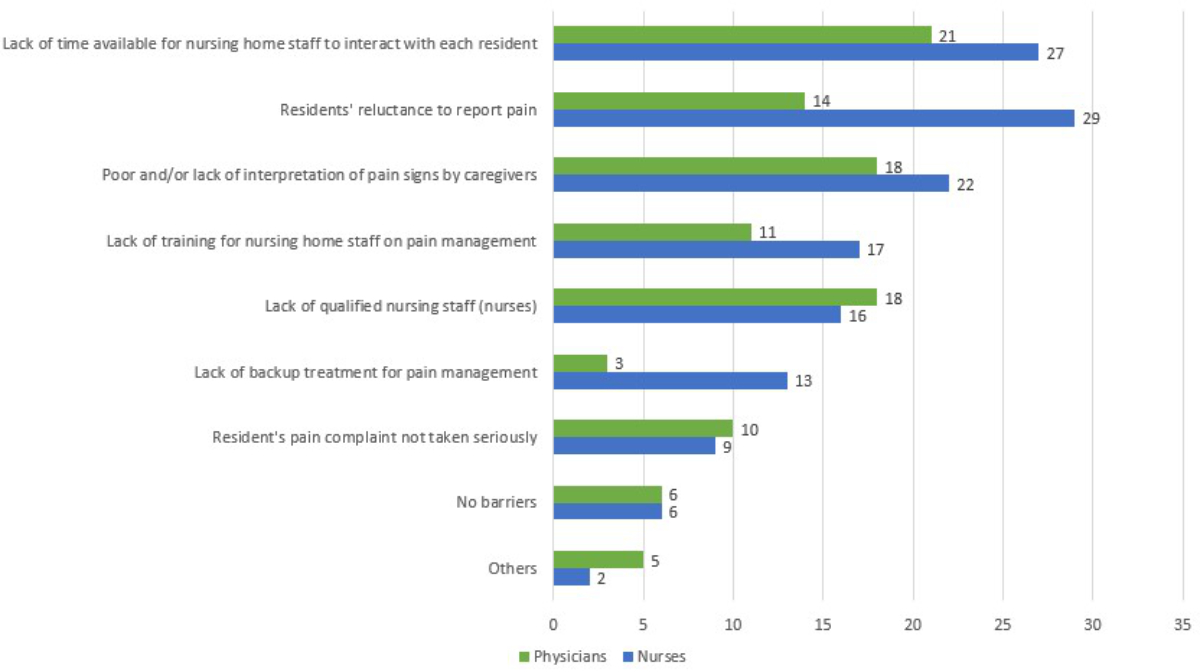
Figure 2Barriers to effective chronic pain management according to physicians (n = 37) and nurses (n = 53).
The reactions of residents to strong opioid prescriptions and those of their relatives are mostly positive according to the physicians (16/37 and 18/37, respectively) and nurses interviewed (47/61 and 34/61, respectively). In the view of the professionals, the main reasons for the reluctance of residents and their relatives are the fact that opioid analgesics are often specifically used at the end of life (23/37; 33/61), the risk of dependence (16/37; 23/61) and the risk of side effects (13/37; 19/61). More than a third of physicians (14/37) and nurses (26/61) considered that the reluctance of residents and their relatives to use strong opioids represents an obstacle to good chronic pain management in nursing homes.
Data from 124 nursing homes were used for the analysis; the number of nursing homes varied each year because of openings, closures or mergers of nursing homes. A total of 12,749 unique residents meeting the inclusion criteria stayed in the included nursing homes between 2017 and 2021; table 2 summarises the number of included nursing homes and residents.
Table 2Characteristics of nursing homes and number of residents included in the analysis.
| Year | Number of nursing homes1 | Mean age at time of admission (years)2 | Length of stay in nursing home (years)2 | Percentage of full-time equivalent healthcare staff (physicians, nurses, nursing assistants) within the total staff of nursing home (%)2 | Number of residents *1 | Number of residents with analgesic consumption1 |
| 2017 | 120 | 85.4 | 2.2 | 49.9% | 6064 | 4639 |
| 2018 | 123 | 84.1 | 2.4 | 50.2% | 5764 | 4720 |
| 2019 | 115 | 84.3 | 2.2 | 50.4% | 5419 | 4394 |
| 2020 | 118 | 84.3 | 2.2 | 50.4% | 5500 | 4620 |
| 2021 | 112 | 84.3 | 1.9 | 50.3% | 4855 | 4017 |
* Irrespective of analgesic consumption; number used as denominator for computing the prescription frequency.
Sources: 1 Data from the Quality of Care Programme; 2 the database of Statistics on Medical and Social Institutions (SOMED) [20].
During the analysis period, 11,012 residents used an analgesic at least once (overall prescription frequency 86.4%); the yearly prescription frequency increased from 76.5% in 2017 to 81.7% in 2021, with a maximum of 84.0% in 2020, caused by a rise in the use of strong opioids (see figure 3). The overall prescription frequency is higher than any yearly prescription frequency, as not all residents who received analgesics received them every year of their stay in the nursing home.
This increase in prescription frequency was not reflected in the amount of analgesics used, as the yearly DDD/d/resident remained nearly constant (0.41 in 2017 vs 0.42 in 2021, with a peak of 0.43 in 2020), indicating that residents received lower doses; slight changes were seen for non-opioid analgesics, whose use went from 0.32 DDD/d/resident in 2017 to 0.34 in 2020, but not for opioid analgesics (appendix III).
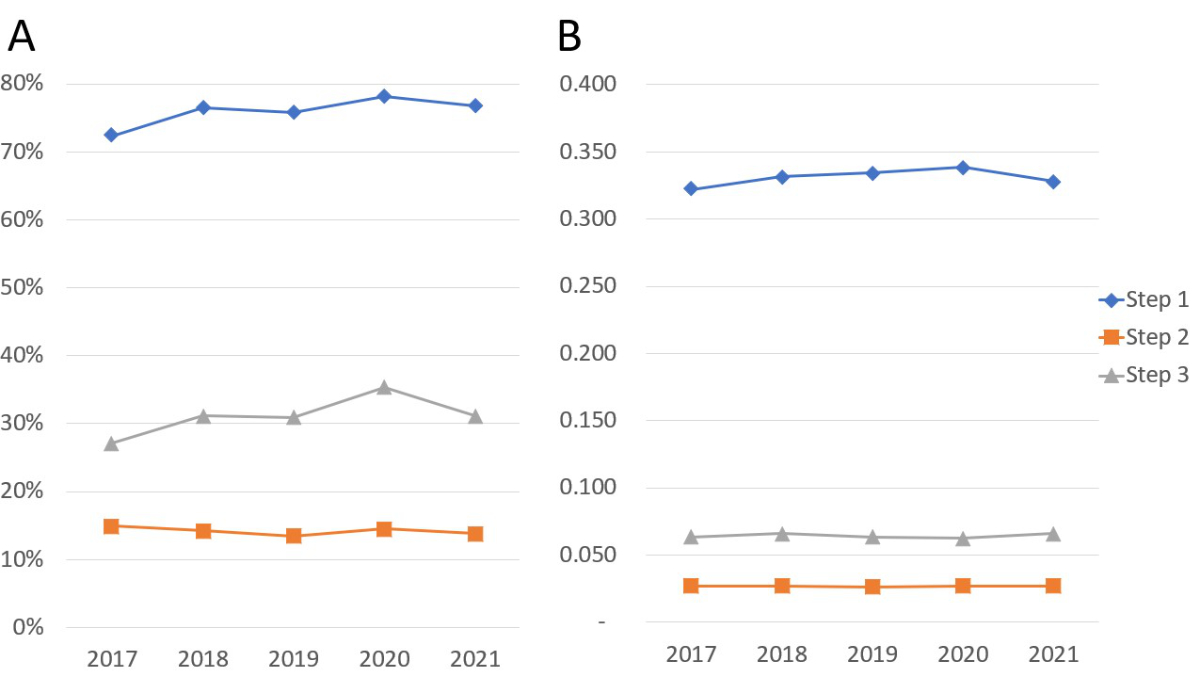
Figure 3Evolution of analgesic consumption expressed in prescription frequency (A) and Defined Daily Dose/resident/day (B), by WHO pain step, in the nursing homes of Vaud between 2017 and 2021. Topical NSAIDs (ATC M02A) are included in the prescription frequency analysis, but not in the Defined Daily Dose/resident/day analysis.
Paracetamol was the most-used non-opioid analgesic, with an average prescription frequency of 64.4% over the analysis period; its prescription frequency was 62.0% in 2017 and 65.0% in 2021, with a peak of 67.3% in 2020. The amount used increased as well, from 0.28 DDD/d/resident in 2017 to 0.29 in 2021.
Among the other systemic non-opioid analgesics, ibuprofen and metamizole were the most widely used; both prescription frequency and DDD/d/resident of ibuprofen dropped between 2017 and 2021, while metamizole’s use increased (figure 4) (appendix III).
Among topical treatments, diclofenac was the most used, with an average prescription frequency of 31.5% over the study period, increasing from 30.2% in 2017 to 33.0% in 2021. Other topical treatments were significantly less used, with only 7.0% of residents using preparations with salicylic acid derivatives, on average. No DDD/d/resident were computed for topical analgesics.
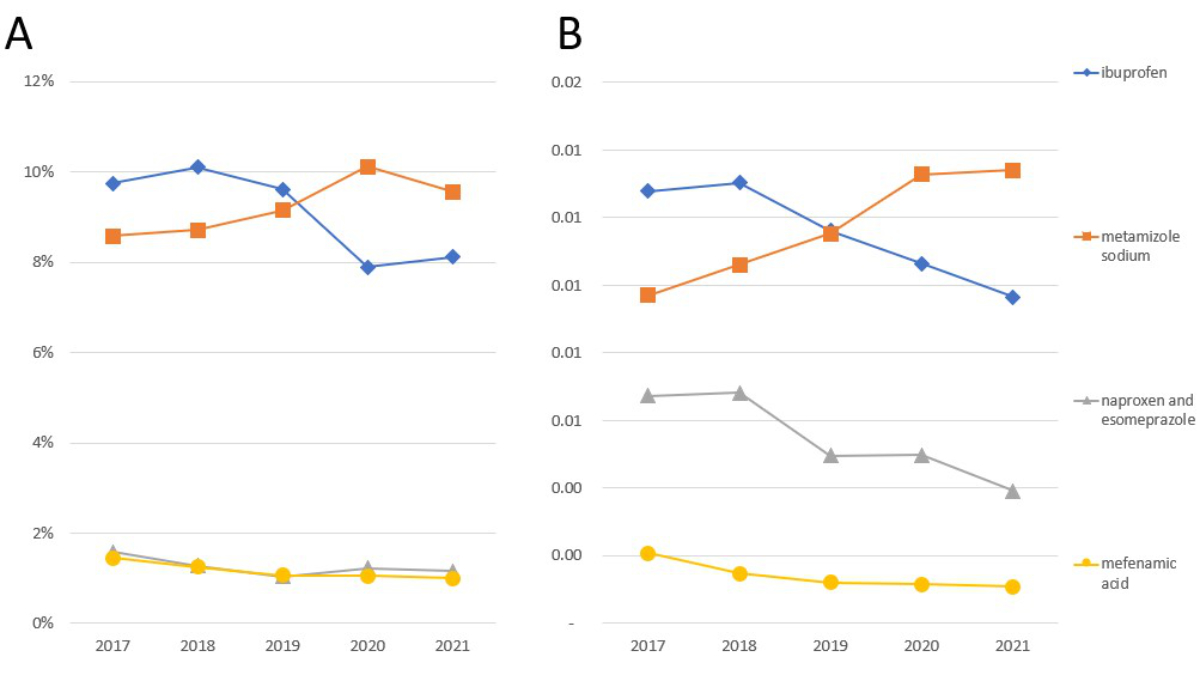
Figure 4Evolution of non-opioid systemic analgesic consumption expressed in prescription frequency (A) and Defined Daily Dose/resident/day (B), in the nursing homes of Vaud between 2017 and 2021. To improve readability, paracetamol and analgesics with prescription frequency <1% are not shown.
Tramadol was the most widely used weak opioid during the study period, prescribed at 3 times the frequency of codeine and paracetamol (see figure 5). Its prescription frequency decreased between 2017 and 2021, both as a single substance (12.1% vs 11.0%) and in combination with paracetamol (1.5% vs 0.8%), but the amount used remained constant, indicating that residents using tramadol received higher doses. A sharp increase, both in prescription frequency and amount used, was seen in 2020 for tramadol, matched by a sharp decrease in the amount of codeine and paracetamol used (appendix III).
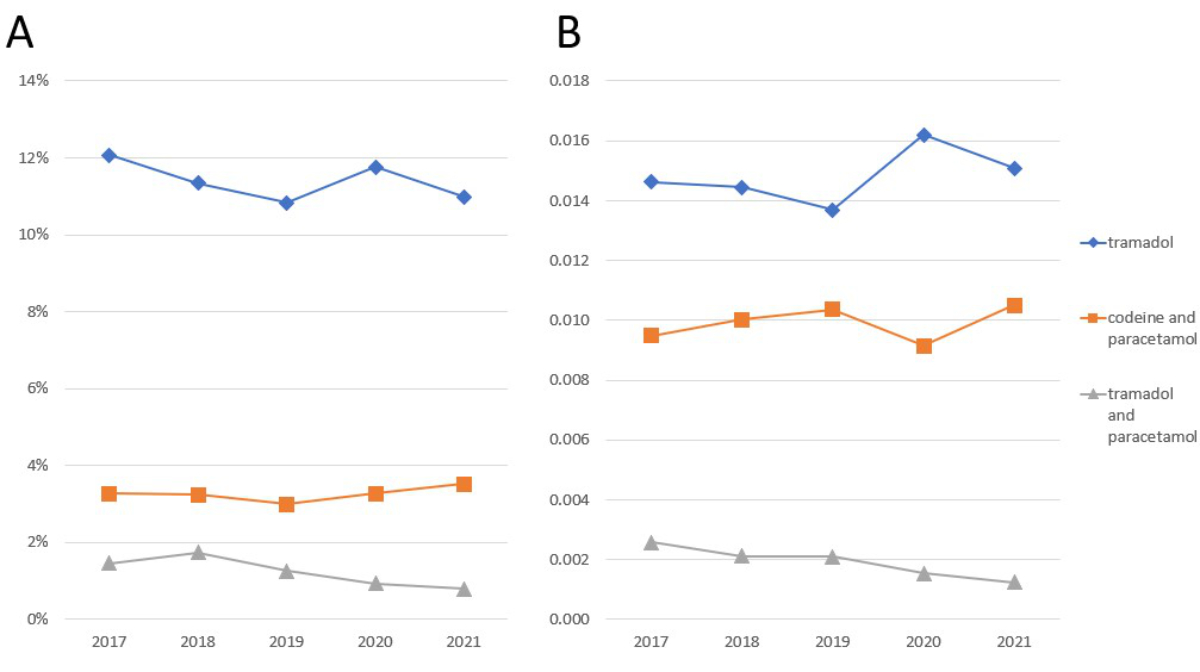
Figure 5Evolution of weak opioid consumption, expressed in prescription frequency (A) and Defined Daily Dose/resident/day (B), in the nursing homes of Vaud between 2017 and 2021.
The overall increase in strong opioid prescription frequency seen in figure 3 is due to a rise in morphine use, from 16.6% in 2017 to 21.5% in 2021, with a spike in 2020 to 25.7% of residents having received the drug at least once. The overall amount of strong opioids used was nearly constant (0.0634 DDD/d/resident in 2017 vs 0.0663 in 2021), the rise in fentanyl use being compensated by a decline in the use of both buprenorphine and the oxycodone-naloxone combination (see figure 6) (appendix III).
Oxycodone use remained relatively stable, at around 4.0% and 0.0075 DDD/d/resident, while other strong opioids were less widely used.
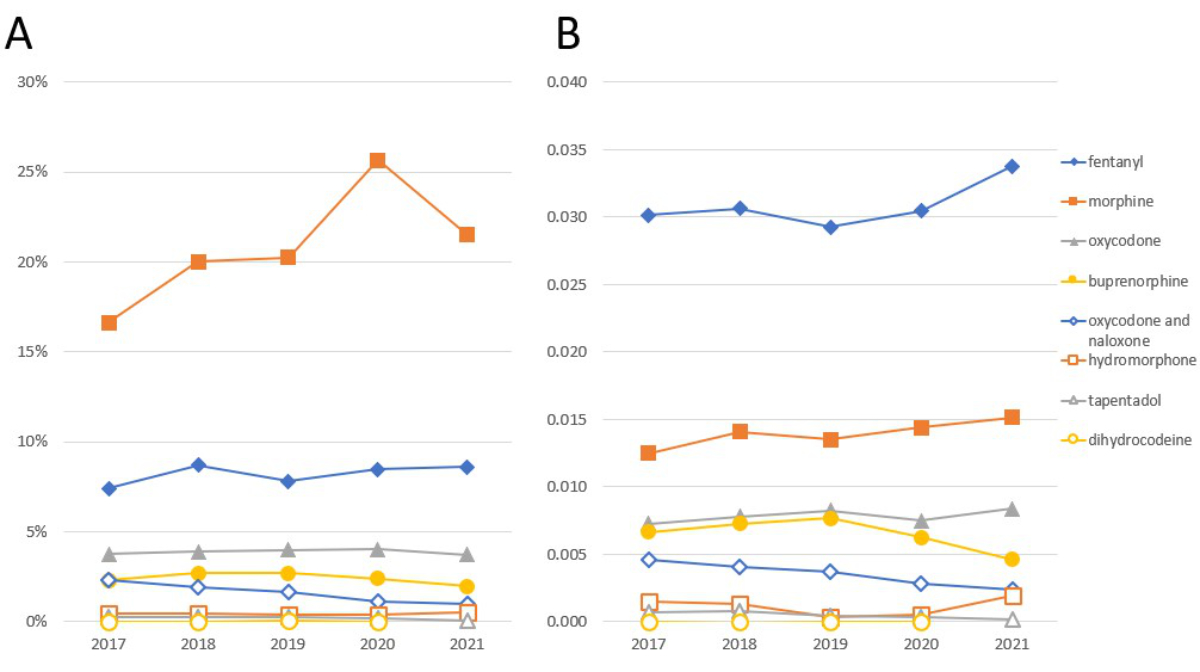
Figure 6Evolution of strong opioid consumption, expressed in prescription frequency (A) and Defined Daily Dose/resident/day (B), in the nursing homes of Vaud between 2017 and 2021.
Consumption varied wildly between nursing homes, with, for example, prescription frequency ranging from 2% to 71% of residents for strong opioids (Step 3) in 2020, or the amount used ranging from 0.05 to 0.74 DDD/d/resident for systemic non-opioids (Step 1) in the same year.
Excluding nursing homes for which data were missing for one or more years, nursing homes were grouped in quartiles according to the amount (in DDD/d/resident) of analgesics used each year. For overall use (ignoring WHO steps), 7 nursing homes were consistently in the 1st quartile (lowest users) for the 5 years of the study period and 10 were consistently in the 4th quartile (highest users). For WHO step 1, no nursing homes were consistently among the lowest or highest users, whereas for steps 2 and 3, 8 and 6 nursing homes, respectively, were consistently among the lowest users, and 10 and 5 nursing homes, respectively, were consistently among the highest users.
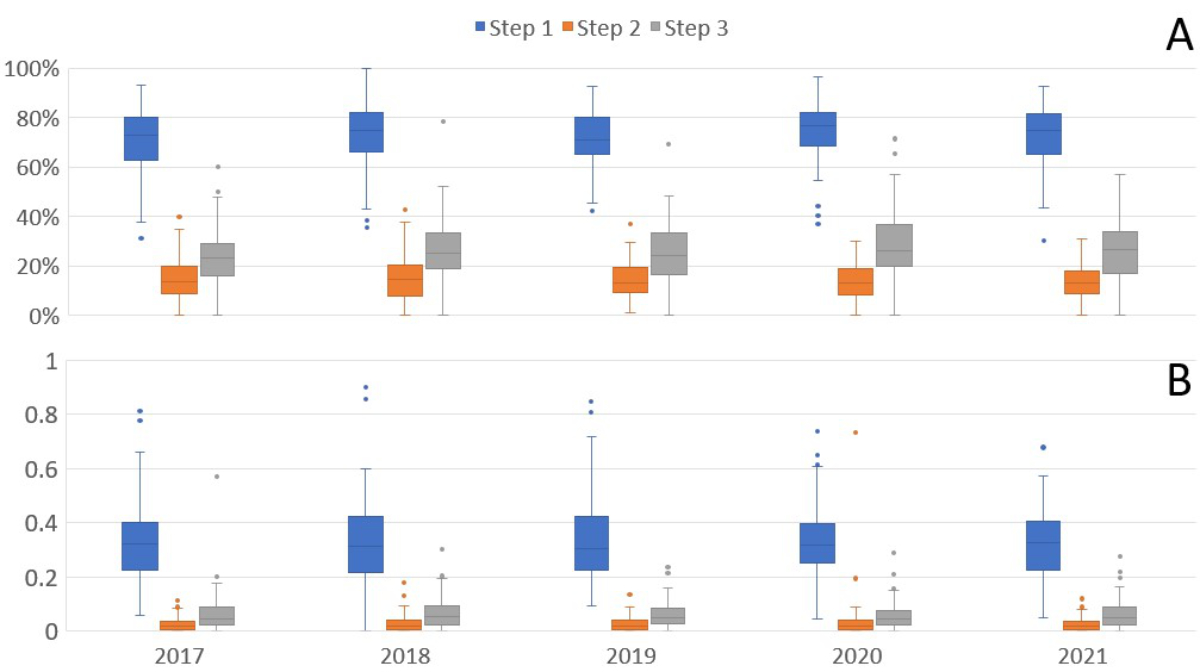
Figure 7Distribution of analgesic consumption among nursing homes in Vaud, from 2017 to 2021, expressed in prescription frequency (A) and Defined Daily Dose/resident/day (B), WHO pain step.
Although there are no recommendations for the management of chronic pain in the elderly in Switzerland, the majority of nurses and physicians tend to follow the few existing international recommendations for pain management for older patients [7, 21–24].
The results of this study highlight some significant points relevant for practice. First, various self-assessment and, where appropriate, hetero-assessment scales are used by the professionals in a complementary and interprofessional way. The prevalence of residents with diagnosed or suspected dementia (nearly two-thirds) in Swiss nursing homes can explain the need for these professionals to use hetero-assessment scales as a complement [25]. The greater use of pain scales by nurses can be supported in part by their role in pain monitoring and their proximity to the patient in this management. The most commonly mentioned self-assessment scales (numerical, facial), whose reliability and preference in the elderly are emphasised, make them the preferred choices [26]. Among the hetero-assessment scales, the PAINAD scale, which is a scale recommended for people with severe cognitive impairment [4], appears to be under-used.
Second, our survey shows that non-pharmacological measures, such as physiotherapy and adapted physical activities, have a role in chronic pain management for the professionals surveyed. Although the benefit of most non-pharmacological measures is not totally established in this indication [23, 27], adapted physical exercise is an essential measure for maintaining muscle function and the management of chronic pain in the elderly [22, 23, 27]. The reinforcement of psychological management, with cognitive behavioural therapy for example, is welcomed by a large number of the surveyed professionals, which is interesting in view of its benefits in the management of pathologies frequently encountered in older people such as chronic lower back pain [27].
Third, this study showed that both the professionals’ stated practice and their actual drug use are concordant with pain management guidelines [7, 21–23], which place paracetamol as the first-line treatment, limit the role of systemic NSAIDs and present opioids as a last-resort option. Opioids, however, are not used according to the WHO pain management guideline, which states that weak opioids (tramadol, codeine) should be preferred if they provide sufficient relief [13]; on the contrary, strong opioids are used both more widely, with a prescription frequency twice as high, and in larger amounts, with nearly three times the amount of DDD/d/resident, than weak ones. This practice could be explained by the higher side effect and interaction risk of weak opioids compared to strong opioids and by a preference for prescribing low doses of strong opioids to the detriment of weak opioids to treat moderate pain [28] and this in the absence of recommendations on the type of opioid (weak or strong) to be used in various guidelines on chronic pain management [29, 30]. Among strong opioids, morphine is the most widely prescribed drug due to its historical first-choice status in this class and its low cost; this “gold standard” status is however questioned [31], and our results show that practice in the included nursing homes favours fentanyl as the opioid of choice for people using larger amounts of drugs: the residents receiving it tend to use larger amounts, as evidenced by its lower prescription frequency and its larger DDD/d/resident compared to morphine. The sharp increase in morphine consumption in 2020 is not necessarily related to the management of non-cancer chronic pain but is likely to be due to its recommended use at the end of life during the COVID-19 pandemic [32]. Concerning the use of weak opioids, tramadol is widely prescribed compared with codeine (around three times more), despite the risks of drug interactions as well as the relatively high risk associated with its serotonergic effects [33, 34]. This larger use may be explained by practical reasons, such as the availability of an oral liquid form and the unavailability of codeine as a single substance for pain relief on the Swiss market, or by pharmacological ones, such as tramadol’s usefulness in cases of neuropathic pain, due to its serotoninergic activity [35].
The benefits of interprofessional collaborative practice in improving the quality of care are well established [36, 37]. Good interprofessional collaboration involves effective communication and a clear division of roles between professionals. Our study shows that physicians and nurses share an interprofessional approach of pain management in nursing home residents. The checking of the adequacy of long-term and rescue analgesic treatment by nurses is well recognised by both professions, as is the shared responsibility for assessing pain in residents. This sharing of tasks and responsibilities partly explains the comfort felt by physicians and nurses in pain management and in the use of rescue doses. Although nurses and physicians are aware of the pharmacist’s potential contributions in optimising patients’ drug therapy, they perceive the role of community pharmacists in chronic pain management as limited. Explanations for this could be that pharmacists have no direct contact with residents or do not participate in interprofessional meetings to discuss clinical situations. On a daily basis, interprofessional collaboration often works but its strengthening, even if appreciated by most physicians, nurses and other healthcare professionals, requires investing time and a joint project, which makes it difficult to achieve in practice.
In addition, patients are now more prominently integrated in the decision-making process, through the concept of patient-centred care [38] and taking into account their perceptions and behaviours. Although most physicians and nurses report a fairly positive reaction from residents and their relatives to the introduction of strong opioid therapy, their occasional reluctance can affect the effectiveness of pain management and underlines the importance of involving them in these decisions.
Although most professionals believed that the majority of residents were adequately treated in terms of pain relief and considered that cooperation within their medical care team was good or excellent, some perspectives could be put forward to improve pain management in nursing home residents.
First, better communication between nurses and physicians could improve chronic pain management. However, the current shortage of nurses in Swiss nursing homes, noted by the physicians interviewed, and the constant renewal of care teams may limit this prospect. Better training of nurses and rules to better interpret pain signs by residents could be potential levers to facilitate pain management in nursing home residents [9, 39] as well as a more optimal use of rescue treatment. Specific audit and feedback on analgesic use could also be reinforced within the annual analysis of nursing home drug consumption [40] by the pharmacists, in order to favour molecules with the best efficacy and safety profile in elderly patients. Their involvement in training nursing staff and leading medication reviews could be other possible interventions.
Second, the heterogeneity of analgesic use between nursing homes shows that some of them find adequate ways to manage the pain of their residents without using large amounts of analgesics. A part of this heterogeneity could be explained by the individual circumstances of some residents, who may require large quantities of drugs to manage severe pain. However, 21 of the 124 nursing homes included consistently used either high or low amounts of analgesics over the 5 years of the study, showing that care practices are also a driver of analgesic use: as the average duration of residents stay is less than 3 years [41], it is unlikely that their individual circumstances would consistently drive up the use of analgesics over 5 years. Further studies in these “high-consumer” and “low-consumer” nursing homes could identify the parameters and practices influencing analgesic use, opening perspectives to optimise chronic pain management among nursing home residents.
One of the strengths of our study is the use of a mixed-methods research approach, integrating the combined use of an online questionnaire with drug consumption data. This method enabled us to obtain rich results and to triangulate findings concerning the use of analgesic drugs within nursing homes. Although the number of responses from professionals in this study was fairly low, the collection of data from two different professions lends a certain interest to the data collected. However, the inclusion of other professionals involved in pain management, such as care assistants, could have enabled a more comprehensive analysis of chronic pain management in these establishments. We did not explore the impact of the COVID-19 pandemic on the practices of the professionals interviewed. However, our consumption data don’t suggest a more restrictive use of strong opioids during the pandemic. Instead, morphine and fentanyl use increased in 2020–2021, possibly reflecting the higher mortality rates in nursing homes and the resulting increase in end-of-life care, including palliative sedation.
This study, conducted across a substantial sample of nursing homes in the French-speaking region of Switzerland, aimed to provide deep insights on chronic non-cancer pain management practices in nursing homes rather than to identify determinants of this management with statistical reliability. Although these results cannot be directly generalised to the whole of Switzerland – given that differences in pain management practices between regions may exist due to medical, organisational or cultural factors [42] –, the findings may nevertheless provide a useful basis for reflection and inform potential improvements in regions facing similar challenges in the management of chronic non-cancer pain in elderly populations. Future research incorporating more detailed analyses – such as resident characteristics, nursing home profiles and staffing variables – combined with robust statistical testing and inclusion of nursing homes from German- and Italian-speaking cantons, could enable a more comprehensive understanding of chronic non-cancer pain management and its influencing factors in Swiss nursing homes.
This study shows that surveyed healthcare professionals are aware and adhere to recommendations for chronic pain management, whether in terms of pain assessment, or non-pharmacological and pharmacological measures. Chronic pain management is supported by interprofessional practice in these nursing homes, in terms of defining the roles of each profession and sharing tasks between physicians and nurses. However, an enlargement of interprofessional collaborations, more-extensive training of nurses, audit and feedback on analgesic use and an exploration of care practices in nursing homes using low amounts of analgesics would be levers to improve the management of chronic pain in nursing home residents.
The data underlying this study was collected as part of a Quality of Care programme and is not publicly available, but may be obtained from the corresponding author upon reasonable request.
This study received no funding.
All authors have completed and submitted the International Committee of Medical Journal Editors form for disclosure of potential conflicts of interest. No potential conflict of interest related to the content of this manuscript was disclosed.
1. Cole CS, Carpenter JS, Chen CX, Blackburn J, Hickman SE. Prevalence and Factors Associated with Pain in Nursing Home Residents: A Systematic Review of the Literature. J Am Med Dir Assoc. 2022 Dec;23(12):1916–1925.e1.
2. Sommerhalder K, Gugler E, Conca A, et al. Residents’ Perspectives of Living in Nursing Homes in Switzerland (RESPONS). 2015. https://www.bfh.ch/dam/jcr:8e0d20fd-56c9-4e33-a249-f48536d30f24/ergebnisse-studie-respons.PDF
3. Allaz AF. Prendre en soins les douleurs chroniques - Des dimensions émotionnelles aux aspects organisationnels Caring for chronic pain - From emotional dimensions to organizational aspects. 2024. https://www.artiset.ch/files/MC59U5I/ws_3_anne_francoise_allaz_prendre_en_soins_les_douleurs_chroniques.pdf
4. Schofield P. The Assessment of Pain in Older People: UK National Guidelines. Age Ageing. 2018 Mar;47 suppl_1:i1–22.
5. Martin R, Williams J, Hadjistavropoulos T, Hadjistavropoulos HD, MacLean M. A qualitative investigation of seniors’ and caregivers’ views on pain assessment and management. Can J Nurs Res. 2005 Jun;37(2):142–64.
6. NHS. Ways to manage chronic pain. https://www.nhs.uk/live-well/pain/ways-to-manage-chronic-pain/
7. American Geriatrics Society Panel on Pharmacological Management of Persistent Pain in Older Persons. Pharmacological management of persistent pain in older persons. J Am Geriatr Soc. 2009 Aug;57(8):1331–46.
8. Herman AD, Johnson TM 2nd, Ritchie CS, Parmelee PA. Pain management interventions in the nursing home: a structured review of the literature. J Am Geriatr Soc. 2009 Jul;57(7):1258–67.
9. Brunkert T, Simon M, Ruppen W, Zúñiga F. A Contextual Analysis to Explore Barriers and Facilitators of Pain Management in Swiss Nursing Homes. J Nurs Scholarsh. 2020 Jan;52(1):14–22.
10. Brunkert T, Simon M, Haslbeck J, Zúñiga F. Who to Talk to About my Pain? A Brief Qualitative Study on Perception of Pain and its Management in Swiss Nursing Home Residents. Pain Manag Nurs. 2020 Apr;21(2):151–6.
11. Brunkert T, Ruppen W, Simon M, Zúñiga F. A theory-based hybrid II implementation intervention to improve pain management in Swiss nursing homes: A mixed-methods study protocol. J Adv Nurs. 2019 Feb;75(2):432–42.
12. von Elm E, Altman DG, Egger M, Pocock SJ, Gøtzsche PC, Vandenbroucke JP; STROBE Initiative. The Strengthening the Reporting of Observational Studies in Epidemiology (STROBE) statement: guidelines for reporting observational studies. Ann Intern Med. 2007 Oct;147(8):573–7. doi: https://doi.org/10.7326/0003-4819-147-8-200710160-00010
13. World Health Organization. Guidelines for the Pharmacological and Radiotherapeutic Management of Cancer Pain in Adults and Adolescents. 2018. https://www.who.int/publications/i/item/9789241550390
14. Norwegian Institute of Public Health. International language for drug utilization research. 2025. https://atcddd.fhi.no/
15. World Health Organization. Defined Daily Dose (DDD). https://www.who.int/tools/atc-ddd-toolkit/about-ddd
16. Confédération suisse. 810.30 Loi fédérale relative à la recherche sur l’être humain 810.30 Federal law on human research. https://www.fedlex.admin.ch/eli/cc/2013/617/fr
17. Association Doloplus. L’échelle Doloplus Doloplus Scale. https://doloplus.fr/lechelle-doloplus/
18. Association Doloplus. L’échelle Algoplus. Algoplus Scale. https://doloplus.fr/lechelle-algoplus/
19. Warden V, Hurley AC, Volicer L. Development and psychometric evaluation of the Pain Assessment in Advanced Dementia (PAINAD) scale. J Am Med Dir Assoc. 2003;4(1):9–15.
20. Direction Générale de la Santé du Canton de Vaud. Plateforme d’information du système de santé vaudois Vaud healthcare system information platform. https://infosan.vd.ch/
21. Abdulla A, Adams N, Bone M, Elliott AM, Gaffin J, Jones D, et al.; British Geriatric Society. Guidance on the management of pain in older people. Age Ageing. 2013 Mar;42 Suppl 1:i1–57. doi: https://doi.org/10.1093/ageing/afs199
22. Schofield P. Managing chronic pain in older people. Nurs Times. 2013 Jul;109(30):26–7.
23. Schofield P, Dunham M, Martin D, Bellamy G, Francis SA, Sookhoo D, et al. Evidence-based clinical practice guidelines on the management of pain in older people - a summary report. Br J Pain. 2022 Feb;16(1):6–13.
24. The australian pain society. Pain in Residential Aged Care Facilities: Management Strategies. https://www.apsoc.org.au/Pain-in-RACF2-Resources
25. Association Alzheimer Suisse. Personnes atteintes de démence dans les EMS suisses : des défis multiples People with dementia in Swiss NHs: multiple challenges. https://www.alzheimer-schweiz.ch/fileadmin/dam/Alzheimer_Schweiz/Dokumente/Publikationen-Produkte/200F_2014_demence-ems.pdf
26. Nimmaanrat S, Thepsuwan A, Tipchatyotin S, Jensen MP. Measuring pain intensity in older patients: a comparison of five scales. BMC Geriatr. 2024 Jun;24(1):556.
27. Canadian Agency for Drugs and Technologies in Health. Les options non opioïdes dans la prise en charge de la douleur chronique chez l’adulte Non-opioid options in the management of chronic pain in adults. https://www.cadth.ca/sites/default/files/pdf/les_options_non_opio%C3%AFdes_dans_la_prise_en_charge_de_la_douleur_chronique_chez_l%E2%80%99adulte.pdf
28. Anekar AA, Hendrix JM, Cascella M. WHO Analgesic Ladder. 2023 Apr 23. In: StatPearls. Treasure Island (FL): StatPearls Publishing; 2025. PMID: 32119322.
29. Dowell D, Ragan KR, Jones CM, Baldwin GT, Chou R. CDC Clinical Practice Guideline for Prescribing Opioids for Pain - United States, 2022. MMWR Recomm Rep. 2022 Nov;71(3):1–95.
30. Haute Autorité de Santé. Traitement antalgique opioïde de la douleur chronique non cancéreuse Opioid analgesic treatment of chronic non-cancer pain. 2022. https://www.has-sante.fr/upload/docs/application/pdf/2022-03/traitement_antalgique_opioide_de_la_douleur_chronique_non_cancereuse_-_fiche.pdf
31. Gálvez R, Pérez C. Is morphine still the best reference opioid? Pain Manag. 2012 Jan;2(1):33–45.
32. World Health Organization. Clinical management of COVID-1. 2022. https://iris.who.int/server/api/core/bitstreams/4908ec34-8b15-4d89-b1d7-3d9b1f1fc696/content
33 Capriz F, Chapiro S, David L, et al. Consensus multidisciplinaire d’experts en douleur et gériatrie : utilisation des antalgiques dans la prise en charge de la douleur de la personne âgée (hors anesthésie) Multidisciplinary consensus of experts in pain and geriatrics: use of analgesics in the management of pain in older adults (excluding anesthesia). Douleurs Éval - Diagn - Trait 2017; 18: 234–247. http://dx.doi.org/.
34. Hôpitaux Universitaires de Genève. Interactions médicamenteuses, cytochromes P450 et P-glycoprotéine (Pgp) Drug interactions, cytochromes P450 and P-glycoprotein (Pgp) 2017. https://www.hug.ch/sites/interhug/files/structures/pharmacologie_et_toxicologie_cliniques/a5_cytochromes_6_2.pdf
35. Schlereth T. Guideline “diagnosis and non interventional therapy of neuropathic pain” of the German Society of Neurology (deutsche Gesellschaft für Neurologie). Neurol Res Pract. 2020 Jun;2(1):16.
36. Morgan KH, Barroso CS, Bateman S, Dixson M, Brown KC. Patients’ Experiences of Interprofessional Collaborative Practice in Primary Care: A Scoping Review of the Literature. J Patient Exp. 2020 Dec;7(6):1466–75.
37. Agency for Healthcare Research and Quality. TeamSTEPPS®: National Implementation Research/Evidence Base. https://www.ahrq.gov/teamstepps/evidence-base/primary-care.html
38 Schweizerische Akademie der Medizinischen Wissenschaften. Patienten und Angehörige beteiligen Involving patients and relatives. Swiss Academies Communications. Basel. 2016.11(10):24.
39. Brunkert T, Simon M, Zúñiga F. Use of Pain Management Champions to Enhance Guideline Implementation by Care Workers in Nursing Homes. Worldviews Evid Based Nurs. 2021 Apr;18(2):138–46.
40. Cateau D, Ballabeni P, Niquille A. Effects of an interprofessional Quality Circle-Deprescribing Module (QC-DeMo) in Swiss nursing homes: a randomised controlled trial. BMC Geriatr. 2021 May;21(1):289.
41. Swiss Health Observatory. Length of stay in nursing homes. https://ind.obsan.admin.ch/fr/indicator/obsan/duree-de-sejour-en-ems
42. Vallon N, Eggli Y, Niquille A, et al. Utilisation de médicaments potentiellement inappropriés dans la population gériatrique du Valais et comparaison intercantonale Use of potentially inappropriate medications in the geriatric population of Valais and inter-cantonal comparison. 2023. https://api.unil.ch/iris/server/api/core/bitstreams/43388acd-f90f-43dc-b681-01de92e8ca2e/content
The appendix is available in the PDF version of the article at https://doi.org/10.57187/4743.