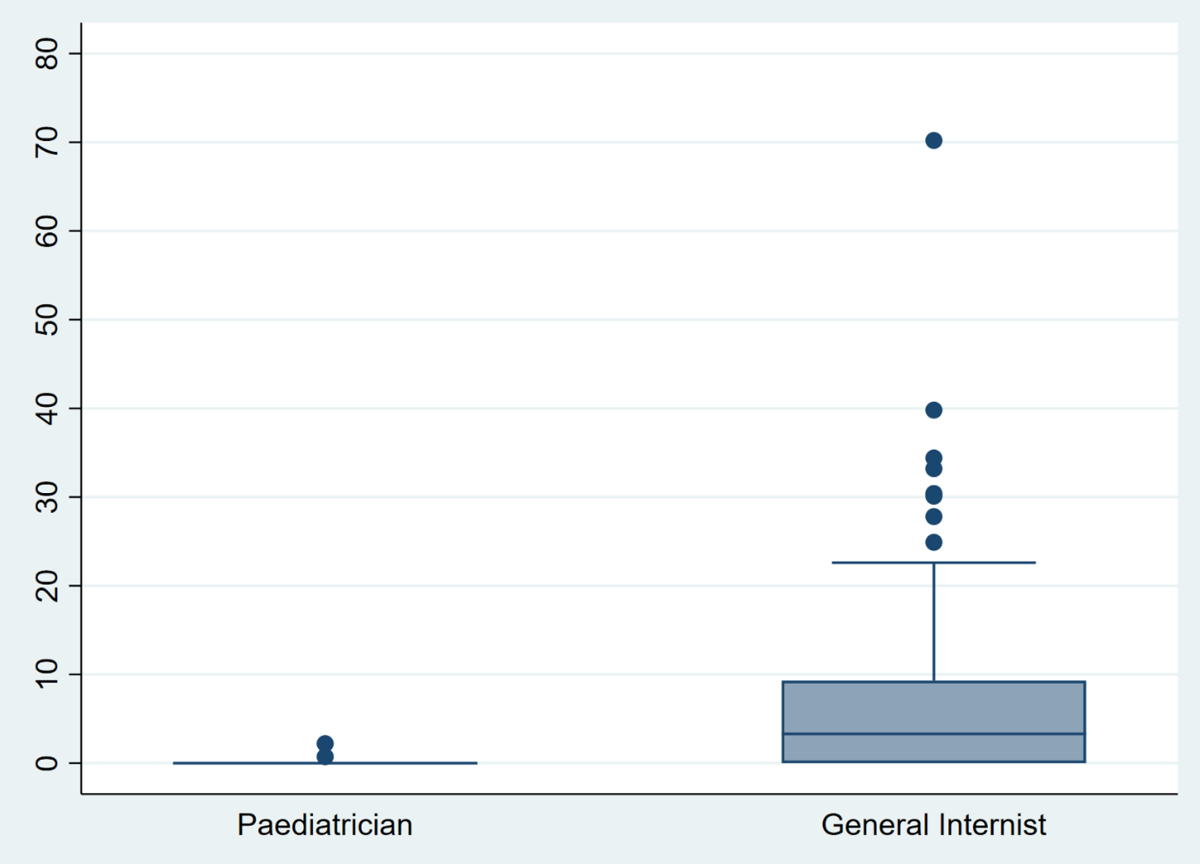
Figure 1Median incidence rate of long COVID-related consultations per 1000 consultations, stratified by specialty of family doctors reporting within the Sentinella network.
DOI: https://doi.org/https://doi.org/10.57187/4300
By the end of 2020, the patient-coined term “long COVID” drew the medical community’s attention to the increasingly frequent and potentially long-term persistent symptoms following SARS-CoV-2 infection [1]. More recently, it has been suggested that long COVID should be viewed not as a single disease entity but as an umbrella term encompassing multiple post-COVID syndromes with distinct pathophysiological mechanisms [2–8]. This diversity within the classification, along with the differences in study contexts, sampling methods (such as hospital vs community settings) and the initial absence of a clear definition for long COVID, led to widely heterogeneous initial prevalence estimates [8–11].
In Switzerland, early research revealed alarming prevalences of long COVID, raising significant concerns. A study conducted at Geneva University Hospitals found that 39% of adults who visited the CoviCare clinic continued to experience symptoms 7 to 9 months after their initial COVID-19 symptoms [12]. Similarly, two-thirds of participants from Zurich who had tested positive for SARS-CoV-2 reported ongoing symptoms 6 months post-infection [13]. A larger cohort study later indicated that nearly one in five unvaccinated individuals had not recovered after two years [11]. Additionally, 53% of patients at the outpatient clinics of CHUV in Lausanne reported experiencing symptoms that persisted for up to ten months following a mild SARS-CoV-2 infection [14]. Concerns also extended to children, with the SEROCoV-KIDS study showing an increased prevalence of persistent symptoms in nearly 10% of adolescents [15]. However, these findings regarding symptom prevalence did not provide insights on the impact on patients’ health or the broader burden of long COVID on health services in Switzerland.
In fact, despite high prevalence estimates, Swiss family medicine practices and paediatric services did not observe any notable surge in patients presenting with long COVID in 2021. This is reflected in data from the canton of Vaud, where long COVID accounted for less than 1% of family medicine consultations between April and December 2021 [16, 17]. Similarly, in Britain, data collected from February 2020 to May 2021 by analysing electronic health records of 96% of the population (58 million records) showed that long COVID was coded at a rate of just 20.3 to 55.6 cases per 100,000 patients, suggesting comparable trends in low recognition of long COVID in primary care settings [18].
To guide health service planning, it appeared essential to gather more precise data from the primary care context. The existing Swiss Sentinella surveillance system, designed to collect data from family medicine (general internal medicine and paediatric) practices in Switzerland, offered a valuable opportunity to estimate the actual burden of long COVID in Swiss family practices and to monitor it over time. Thus, the objective was to estimate the incidence of long COVID-related consultations in family medicine practices.
We conducted a repeat cross-sectional study using the data collected by family doctors within the Swiss Sentinella network, part of the epidemiological surveillance system managed by the Federal Office of Public Health (FOPH). Data was collected from August 2021 to April 2023 using monthly reports on physicians’ activities over the previous four weeks.
The data was collected by the FOPH, where physicians’ identities were coded and securely stored. Some physicians working in the same practice reported under the same code, while others working in the same practice reported under separate codes. The anonymised dataset was then transferred from the FOPH to the research team for statistical analysis. Available physician and practice characteristics included Sentinella region, zone of practice (urban, intermediate, rural), specialisation (internal medicine or paediatrics), physician activity rate, sex and number of contributions. The data did not include information on individual patients (personal data, symptoms and patient reports were not gathered).
The data collection form was based on the definition of long COVID by the UK’s National Institute for Health and Care Excellence (NICE), i.e. either (1) ongoing symptomatic COVID-19 if symptoms were present between 4 and 12 weeks after the initial infection, or (2) post-COVID syndrome if symptoms were present for >12 weeks after the initial infection. When the study was initially designed, the NICE definition was the most used in the literature and the current World Health Organization (WHO) clinical case definition of long COVID did not exist [19]. Reported variables included total number of consultations over the previous four weeks and long COVID-related consultations. The analysis did not distinguish between new and repeat long COVID-related consultations.
We performed a descriptive analysis of the data. Proportions were used to summarise categorical variables, while continuous variables were summarised using medians and interquartile ranges (IQR), as they were not normally distributed. Incidence rates of long COVID consultations per 1000 doctor-patient contacts were calculated on a monthly basis in the following manner: number of long COVID-related consultations within four weeks divided by the number of doctor-patient contacts within the same month (n per 1000 consultations). We analysed trends in the monthly incidence of long COVID-related consultations. Ordinal logistic regression was employed to investigate the association between certain physician characteristics and the monthly incidence of long COVID-related consultations. For these calculations, incidence rates were grouped into three categories, based on median incidence rates for each doctor: median monthly incidence of 0 long COVID consultations per 1000 doctor-patient contacts, between 0.1 and 8 and >8. The two-sided alpha significance level was set at 0.05. Univariable ordinal logistic regressions were conducted for each physician characteristic: Sentinella region, practice zone, specialisation, physician activity rate, sex and the number of months the physician/practice contributed data during the study period. Subsequently, a multivariable ordinal logistic regression model incorporating all variables was developed. All results were expressed as odds ratios with 95% confidence intervals.
During data cleaning, we identified outliers and implausible incidence rates. To differentiate true outliers from data entry errors, all data entries leading to an incidence rate above the 95th percentile were examined. Of the 2743 monthly reports, 158 were identified as outliers and examined in detail, leading to the exclusion of 17 due to implausible data (most due to total number of monthly consultations being lower than the number of long COVID-related consultations for that month. Decisions on monthly data inclusion or exclusion were carefully documented and are available on request if required.
Data analysis was conducted using Stata® software, version 17.0 (StataCorp LLC, College Station, TX, USA).
A total of 181 family practices – 154 general internists (85%) and 27 paediatricians (15%) – completed at least one monthly long COVID questionnaire during the study. A total of 2743 monthly reports were collected over the 21-month study period. While 35 practices (19%) – 31 internal medicine (17%) and 4 paediatrics (2%) – provided data for the entire study period, 112 practices (62%) – 94 internal medicine (52%) and 18 paediatrics (10%) – contributed for at least 12 months or more.
Table 1 summarises the collected data and shows the characteristics of reporting Sentinella practices. Of the 181 Sentinella practices, 18 were “group-reporting”, meaning multiple physicians used the same code. One-third of the reporting doctors were women. The majority were general internists and most worked in urban areas. Additionally, most reported an activity rate greater than 0.8 full-time equivalent (FTE).
Table 1Physician characteristics and association with median incidence of monthly consultations for long COVID per 1000 doctor-patient contacts.
| Variable | Category | Number of doctors, n* (%) | Median monthly incidence of long COVID-related consultations:0 per 1000 consultations | Median monthly incidence of long COVID-related consultations: 0.1–8 per 1000 consultations | Median monthly incidence of long COVID-related consultations:>8 per 1000 consultations | Unadjusted OR (95% CI) | p value | Adjusted OR (95% CI) | p value |
| Overall distribution | All doctors | 179 (100%) | 88 (49.2) | 27 (15.1) | 34 (19.0) | NA | NA | NA | NA |
| Sentinella region | GE/NE/VD/VS | 43 (23.5%) | 25 (58.1) | 8 (18.6) | 10 (23.6) | 1.0 | NA | 1.0 | NA |
| BE/FR/JU | 38 (21.3%) | 20 (52.6) | 11 (29.0) | 7 (18.4) | 1.1 (0.5–2.5) | 0.847 | 0.7 (0.3–1.9) | 0.520 | |
| AG/BL/BS/SO | 28 (15.3%) | 13 (46.4) | 6 (21.4) | 9 (32.1) | 1.7 (0.7–2.5) | 0.285 | 1.5 (0.5–4.0) | 0.468 | |
| LU/NW/OW/SZ/UR/ZG | 14 (7.7%) | 4 (30.8) | 1 (7.7) | 8 (61.5) | 5.2 (1.4–18.6) | 0.012 | 5.7 (1.4–23.4) | 0.016 | |
| AI/AR/GL/SG/SH/TG/ZH | 39 (21.3%) | 14 (35.9) | 17 (43.6) | 8 (20.5) | 1.7 (0.8–3.8) | 0.197 | 1.1 (0.4–2.7) | 0.866 | |
| GR/TI | 20 (10.9%) | 12 (60.0) | 4 (20.0) | 4 (20.0) | 0.9 (0.3–2.6) | 0.832 | 0.8 (0.2–2.4) | 0.648 | |
| Professional activity rate | <50% | 7 (3.8%) | 3 (42.9) | 1 (14.3) | 3 (42.9) | 1.0 | NA | 1.0 | NA |
| 50–80% | 67 (36.6%) | 34 (50.8) | 10 (14.9) | 23 (34.3) | 0.7 (0.1–3.1) | 0.608 | 0.3 (0.04–1.5) | 0.128 | |
| 81–100% | 92 (50.3%) | 47 (52.2) | 26 (28.9) | 17 (18.9) | 0.5 (0.1–2.2) | 0.343 | 0.1 (0.02–0.8) | 0.027 | |
| >100%** | 17 (9.3%) | 4 (23.5) | 10 (58.8) | 3 (17.7) | 0.9 (0.2–4.7) | 0.902 | 0.5 (0.04–6.6) | 0.591 | |
| Sex | Female | 59 (32.2%) | 33 (55.9) | 9 (15.3) | 17 (20.8) | 1.0 | NA | 1.0 | NA |
| Male | 109 (59.6%) | 52 (48.6) | 29 (27.1) | 26 (24.3) | 1.1 (0.6–2.1) | 0.693 | 1.5 (0.7–3.3) | 0.309 | |
| Mixed** | 15 (8.2%) | 3 (20.0) | 9 (60.0) | 3 (20.0) | 1.9 (0.7–5.1) | 0.188 | 1.1 (0.1–9.1) | 0.948 | |
| Practice zone | Urban | 135 (73.8%) | 63 (47.0) | 36 (26.9) | 35 (26.1) | 1.0 | NA | 1.0 | NA |
| Intermediate | 30 (16.4%) | 16 (53.3) | 8 (26.7) | 6 (20.0) | 0.8 (0.4–1.6) | 0.469 | 0.7 (0.3–1.5) | 0.350 | |
| Rural | 18 (9.8%) | 9 (52.9) | 3 (17.7) | 5 (29.4) | 0.9 (0.3–2.4) | 0.843 | 0.6 (0.2–1.7) | 0.316 | |
| Specialty | Paediatrician | 27 (14.8%) | 25 (92.6) | 2 (7.4) | 0 (0) | 1.0 | NA | 1.0 | NA |
| General internist | 156 (85.3%) | 63 (40.9) | 45 (29.2) | 46 (29.9) | 18.7 (4.3–81.5) | <0.001 | 31.3 (6.3–156.1) | <0.001 |
* n varies across variables due to missing data (range n = 179–181)
** In group-reporting practices.
NA = not applicable
The median incidence of monthly long COVID consultations was 3 per 1000 consultations for general internists (IQR: 0–10.5) and 0 per 1000 consultations for paediatricians (IQR: 0–2.2) (figure 1). Most paediatricians reported no long COVID consultations. Figure 2 illustrates the evolution over time in median incidence for internal medicine practices during the study.
Figure 1Median incidence rate of long COVID-related consultations per 1000 consultations, stratified by specialty of family doctors reporting within the Sentinella network.
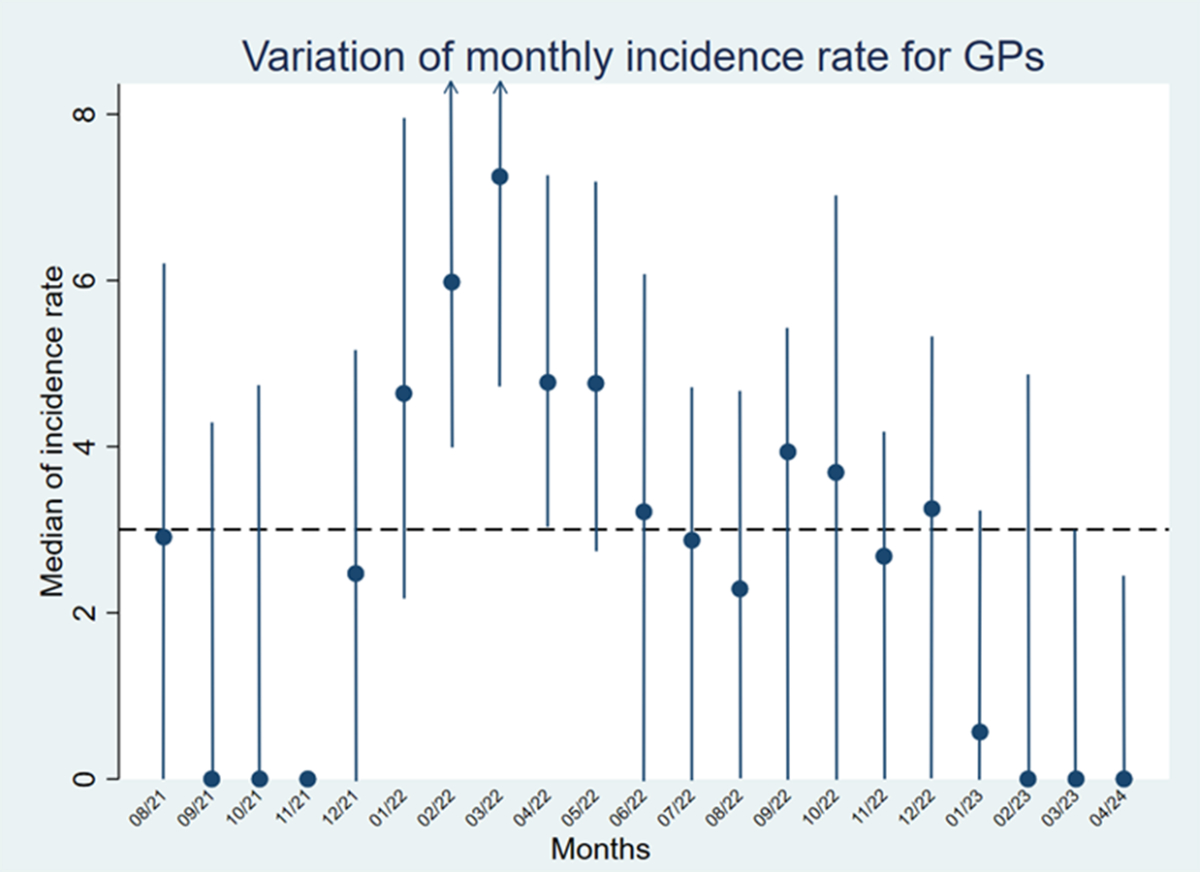
Figure 2Monthly median incidence rate of long COVID-related consultations per 1000 consultations in general internal medicine reporting practices of the Sentinella network.
In the univariable analyses, only physician specialty was significantly associated with reporting long COVID-related consultations in higher incidence categories. No associations were observed with other variables, including region, physician activity rate or sex.
The multivariable ordinal logistic regression showed that the association between physician specialty and reporting long COVID cases remained significant, with general internists reporting more cases compared to paediatricians (p <0.05). Additionally, physicians from central Switzerland (LU/NW/OW/SZ/UR/ZG region) had significantly higher odds of reporting long COVID-related consultations in higher incidence categories compared to those from other regions (table 1). On the other hand, physicians working at a rate >80% had a higher odds of reporting long Covid-related consultations in lower incidence categories than physicians working less than half time.
Our study indicates that family doctors in Switzerland are not frequently encountering patients with long COVID in their routine practice. The median monthly incidence of long COVID-related consultations was 3 per 1000 consultations for general internists, while most paediatricians had no long COVID-related consultations during the study period. This low incidence of long COVID-related consultations reflects a low demand and burden related to long COVID in family medicine in Switzerland. The extent to which it correlates with the overall incidence of long COVID in the general population over the study period is unknown.
An estimated 3.7 million SARS-CoV-2 infections were recorded in Switzerland over the study period [20]. Assuming that approximately 10% of SARS-CoV-2 infections result in long COVID, as reported in previous studies, and given that 90% of the Swiss population consults a family medicine practice at least once a year, the number of recorded long COVID-related consultations in family medicine is markedly lower than was expected in relation to the estimated half a million long COVID cases that were predicted to have occurred in Switzerland [10, 12, 21]. This discrepancy could be attributed to multiple factors such as potential biases in initial studies, epidemiological variabilities and diagnostic challenges.
Early reports showing troubling figures may have overestimated the prevalence of long COVID due to recruitment strategies[12–14]. This data was based on cohorts recruited in a hospital setting, included participants more severely affected by SARS-CoV-2 [5, 22]. Given that the prognosis of long COVID appears to depend on the severity of the acute COVID-19 infection, this data may not reflect the true prevalence of long COVID development in the broader population [22–24]. Additionally, symptoms related to post-ICU syndrome could have been attributed to those of long COVID, due to the significant overlap in presentation [8, 25, 26].
As expected, long COVID-related consultations were significantly more frequent among internists than paediatricians, with most paediatricians reporting no such consultations throughout the study. This is consistent with the lower prevalence of post-COVID conditions in children compared to adults [27, 28]. This difference likely reflects the tropism of SARS-CoV-2 towards older, more comorbid adults, along with the variations in immune responses in adults versus children [27]. Additionally, it may also be influenced by health-seeking behaviours of parents, who may prefer seeking care directly at hospitals rather than in primary care settings.
Our results showed that certain regions in Switzerland exhibited higher long COVID-related consultation rates. Due to the nature of the data gathered, we are unable to explain this trend, but multiple hypotheses exist, namely variable health-seeking behaviours of patients related to COVID-19, and diagnostic challenges [17, 18, 27, 29].
Diagnostic challenges have been largely reported in the literature and attributed to a multitude of factors ranging from variability of clinical manifestations, confounding effect of symptoms overlapping with other chronic conditions, the lack of diagnostic criteria and biomarkers, and changing definitions [3, 4, 8, 10, 14, 22, 24, 26, 30]. Faced with these factors, primary care physicians have expressed frustrations and feelings of being ill-equipped to diagnose and manage long COVID, specifically in a primary care setting [3 ,26]. Also, the lack of management recommendations during the study period may have added to the diagnostic difficulties: in Switzerland, the first recommendations for long COVID management were published in June 2023 [31]. The variety of clinical presentations has led some to suggest that long COVID may be an umbrella term, grouping several diseases or subtypes of the disease, possibly based on distinct pathophysiology [2–5, 7]. These factors likely led to variability in physicians’ reporting of long COVID-related consultations in the study.
Our results show that there was a steep decline in the incidence of long COVID-related consultations after a peak in March 2022 and almost no cases reported after January 2023 (figure 2). The observed decline in incidence of long COVID-related consultations fits epidemiological trends related to the COVID-19 pandemic seen in Switzerland and elsewhere [18, 24]. Additionally, the propensity of certain SARS-COV-2 variants to increase the risk of developing long COVID could also explain the decline as pre-Omicron strains have been linked to higher development of long COVID symptoms mediated through increased inflammatory and immunity responses [12, 27, 32]. Furthermore, the natural resolution of symptoms with time could also contribute to the observed decline [17, 23–25, 27, 29] . Finally, the widespread vaccination efforts in Switzerland likely played a significant role, as vaccination has been shown to decrease the risk of long COVID [33]. Other factors may include the increased availability of specialised long COVID consultations, better self-care awareness and improved management, which may have led patients to seek care outside primary care settings or reduced the need for primary care consultations.
This study has several limitations. First, during data collection, the most widely used definition was from the UK’s NICE, which defined long COVID as either 1) signs and symptoms of COVID-19 persisting between 4 and 12 weeks, or 2) signs and symptoms that develop during or after an infection consistent with COVID‑19, continue for more than 12 weeks, and are not explained by an alternative diagnosis. The current WHO definition is more restrictive and requires symptoms to persist for at least 12 weeks after acute SARS-CoV-2 infection. If this definition had been applied, our incidence estimates would have been lower than those reported.
Due to the nature of the collected data (reports providing data on the number of consultations, not the number of individual patients seen), we have consistently emphasised throughout the report that we are describing the incidence of long COVID-related consultations, rather than the actual incidence. Additionally, our study does not distinguish between new and follow-up consultations, meaning that our results reflect healthcare utilisation rather than the prevalence and occurrence of new long COVID cases in primary care.
Furthermore, the evolving case definitions, changes in healthcare policies such as quarantine measures, vaccinations and treatment guidelines may have influenced consultation rates. Media attention and public health messaging could have further impacted these rates in ways that our study did not account for.
Underreporting bias is possible, as severely affected patients may have sought specialised care, while others avoided consultations due to stigma or uncertainty about discussing symptoms with a family doctor. Diagnostic challenges, especially in patients with psychosomatic conditions, may have further contributed to this bias.
Another limitation is the lack of case-mix data within our dataset, which restricts the ability to fully contextualise long COVID-related consultations within the broader primary care activity. However, we can compare our study findings to case-mix data from primary care, such as the BEACH study from Australia: common conditions like hypertension (75 per 1000 consultations), depression (42/1000) and diabetes (40/1000) are managed much more frequently than long COVID [34].
Our findings highlight the need for standardised diagnostic criteria for long COVID to improve recognition in primary care. Ongoing research into biomarkers and the development of clinical guidelines could help differentiate long COVID from other conditions, reducing diagnostic uncertainty [35–37] .
Our repeat cross-sectional study highlights that the incidence of long COVID-related consultations in Swiss family medicine is notably lower than anticipated, given the estimated prevalence of long COVID following SARS-CoV-2 infections. These findings should inform future health planning in the event of a resurgence of COVID-19 prevalence in the future. They underscore the need for refined diagnostic criteria and targeted support for primary care providers in identifying long COVID and referring more severely affected patients to specialised long COVID consultations for long-term care.
The data underlying this article can be shared following reasonable request to the corresponding author.
The authors thank the Sentinella commission for their support and scientific input, as well as all the members of the Sentinella network who participated in our studyand Raphaël Rytz and Cyril Jaksic for their valuable contributions.
This research was funded by the Federal Office of Public Health of Switzerland. The Sentinella Network is supported by the Federal Office of Public Health. This study was conducted with institutional support from the University of Geneva.
All authors have completed and submitted the International Committee of Medical Journal Editors form for disclosure of potential conflicts of interest. No potential conflict of interest related to the content of this manuscript was disclosed.
1. Nittas V, Puhan MA, Raineri A, Gao M, West E, Bürzie O. Long COVID: Evolving Definitions, Burden of Disease and Socio-Economic Consequences. Zurich: Epidemiology, Biostatistics and Prevention Institute, University of Zurich; 2022 nov. (Literature screening report).
2. Shah AD, Subramanian A, Lewis J, Dhalla S, Ford E, Haroon S, et al. Long Covid symptoms and diagnosis in primary care: A cohort study using structured and unstructured data in The Health Improvement Network primary care database. Ramagopalan SV, éditeur. PLOS ONE. 26 sept 2023;18(9):e0290583. doi: https://doi.org/10.1371/journal.pone.0290583
3. Rotar Pavlic D, Maksuti A, Mihevc M, Munda A, Medija K, Strauch V. Long COVID as a never-ending puzzle: the experience of primary care physicians. A qualitative interview study. BJGP Open. déc 2023;7(4):BJGPO.2023.0074.
4. Pavli A, Theodoridou M, Maltezou HC. Post-COVID Syndrome: Incidence, Clinical Spectrum, and Challenges for Primary Healthcare Professionals. Arch Med Res. 2021 Aug;52(6):575–81. doi: https://doi.org/10.1016/j.arcmed.2021.03.010
5. Castanares-Zapatero D, Chalon P, Kohn L, Dauvrin M, Detollenaere J, Maertens de Noordhout C, et al. Pathophysiology and mechanism of long COVID: a comprehensive review. Ann Med. 2022 Dec;54(1):1473–87. doi: https://doi.org/10.1080/07853890.2022.2076901
6. Davis HE, McCorkell L, Vogel JM, Topol EJ. Long COVID: major findings, mechanisms and recommendations. Nat Rev Microbiol. 2023 Mar;21(3):133–46. doi: https://doi.org/10.1038/s41579-022-00846-2
7. Clinical management of COVID-19: living guideline (7th version) . Geneva: World Health Organization; 2023 août.
8. Rando HM, Bennett TD, Byrd JB, Bramante C, Callahan TJ, Chute CG, et al. Challenges in defining Long COVID: Striking differences across literature, Electronic Health Records, and patient-reported information. MedRxiv Prepr Serv Health Sci. 26 mars 2021;2021.03.20.21253896. doi: https://doi.org/10.1101/2021.03.20.21253896
9. Montenegro P, Moral I, Puy A, Cordero E, Chantada N, Cuixart L, et al. Prevalence of Post COVID-19 Condition in Primary Care: A Cross Sectional Study. Int J Environ Res Public Health. 2022 Feb;19(3):1836. doi: https://doi.org/10.3390/ijerph19031836
10. Henderson AD, Butler-Cole BF, Tazare J, Tomlinson LA, Marks M, Jit M, et al. Clinical coding of long COVID in primary care 2020-2023 in a cohort of 19 million adults: an OpenSAFELY analysis. 2023 [cited April 15 2024]. http://medrxiv.org/lookup/doi/10.1101/2023.12.04.23299364
11. Ballouz T, Menges D, Anagnostopoulos A, Domenghino A, Aschmann HE, Frei A, et al. Recovery and symptom trajectories up to two years after SARS-CoV-2 infection: population based, longitudinal cohort study. BMJ. 2023 May;381:e074425. doi: https://doi.org/10.1136/bmj-2022-074425
12. Nehme M, Braillard O, Chappuis F, Courvoisier DS, Guessous I; CoviCare Study Team. Prevalence of Symptoms More Than Seven Months After Diagnosis of Symptomatic COVID-19 in an Outpatient Setting. Ann Intern Med. 2021 Sep;174(9):1252–60. doi: https://doi.org/10.7326/M21-0878
13. Menges D, Ballouz T, Anagnostopoulos A, Aschmann HE, Domenghino A, Fehr JS, et al. Burden of post-COVID-19 syndrome and implications for healthcare service planning: A population-based cohort study. Simuunza MC, éditeur. PLOS ONE. 12 juill 2021;16(7):e0254523. doi: https://doi.org/10.1371/journal.pone.0254523
14. Desgranges F, Tadini E, Munting A, Regina J, Filippidis P, Viala B, et al.; the RegCOVID Research Group. Post‑COVID‑19 Syndrome in Outpatients: a Cohort Study. J Gen Intern Med. 2022 Jun;37(8):1943–52. doi: https://doi.org/10.1007/s11606-021-07242-1
15. Dumont R, Richard V, Lorthe E, Loizeau A, Pennacchio F, Zaballa ME, et al.; SEROCoV-KIDS study group. A population-based serological study of post-COVID syndrome prevalence and risk factors in children and adolescents. Nat Commun. 2022 Nov;13(1):7086. doi: https://doi.org/10.1038/s41467-022-34616-8
16. Mueller Y, Auderset D, Maeder M, Schwarz J, Masserey E. Sentinel monitoring of COVID-related daily activity in primary care practices of the canton of Vaud. Eur J Public Health. 21 oct 2022;32(Supplement_3):ckac131.560.
17. Fumagalli C, Zocchi C, Tassetti L, Silverii MV, Amato C, Livi L, et al.; AOU Careggi COVID-19 Follow-up study Group. Factors associated with persistence of symptoms 1 year after COVID-19: A longitudinal, prospective phone-based interview follow-up cohort study. Eur J Intern Med. 2022 Mar;97:36–41. doi: https://doi.org/10.1016/j.ejim.2021.11.018
18. Walker AJ, MacKenna B, Inglesby P, Tomlinson L, Rentsch CT, Curtis HJ, et al.; The OpenSAFELY Collaborative. Clinical coding of long COVID in English primary care: a federated analysis of 58 million patient records in situ using OpenSAFELY. Br J Gen Pract. 2021 Oct;71(712):e806–14. doi: https://doi.org/10.3399/BJGP.2021.0301
19. Soriano JB, Murthy S, Marshall JC, Relan P, Diaz JV; WHO Clinical Case Definition Working Group on Post-COVID-19 Condition. A clinical case definition of post-COVID-19 condition by a Delphi consensus. Lancet Infect Dis. 2022 Apr;22(4):e102–7. doi: https://doi.org/10.1016/S1473-3099(21)00703-9
20. World Health Organization. 2023 data.who.int, WHO Coronavirus (COVID-19) dashboard > Data [Dashboard]. https://data.who.int/dashboards/covid19/data
21. Dorn M. OBSAN Bercicht 10/2023 - Erfahrungen der Wohnbevölkerung ab 18 Jahren mit dem Gesundheitssystem – Situation in der Schweiz und im internationalen Vergleich. Neuchâtel. Observatoire Suisse de la Santé (Obsan). 2023;(avr):55.
22. Wander PL, Baraff A, Fox A, Cho K, Maripuri M, Honerlaw JP, et al. Rates of ICD-10 Code U09.9 Documentation and Clinical Characteristics of VA Patients With Post-COVID-19 Condition. JAMA Netw Open. 2023 Dec;6(12):e2346783. doi: https://doi.org/10.1001/jamanetworkopen.2023.46783
23. Nguyen NN, Hoang VT, Lagier JC, Raoult D, Gautret P. Long-term persistence of olfactory and gustatory disorders in COVID-19 patients. Clin Microbiol Infect. 2021 Jun;27(6):931–2. doi: https://doi.org/10.1016/j.cmi.2020.12.021
24. Huerne K, Filion KB, Grad R, Ernst P, Gershon AS, Eisenberg MJ. Epidemiological and clinical perspectives of long COVID syndrome. Am J Med Open. 2023 Jun;9:100033. doi: https://doi.org/10.1016/j.ajmo.2023.100033
25. Pandharipande P, Williams Roberson S, Harrison FE, Wilson JE, Bastarache JA, Ely EW. Mitigating neurological, cognitive, and psychiatric sequelae of COVID-19-related critical illness. Lancet Respir Med. 2023 Aug;11(8):726–38. doi: https://doi.org/10.1016/S2213-2600(23)00238-2
26. O’Hare AM, Vig EK, Iwashyna TJ, Fox A, Taylor JS, Viglianti EM, et al.; VA COVID Observational Research Collaboratory (CORC). Complexity and Challenges of the Clinical Diagnosis and Management of Long COVID. JAMA Netw Open. 2022 Nov;5(11):e2240332. doi: https://doi.org/10.1001/jamanetworkopen.2022.40332
27. Toepfner N, Brinkmann F, Augustin S, Stojanov S, Behrends U. Long COVID in pediatrics-epidemiology, diagnosis, and management. Eur J Pediatr. 2024 Apr;183(4):1543–53. doi: https://doi.org/10.1007/s00431-023-05360-y
28. Wulf Hanson S, Abbafati C, Aerts JG, Al-Aly Z, Ashbaugh C, Ballouz T, et al.; Global Burden of Disease Long COVID Collaborators. Estimated Global Proportions of Individuals With Persistent Fatigue, Cognitive, and Respiratory Symptom Clusters Following Symptomatic COVID-19 in 2020 and 2021. JAMA. 2022 Oct;328(16):1604–15. doi: https://doi.org/10.1001/jama.2022.18931
29. Steinmetz A, Gross S, Lehnert K, Lücker P, Friedrich N, Nauck M, et al. Longitudinal Clinical Features of Post-COVID-19 Patients-Symptoms, Fatigue and Physical Function at 3- and 6-Month Follow-Up. J Clin Med. 2023 Jun;12(12):3966. doi: https://doi.org/10.3390/jcm12123966
30. Ahmed S, Ahmad E, Ahmad B, Arif MH, Ilyas HM, Hashmi N, et al. Long COVID-19 and primary care: Challenges, management and recommendations. Semergen. 2024 Apr;50(3):102188. doi: https://doi.org/10.1016/j.semerg.2023.102188
31. Nehme M, Diem L, Bassetti CL, Guessous I. Swiss recommendations for the diagnosis, management and follow-up of post-COVID condition in primary care medicine (2023). Swiss Med Wkly. 2023 Sep;153(9):3468. doi: https://doi.org/10.57187/s.3468
32. Xie Y, Choi T, Al-Aly Z. Postacute Sequelae of SARS-CoV-2 Infection in the Pre-Delta, Delta, and Omicron Eras. N Engl J Med. 17 juill 2024;NEJMoa2403211.
33. Byambasuren O, Stehlik P, Clark J, Alcorn K, Glasziou P. Effect of covid-19 vaccination on long covid: systematic review. BMJ Med. 2023 Feb;2(1):e000385. doi: https://doi.org/10.1136/bmjmed-2022-000385
34. Britt H, Miller G, Bayram C, Henderson J, Valenti L, Harrison C, et al. A decade of Australian general practice activity 2006–07 to 2015–16. Syndney: Sydney University Press; 2016. (General practice series no. 40.).
35. da Silva MD, da Silva TS, Mendes CG, Valbão MC, Badu-Tawiah AK, Laurindo LF, et al. Advances in Understanding Long COVID: Pathophysiological Mechanisms and the Role of Omics Technologies in Biomarker Identification. Mol Diagn Ther. 2025 Sep;29(5):617–36. doi: https://doi.org/10.1007/s40291-025-00792-8
36. Espín E, Yang C, Shannon CP, Assadian S, He D, Tebbutt SJ. Cellular and molecular biomarkers of long COVID: a scoping review. EBioMedicine. 2023 May;91:104552. doi: https://doi.org/10.1016/j.ebiom.2023.104552
37. Wilhelm F, Cadamuro J, Mink S. Autoantibodies in long COVID: a systematic review. Lancet Infect Dis. 2025;(sept):S1473309925004116.